Greetings to all! I hope you'll join us for the next installment of
the Cephalopod Coffeehouse, an online gathering of bloggers who love
books. The next meeting is set for Friday, November 27th. If you're
interested, please sign on to the link list at the end of this post.
The
idea is simple: on the last Friday of each month, post about the best
book you've finished over the past month while visiting other bloggers
doing the same. In this way, we'll all have the opportunity to share
our thoughts with other enthusiastic readers. Please join us:
"If more of us valued food and cheer and song over hoarded gold, it would be a merrier world." - J.R.R. Tolkien
Saturday, October 31, 2015
Friday, October 30, 2015
The Cephalopod Coffeehouse: October 2015
Welcome one and all to the Cephalopod Coffeehouse, a cozy gathering of
book lovers, meeting to discuss their thoughts regarding the works they
enjoyed most over the previous month. Pull up a chair, order your
cappuccino and join in the fun. If you wish to add your own review to
the conversation, please sign on to the link list at the end of my post.
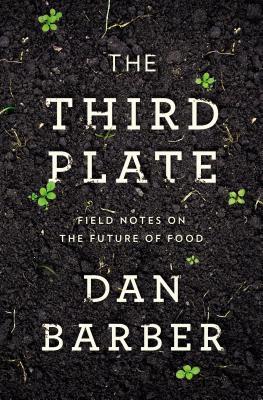
Title: The Third Plate: Field Notes on the Future of Food
Author: Dan Barber
Unlike Michael Pollan, though, Dan Barber is a chef rather than a journalist. As such, his primary motivation is flavor. His conclusion is essentially the same: sustainable agricultural practices are the best. One should farm according to ecological principles, feeding the ecosystem what it demands rather than bending it to commercial demands. His reason, though, is different: such an approach to farming produces tastier food. What's more, he asserts that chefs have a responsibility to promote more responsible practices through the composition of their menus.
The Third Plate exposes many of the ills of the food industry: soil depletion, over-fishing, monocultures, etc. Barber highlights several farmers and scientists practicing by new methods, many of which are simply more like the old pre-industrial methods. The solutions aren't always so simple, though. Quality of food often comes at the cost of quantity. High yield is the driving motivator for agribusiness and that's unlikely to change anytime soon. As Barber admits, Monsanto isn't going anywhere. The altruistic side of the equation is complicated, too. How do we farm responsibly and also meet the demands of a hungry - too often, starving - world?
All of which leads back to the quote above. The solutions to the major food questions of the age are not going to come easily, perhaps not in our own lifetimes. But if we don't get to work on them now, the outlook for future generations may be quite dire.
Please join us and share your own review of your best read from the past month. This month's link list is below. I'll keep it open until the end of the day. I'll post November's tomorrow. Meetings are the last Friday of each month. Next gathering is November 27th.
Title: The Third Plate: Field Notes on the Future of Food
Author: Dan Barber
| via Goodreads |
"If you're working on a problem you can solve in your own lifetime, you're not thinking big enough." - Wes Jackson, co-founder of The Land InstituteI'm not usually big on quotes. But when I read that one in The Third Plate, I loved it so much I put it up on the whiteboard in my classroom where it has remained for several weeks. They're wonderful words to live by and they provide a fine summation of Barber's book. The Third Plate is similar to The Omnivore's Dilemma (my review here) in many ways, tracing the origins of our food from farm to table: flour, fois gras, Spanish ham and seafood.
Unlike Michael Pollan, though, Dan Barber is a chef rather than a journalist. As such, his primary motivation is flavor. His conclusion is essentially the same: sustainable agricultural practices are the best. One should farm according to ecological principles, feeding the ecosystem what it demands rather than bending it to commercial demands. His reason, though, is different: such an approach to farming produces tastier food. What's more, he asserts that chefs have a responsibility to promote more responsible practices through the composition of their menus.
The Third Plate exposes many of the ills of the food industry: soil depletion, over-fishing, monocultures, etc. Barber highlights several farmers and scientists practicing by new methods, many of which are simply more like the old pre-industrial methods. The solutions aren't always so simple, though. Quality of food often comes at the cost of quantity. High yield is the driving motivator for agribusiness and that's unlikely to change anytime soon. As Barber admits, Monsanto isn't going anywhere. The altruistic side of the equation is complicated, too. How do we farm responsibly and also meet the demands of a hungry - too often, starving - world?
All of which leads back to the quote above. The solutions to the major food questions of the age are not going to come easily, perhaps not in our own lifetimes. But if we don't get to work on them now, the outlook for future generations may be quite dire.
Please join us and share your own review of your best read from the past month. This month's link list is below. I'll keep it open until the end of the day. I'll post November's tomorrow. Meetings are the last Friday of each month. Next gathering is November 27th.
Labels:
Book Club,
family adventures,
food,
food books,
good reading,
science books
Thursday, October 29, 2015
The Clone Wars: Season One
We have reached the end of Season 1 in our exploration of The Clone Wars. Episode posts resume next Tuesday with Season 2. But first, a quick reflection...
General Impressions
As much as I love the Star Wars movies, I am eager for The Clone Wars series to have a life of its own. Therefore, the more intriguing stories for me are the ones exploring aspects of the saga beyond the basic Jedi vs. Sith premise. So far, the best theme going is the relationship between the Jedi and the clone troopers who serve them. The United States was still in two wars at the beginning of the series's run and the plight of the common soldier was a relevant point of discussion. We've also had welcome glimpses of Star Wars's seamy underworld, an important part of the original trilogy. I am hoping for more of the same in seasons to come.
Favorite Episode: "Rookies"
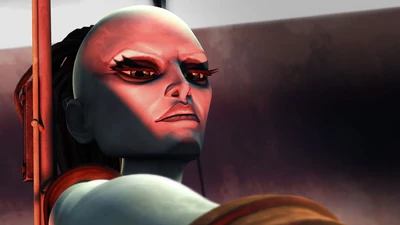
The tedious existence of the clones on a remote outpost is disturbed by a Separatist invasion. In its best moments, the story doesn't feel like Star Wars at all, recalling instead the war movies of an earlier age. "Rookies" reveals the depths of the clones' devotion to their cause and also to one another. I actually teared up a little at the tale's climax.
Least Favorite Episode: "Cloak of Darkness"
There's really nothing wrong with this episode. In fact, quality is fairly even throughout the first season. But the stench of formula came wafting through with this story, the third in a row built upon a prison break narrative structure. Obviously, such a plot is bread and butter for the franchise, going all the way back to the first movie. But as I stated in my general impressions, I'm eager for the series to find its own path. Same old same old ain't gonna cut it.
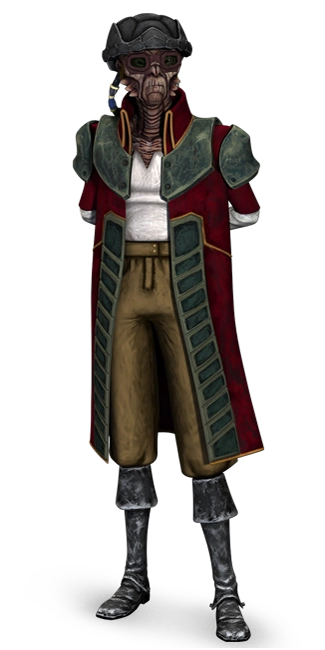
Favorite New Character: Hondo Ohnaka
Hondo, a Weequay pirate, is introduced in "Dooku Captured," part one of a two-episode arc. He is voiced by Jim Cummings who took his inspiration for Hondo from Star Trek's Khan. He is also going to be back. His next appearance comes in Season 2. I take this as a strong indication that The Clone Wars will develop some of its own stories going forward.
Onward
Season 1 ended in March 2009. Real pirates were in the news in April when a band of Somalis gained control of the Maresk Alabama, captained by Richard Phillips. In June, the world lost the King of Pop. The Clone Wars returned with Season 2 in October.
Please visit the other participants today. Next Tuesday: "Holocron Heist."
General Impressions
As much as I love the Star Wars movies, I am eager for The Clone Wars series to have a life of its own. Therefore, the more intriguing stories for me are the ones exploring aspects of the saga beyond the basic Jedi vs. Sith premise. So far, the best theme going is the relationship between the Jedi and the clone troopers who serve them. The United States was still in two wars at the beginning of the series's run and the plight of the common soldier was a relevant point of discussion. We've also had welcome glimpses of Star Wars's seamy underworld, an important part of the original trilogy. I am hoping for more of the same in seasons to come.
Favorite Episode: "Rookies"
| via Wookieepedia |
Least Favorite Episode: "Cloak of Darkness"
| via Wookieepedia |
Favorite New Character: Hondo Ohnaka
| via Wookieepedia |
Onward
Season 1 ended in March 2009. Real pirates were in the news in April when a band of Somalis gained control of the Maresk Alabama, captained by Richard Phillips. In June, the world lost the King of Pop. The Clone Wars returned with Season 2 in October.
Please visit the other participants today. Next Tuesday: "Holocron Heist."
Labels:
Clone Wars project,
comics,
family adventures,
film,
good reading,
music,
sources,
star trek,
Star Wars,
TV
Tuesday, October 27, 2015
The Clone Wars: Hostage Crisis
My friends and I are watching Star Wars: The Clone Wars.
Every Tuesday, we will be featuring an episode from the series which
began in 2008 (as opposed to the one that started in 2003). All are welcome to join us for all or parts of the fun.
Episode: "Hostage Crisis"
Series: Star Wars: The Clone Wars
Season 1, Episode 22
Original Air Date: March 20, 2009
Every once in a while, we get an episode to remind us that Anakin and Padme are gettin' it on behind everyone's backs. They're in love - married even - but that's all verboten for a Jedi. Emotional entanglement equals distraction and vulnerability. Of course, we all know the importance of this union to the broader Star Wars saga and we also know no one's going to find out for a while. But Anakin and Padme don't know. "Hostage Crisis" is such an episode.
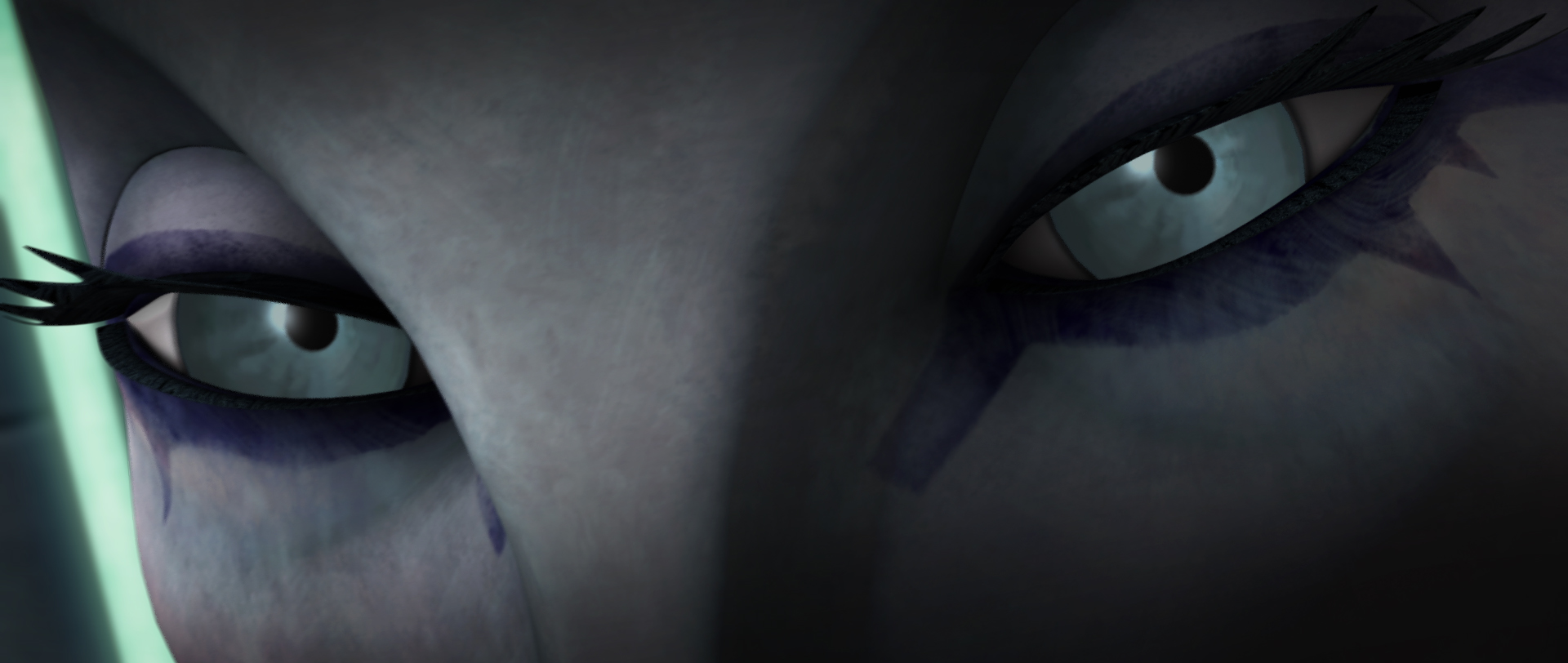
Bounty hunter Cad Bane has been hired to spring Ziro the Hutt from prison. To accomplish this, he takes several senators hostage including, you guessed it, Padme. Obviously, Anakin has to do something about this but there's one complication: Padme has his lightsaber. "Hostage Crisis" is the final episode of the first season and the beginning of a new story arc so, naturally, there's a cliffhanger.
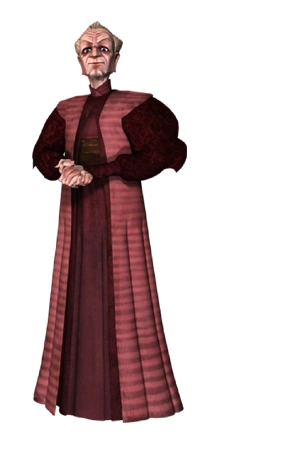
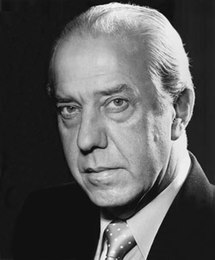
Ian Abercrombie is the voice of Chancellor Palpatine. Abercrombie was born September 11, 1934 in Grays, Essex, England. He started his showbiz career early as an award-winning child dancer. He moved to the United States at age 17.
The stage led to the screen and Abercrombie had a long career as a character actor, particularly in television. Among many other roles, he was Alfred in Birds of Prey and Elaine's boss on Seinfeld. He died in 2012 from kidney failure. "Lawless," a fifth-season Clone Wars episode was dedicated to his memory.
If you would care to join us for all or part of our travels, sign on to the list below. Please visit the other participants today. Next week: "Holocron Heist." This Thursday, we'll be recapping Season One.
Episode: "Hostage Crisis"
Series: Star Wars: The Clone Wars
Season 1, Episode 22
Original Air Date: March 20, 2009
| via Wookieepedia |
Bounty hunter Cad Bane has been hired to spring Ziro the Hutt from prison. To accomplish this, he takes several senators hostage including, you guessed it, Padme. Obviously, Anakin has to do something about this but there's one complication: Padme has his lightsaber. "Hostage Crisis" is the final episode of the first season and the beginning of a new story arc so, naturally, there's a cliffhanger.
*****
| via The Clone Wars Wiki |
| via Wikipedia |
If you would care to join us for all or part of our travels, sign on to the list below. Please visit the other participants today. Next week: "Holocron Heist." This Thursday, we'll be recapping Season One.
Labels:
Clone Wars project,
comics,
family adventures,
film,
good reading,
sources,
Star Wars,
TV
Friday, October 23, 2015
Squid Bakes: Plain Scones
Last Saturday night, as we pondered the rest of our weekend, our daughter (Purple Penguin) asked if we had any plans for Sunday. We asked if there was anything she wanted to do and she responded with a sheepish grin that she hoped we didn't have anything to do. "I want to stay home so I can wear my new fuzzy pants all day." With that, Sunday became Fuzzy Pants Day for all of us.
Such is life in Vermont as we edge our way into late autumn. The leaves are past peak now. The deep reds and oranges of a couple weeks ago have been replaced by yellows and browns. The stained glass windows in the canopy have become lush carpets under the maples. Last weekend also brought our first snowfall - light dustings mostly, but enough to remind us all of what's coming. To be sure, Vermont's glorious summer and dazzling foliage season are behind us. Winter looms.
It's important to have things to look forward to this time of year. Winter hobbies are popular in the northern states for obvious climactic reasons, of course, but they're also important psychologically. Shorter days, bare branches and dropping temperatures are a lot easier to take if you are a hockey fan, for instance. At our house, we put up our bird feeders in November. Our woodland surroundings teem with life and we are better able to enjoy that in winter. We don't dare leave food out in the warmer months - best to wait until we know the bears are down for the season. We enjoy the simple pleasures of flannel sheets and longer sleeves - Fuzzy Pants Days and the like. It's also a better time of year for turning on the oven which means...
Baking!
I took up baking last year but gave it up for the summer. Now that it's cooler, setting the oven to 450 appeals in a way it didn't a month ago. I am gradually working my way through How to Bake by Nick Malgieri, from which the plain scones recipe came. It was a good project for getting back in the groove - very easy. We all gobbled them up eagerly. Apricot jam was a fine pairing.
Such is life in Vermont as we edge our way into late autumn. The leaves are past peak now. The deep reds and oranges of a couple weeks ago have been replaced by yellows and browns. The stained glass windows in the canopy have become lush carpets under the maples. Last weekend also brought our first snowfall - light dustings mostly, but enough to remind us all of what's coming. To be sure, Vermont's glorious summer and dazzling foliage season are behind us. Winter looms.
It's important to have things to look forward to this time of year. Winter hobbies are popular in the northern states for obvious climactic reasons, of course, but they're also important psychologically. Shorter days, bare branches and dropping temperatures are a lot easier to take if you are a hockey fan, for instance. At our house, we put up our bird feeders in November. Our woodland surroundings teem with life and we are better able to enjoy that in winter. We don't dare leave food out in the warmer months - best to wait until we know the bears are down for the season. We enjoy the simple pleasures of flannel sheets and longer sleeves - Fuzzy Pants Days and the like. It's also a better time of year for turning on the oven which means...
Baking!
I took up baking last year but gave it up for the summer. Now that it's cooler, setting the oven to 450 appeals in a way it didn't a month ago. I am gradually working my way through How to Bake by Nick Malgieri, from which the plain scones recipe came. It was a good project for getting back in the groove - very easy. We all gobbled them up eagerly. Apricot jam was a fine pairing.
Labels:
family adventures,
food,
food books,
good reading
Tuesday, October 20, 2015
The Clone Wars: Liberty on Ryloth
My friends and I are watching Star Wars: The Clone Wars.
Every Tuesday, we will be featuring an episode from the series which
began in 2008 (as opposed to the one that started in 2003). All are welcome to join us for all or parts of the fun.
Episode: "Liberty on Ryloth"
Series: Star Wars: The Clone Wars
Season 1, Episode 21
Original Air Date: March 13, 2009
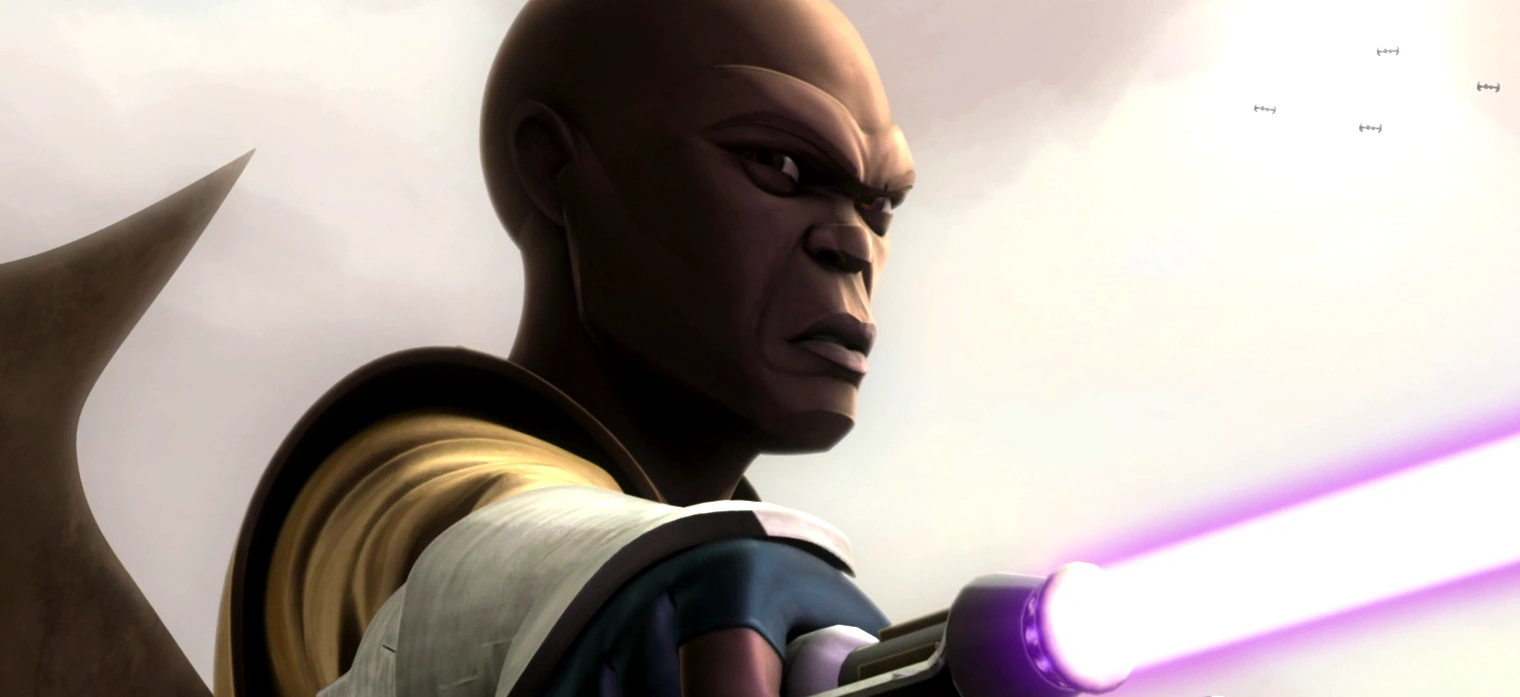
This week's episode completes the Ryloth story arc. The Republic's effort to free the planet from brutal Separatist control is going well. But for a successful assault upon the capital city, Mace Windu requires the assistance of Cham Syndulla, a Twi'lek freedom fighter wary of aligning himself with the Jedi.
The Cham Syndulla story is the most blatantly topical episode of the series so far. It's worth remembering that the United States was still deeply immersed in two wars in 2009. Six years later, long-term stability in both Iraq and Afghanistan still feels out of reach. At one point in discussions, Syndulla expresses reluctance to put his trust in an ally he might have to fight against in time. Boy, is that ever recent Middle East relations in a nutshell!
Syndulla is voiced by Robin Atkin Downes. Downes was born in London. In addition to extensive voice work in film, television and video games, he has made live action appearances in such shows as Buffy the Vampire Slayer, Babylon 5 and Beverly Hills, 90210. He has been married to actress Michael Ann Young since 2004.
If you would care to join us for all or part of our travels, sign on to the list below. Please visit the other participants today. Next week: "Hostage Crisis."
Episode: "Liberty on Ryloth"
Series: Star Wars: The Clone Wars
Season 1, Episode 21
Original Air Date: March 13, 2009
| via Wookieepedia |
| via Wookieepedia |
| via The Elder Scrolls Wiki |
If you would care to join us for all or part of our travels, sign on to the list below. Please visit the other participants today. Next week: "Hostage Crisis."
Labels:
Clone Wars project,
comics,
family adventures,
film,
good reading,
sources,
Star Wars,
TV
Friday, October 16, 2015
Family Movie Night: The Grand Budapest Hotel
Title: The Grand Budapest Hotel
Director: Wes Anderson
Original Release: 2014
Choice: My Wife's
My Overall Rating: 4 stars out of 5
I have admired Wes Anderson's work since Rushmore, his breakthrough movie. He is at his quirky, zany best with the highly acclaimed Grand Budapest Hotel. M. Gustave (Ralph Fiennes) is the devoted concierge at a mountainside hotel in the fictional nation of Zubrowka in 1932. He will stop at nothing to please his guests. Unfortunately, he has been framed for murder and he drags his lobby boy Zero (Tony Revolori) on a madcap adventure to escape from prison, evade recapture and discover the truth. The all-star cast includes Tilda Swinton, Bill Murray, Jeff Goldblum, Edward Norton, Jude Law, Harvey Keitel and on and on.
The story itself is not enough to bring me back for a repeat viewing. Instead, the top-notch acting and the world class visual presentation are the selling points. Not for nothing, The Grand Budapest Hotel swept the art Oscars: Best Production Design, Best Costume Design and Best Makeup and Hairstyling (Best Original Score, too, for good measure). Every frame is rich with color and texture. The story is told in three different timelines, each with its own aspect ratio. The main story, in fact, is shot in portrait orientation rather than landscape - usually a no-no but somehow it works here, makes everything and everyone seem taller. Not a bad thing in a film with a mountainous setting and a tall and lanky cast.
Director: Wes Anderson
Original Release: 2014
Choice: My Wife's
My Overall Rating: 4 stars out of 5
![]() |
| via Wikipedia |
The story itself is not enough to bring me back for a repeat viewing. Instead, the top-notch acting and the world class visual presentation are the selling points. Not for nothing, The Grand Budapest Hotel swept the art Oscars: Best Production Design, Best Costume Design and Best Makeup and Hairstyling (Best Original Score, too, for good measure). Every frame is rich with color and texture. The story is told in three different timelines, each with its own aspect ratio. The main story, in fact, is shot in portrait orientation rather than landscape - usually a no-no but somehow it works here, makes everything and everyone seem taller. Not a bad thing in a film with a mountainous setting and a tall and lanky cast.
Subscribe to:
Posts (Atom)