Friday, May 29, 2020

Star Trek: Contagion

Episode: "Contagion"
Series: Star Trek: The Next Generation
Season 2, Episode 11
Original Air Date: March 20, 1989

Image result for contagion tng
via Wikipedia

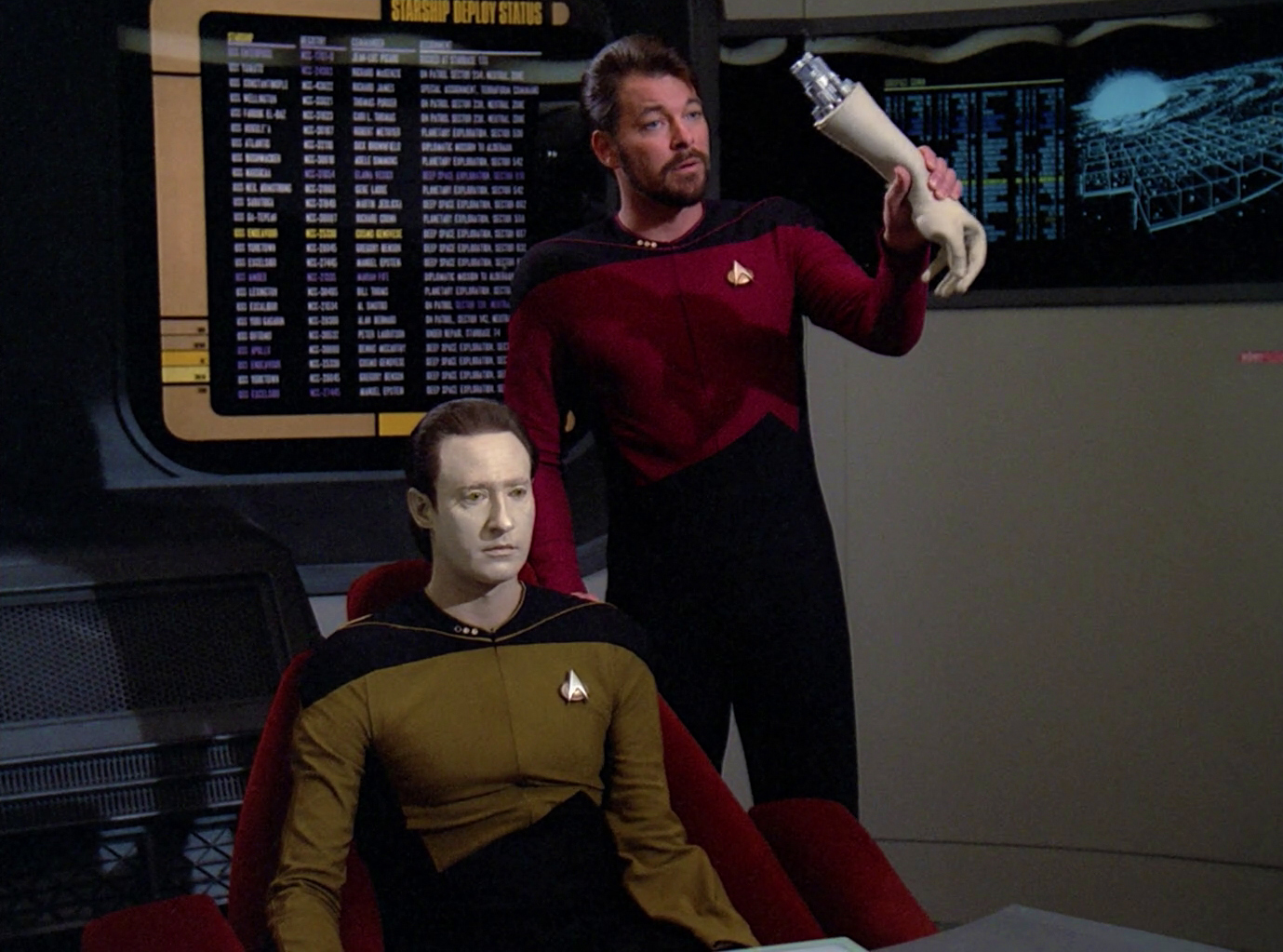
Captain Picard gets a call from an old friend, Donald Varley (Thalmus Rasulala), captain of the Yamato, the Enterprise's sister ship.  A fellow archaeology enthusiast, Varley had been investigating a world rumored to be the home of the legendary Iconians.  Two problems: the planet is inconveniently located in the neutral zone, the Yamoto's trespassing drawing the attention of the Romulans, and the ship seems to have picked up a tech virus in the process.  The virus destroys the Yamato as the Enterprise bridge crew looks on in horror.  Now the same condition has infected the Enterprise.

The story idea came from Beth Woods who was an IT tech at the Star Trek offices at the time.  Some of the ideas used are ones we've seen before.  The ship being attacked by an abandoned planet is reminiscent of "Arsenal of Freedom."  The portal room on the Iconian world is not entirely unlike the one we saw in TOS's "All Our Yesterdays," the penultimate episode of the originals.  A quick side note: the latter is an installment I think about a lot.  I didn't initially include it on my top 10 list but in hindsight, I might - certainly top 15.  It's such a great Spock story.


Food Note

This episode marks the first time Picard orders his trademark "Tea, Earl Gray, hot" from the replicator, though the machine messes up the order.


Acting Notes
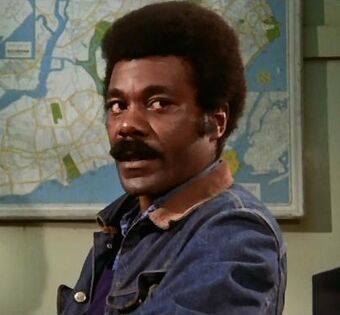
Image result for thalmus rasulala
via Good Times Wiki

Thalmus Rasulala was born Jack Crowder, November 15, 1939 in Miami.  He graduated from the University of Redlands in California.  He had a long career on both stage and screen.  In 1967, he played the role of Cornelius Hackl in an all-black cast of Hello, Dolly!, a production which also featured Pearl Bailey and Cab Calloway.

On the big screen, his biggest starring roles were in blaxploitation films of the early '70s: Cool Breeze, Blacula and Willie Dynamite.  He also has an assistant director credit for The Slams.  On television, he was in the original cast for One Life to Live, then had guest roles on numerous major shows in the '70s and '80s.  TNG was not his first gig with Levar Burton.  Both were in Roots, Rasulala playing the part of Omoro Kinte, father of Kunta Kinte, Burton's character.

Thalmus Rasulala passed away on October 9, 1991 from a heart attack.

Wednesday, May 27, 2020

Squid Mixes: Algonquin


The Algonquin combines whiskey, dry vermouth and pineapple juice.  We tried two different recipes: the one from The New York Bartender's Guide which calls for American blended whiskey (I used Canadian) and David Lebovitz's which favors rye.  The proportions are slightly different, too, though I think the choice of whiskey made the bigger difference in taste.  We both preferred Lebovitz's combo as the rye flavor came through more strongly.

Pineapple seems a strange choice to me for a drink named for an indigenous people from eastern Canada.  Maple would seem a more appropriate flavoring.  However, the drink is actually named after the iconic hotel in Manhattan where it was invented.

Monday, May 25, 2020

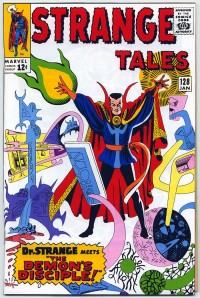
Marvel Immersion Project: Strange Tales #118-124

I'm still undecided as to how I feel about Doctor Strange as a character.  While I will grant that he is refreshingly different from his Marvel contemporaries, I don't find his stories as compelling as those of others.  At this point, I would rate him above the Fantastic Four but below the Silver Surfer and Spider-Man.

Dr Strange 1
via Thoughtful Mirth

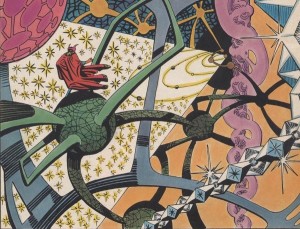
However, there's no denying the artwork is something special.  As promised last week, I've done a little research into the fascinating links between Steve Ditko's illustrations and the psychedelic art that emerged from the counter-culture of the mid-to-late 1960s.  This week, I will share a quick look at the common roots for both...

Dr Strange 2
via Thoughtful Mirth

In creating a mystical character with connections to the Far East, Ditko deliberately drew inspiration from Asian mystical art.  The most commonly found expression of that art in modern society is the mandala:

Painted 17th century Tibetan 'Five Deity Mandala', in the center is Rakta Yamari (the Red Enemy of Death) embracing his consort Vajra Vetali, in the corners are the Red, Green White and Yellow Yamari.jpg
By Anonymous - Rubin Museum of Art, Public Domain, Link

Buddha mandala.jpg
By Kamal Ratna Tuladhar - Own work, CC BY-SA 3.0, Link

Asian mystcism, and the trappings thereof, were popular among the counter-culture as well.  The Beatles, among others, being drawn to Indian sitar music at the time was a different manifestation of the same phenomenon.

Psychedelic 60s | Graphic Design History
via Graphic Design History
While the artist himself would not have been thrilled, there were counter-culture enthusiasts who embraced Dr. Strange comics as an element of their movement.  Next week, I'll look at some of the direct links.


My Recent Reads

Strange Tales #118
Originally Published March 1, 1964
Writer: Stan Lee
Artist: Steve Ditko
  • Villains: The Possessors

Strange Tales #119
April 1, 1964
Lee/Ditko

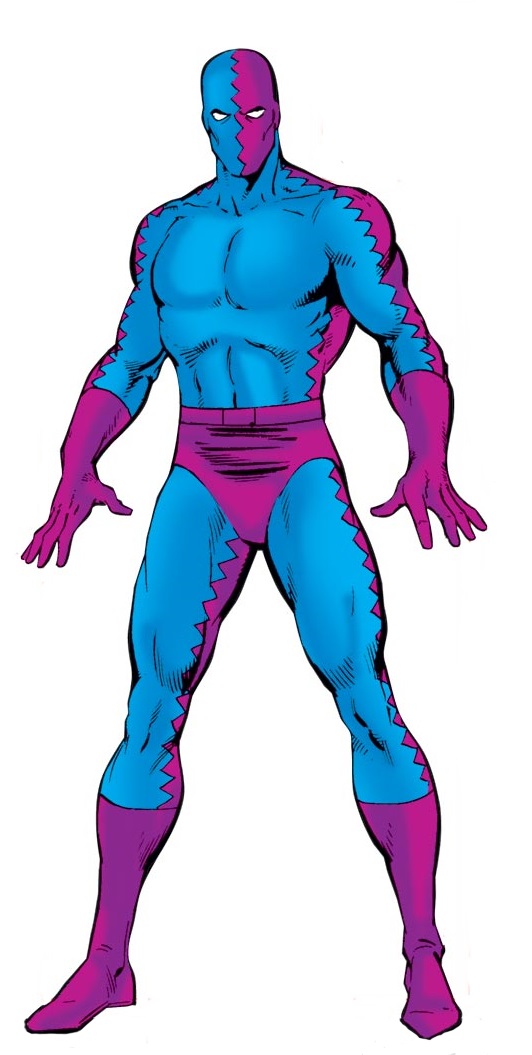
Wong (Earth-616) | Marvel Database | Fandom
via Marvel Database
  • Dr. Strange's servant gets a name: Wong.
  • Strange travels to the Purple Dimension where he frees the enslaved minions of a being called Aggamon. 

Strange Tales #120
May 1, 1964
Lee/Ditko

Iceman | X-Men Wiki | Fandom
via X-Men Wiki
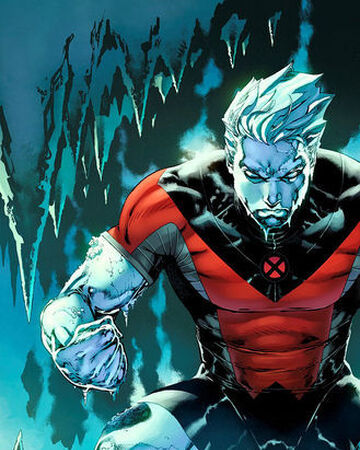
  • In the primary Human Torch story (artist: Jack Kirby), Iceman of the X-Men teams up with Johnny Storm for the first time.
  • Dr. Strange's nemesis: a haunted house 

Strange Tales #121
June 1, 1964
Lee/Ditko

Plantman | Villains Wiki | Fandom
via Villains Wiki
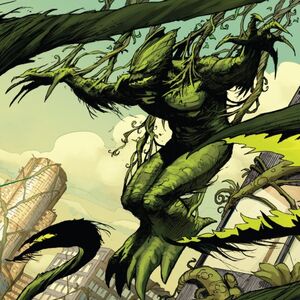
  • Human Torch (artist: Dick Ayers) villain: Plantman
  • Dr. Strange nemesis: Baron Mordo
  • We learn an important limitation of the doctor's powers: he can only stay in his ectoplasmic form for 24 hours.

Strange Tales #122
July 1, 1964
Lee/Ditko

Terrible Trio (Earth-616) | Marvel Database | Fandom
via Marvel Database
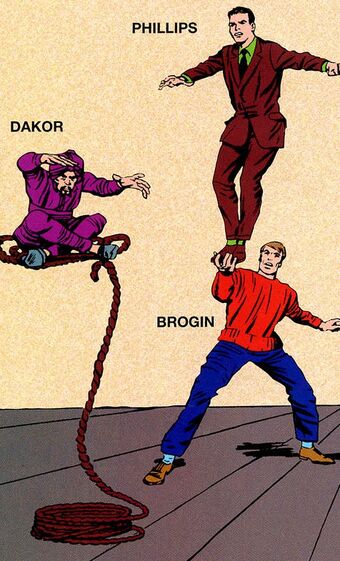
  • Human Torch (artist: Ayers) villains: a group who would eventually be known as the Terrible Trio, including Handsome Harry Phillips, Yogi Dakor and Bill Brogin
  • Dr. Strange nemesis: Nightmare

Strange Tales #123
August 1, 1964
Lee/Ditko
  • Beatles allusion!

  • Dr. Strange nemesis: Loki
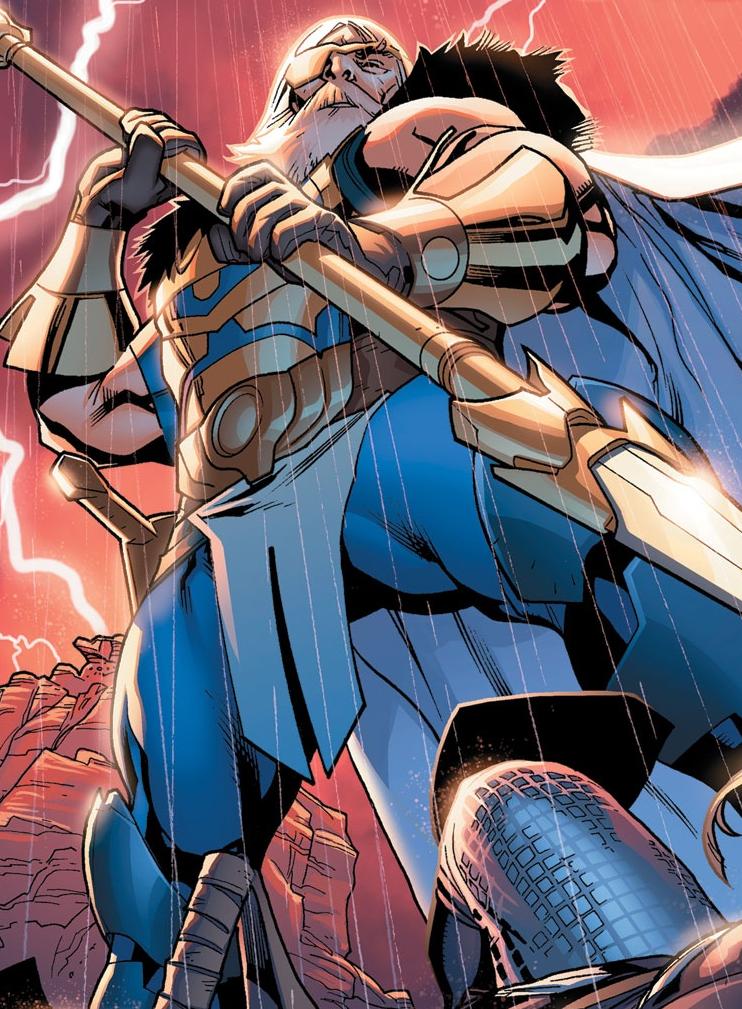
  • Cameos by Thor and Odin
Odin Borson (Earth-616) | Marvel Database | Fandom
Odin via Marvel Database


Strange Tales #124
September 1, 1964
Lee/Ditko

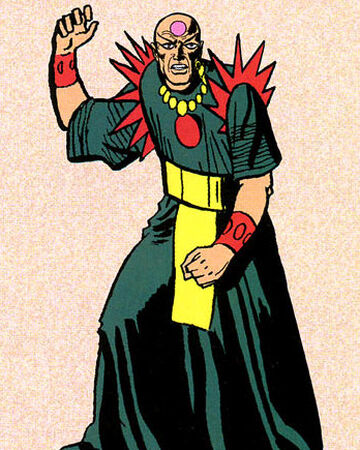
Zota of Pergamum (Earth-616) | Marvel Database | Fandom
via Marvel Database
  • Nemesis: Zota
  • Cameos by Cleopatra and Mark Antony

Friday, May 22, 2020

Star Trek: The Dauphin

Episode: "The Dauphin"
Series: Star Trek: The Next Generation
Season 2, Episode 10
Original Air Date: February 20, 1989

Image result for dauphin star trek
via Memory Alpha

Wesley falls in love.  The Enterprise is transporting what appears to be a young woman to a world where she is to become their new leader.  I say appears because as it transpires, she and her escort are shapeshifters.  Troubling for young Master Crusher, he doesn't learn of this talent until after he's smooched her and thus feels betrayed by the revelation.

My wife's reaction: "Boys are stupid."

It's a Wesley story so one naturally approaches with apprehension.  However, I didn't think it was so bad.  In truth, it's more the sort of narrative I would want Trek to have for him: awkward teenager, hold the wunderkind.  The writing isn't exactly sparkling but there have definitely been less stellar episodes so far in the second season.

Along the way, there is good development for others as Wes seeks advice from his friends.  Worf's recounting of Klingon courtship rituals is wonderful.  The flirtation demonstration between Riker and Guinan is also memorable.  Whoopi Goldberg gets to flex her comedy muscles with a sharp "Shut up, kid" when the young ensign interrupts.  The prominence of chocolate was much appreciated, too.


Acting Notes

Image result for paddi edwards
via Memory Alpha

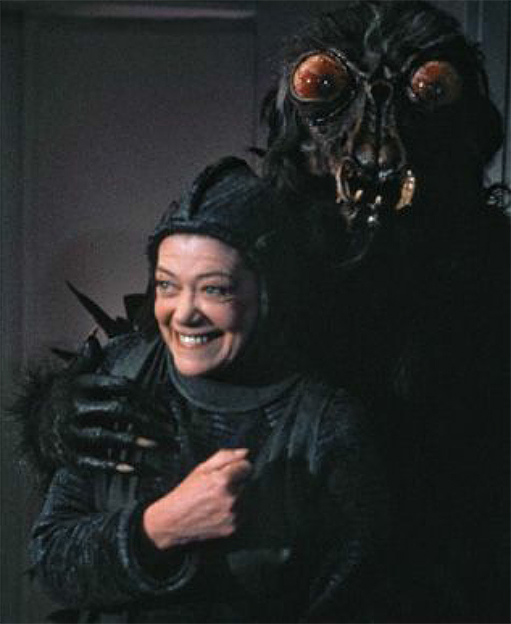
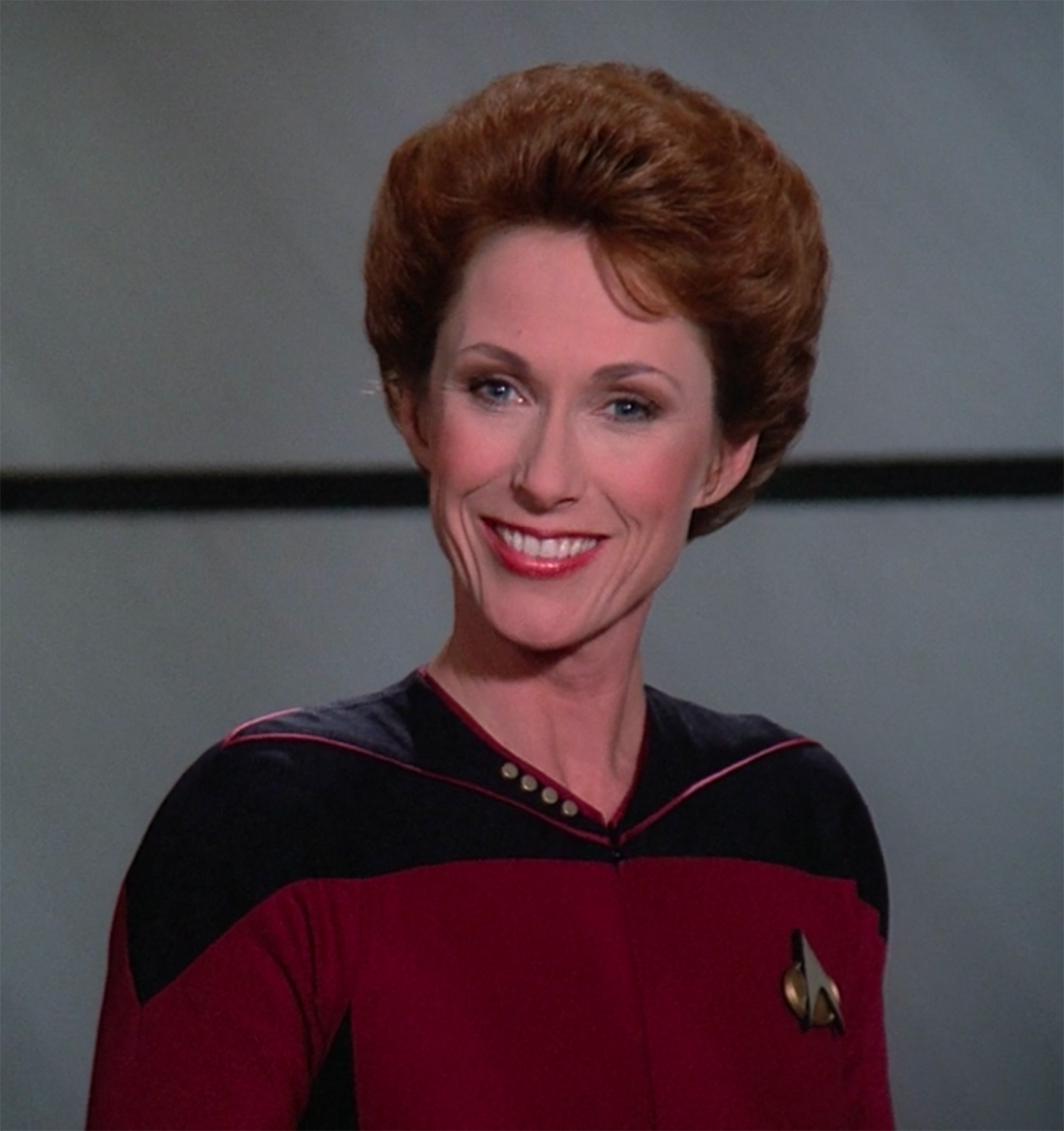
Paddi Edwards played the role of Anya, the escort to Salia (Jaime Hubbard), the Dauphin herself.  Ms. Edwards was born Particia Mary Ursula Edwards, March 8, 1931 in Bristol, UK.  Her family moved to the United States when she was a child.  She grew up in Waban, Massachusetts and she became a naturalized citizen in 1952.  

Most of her work was in television, mostly guest roles.  In addition to Trek, she made appearances on Night Court, Murder, She Wrote and Murphy Brown among others.  If anything, she had a more successful voiceover career.  She was the voice of Gozer in the original Ghostbusters film.  Later in life, she caught on with Disney, voicing characters in such blockbusters as The Little Mermaid and Hercules.

Edwards died of respiratory failure in 1999.

Wednesday, May 20, 2020

Squid Mixes: Virgin Mary

When you have a Zoom meeting scheduled with an old friend in Sydney for 8 a.m. EDT, an alcoholic cocktail is a bit much.  However, I love a Bloody Mary so a Virgin Mary is just the thing!  Besides, if I leave out the alcohol, our tomato juice loving daughter can have one, too.

I got my recipe from Mocktails by Kester Thompson: tomato juice, lemon wedge, lemon juice, Worcestershire sauce, hot sauce and black pepper (which I skipped in favor of a pinch of salt - shhh...) in a shaker, then celery to garnish.  Thompson doesn't use horseradish which I appreciate.  My wife and I both felt the drink could use more heat, our daughter thought perhaps a little less.  Otherwise, the drinks were pleasant.


Whiskey Battles: George Dickel vs. Redemption Rye


Like George Dickel, Redemption Rye is on sale in Vermont liquor stores this month.  It's time to pit the two against one another.  Important consideration: at full price, Dickel is $3 cheaper.  As previously noted, I have decided the Manhattan Test is the only one that really matters.  And so...

I liked both about the same.  In fact, I didn't think they were too different from each other.  My wife preferred the Dickel once again.  She felt the Redemption had a more chemical flavor.

Decision: George Dickel

Dickel's reign continues.  I have a couple more whiskey tests to go, then we'll start working on vermouths.

Monday, May 18, 2020

Marvel Immersion Project: Silver Surfer #18 and Strange Tales #110-111, #114-117

Doctor Strange - Wikipedia
via Wikipedia
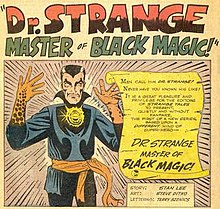
This week, I leave the Silver Surfer and move on to Doctor Strange.  This shift involves a step back in time a few years, the Surfer ending in 1970, Strange launching in 1963.  In some ways, it is disappointing to retreat from the '70s, an era in which Marvel busted through the boundaries of what a superhero comic could be.  With Strange Tales, we're back to the villain-of-the week model.

However, Doctor Strange is definitely different.  His origin story of redemption is nothing new, nor is the basic good vs. evil moral landscape upon which his adventures are set.  But there's a darkness to the character that separates him from others at this point in comic history, perhaps closer to the radio drama heroes of an earlier era.  He also romps through wild, mystical dreamscapes in favor of the more realistic New York streets where we encounter Spider-Man or the Fantastic Four.  Plus, there's the artwork...

Dr. Strange, more than Spidey, was Steve Ditko's baby.  Ditko, a straight-laced conservative who probably never went near an illicit drug in his life, was a psychedelic artist before the word went mainstream.  His art for Dr. Strange, while perhaps not an influence, was certainly a harbinger of what was to come, leading me to wonder if perhaps the art world was heading in this direction even without the counter-cultural forces with which it's associated.

I will readily admit, I am out of my depths on this topic.  But it is intriguing and I'll be hanging out with Strange for a few weeks, plenty of time for me to learn more.  I promise to share the highlights.


My Recent Reads

Silver Surfer #18
Originally published September 1, 1970
Writer: Stan Lee
Artist: Jack Kirby (back to close out the series)
  • The Surfer meets the Inhumans!  It would seem there have been significant developments since the last time I encountered this band.  There are now two factions to keep track of: the royal family who live with Black Bolt in the Great Refuge and the Outsiders who roam in exile with Maximus.  The Surfer meets both.
  • The encounter doesn't go well.  The issue, and the series, end with a message of rage and despair.
  • So ends an excellent first solo series for an outstanding character.  Although there were many guest appearances and a couple of one-shots, the Silver Surfer didn't get his next solo series until 1987.


Strange Tales #110
July 1, 1963
Writer: Stan Lee
Artist: Steve Ditko
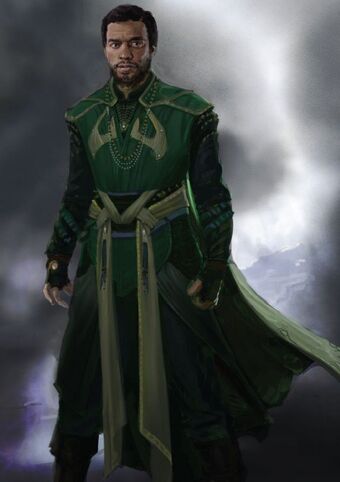
  • The lead stories at this point in the Strange Tales run star the Human Torch (artist: Dick Ayers).  However, the reason for my interest is the secondary tale.  In #110, Doctor Strange is introduced!
Ancient One - Wikipedia
via Wikipedia
  • Also introduced is The Master, to be referred to in later stories as The Ancient One.   He is Strange's guru.
Nightmare (Marvel Comics) - Wikipedia
via Wikipedia
  • We get a new villain, too: Nightmare.

Strange Tales #111
August 1, 1963
Lee/Ditko
Asbestos Man - Wikipedia
via Wikipedia
  • This month's Human Torch story (artist: Ayers) is worthy of note for the introduction of a new villain: Asbestos Man.
Karl Mordo (Earth-101) | Marvel Fanon | Fandom
via Marvel Fanon
  • We meet Dr. Strange's arch-nemesis: Baron Mordo. 


Strange Tales #114
November 1, 1963
Lee/Ditko
  • New character: Victoria Bently, an ally with mystical power potential


Strange Tales #115
December 1, 1963
Lee/Ditko
  • The Doctor Strange origin story


Strange Tales #116
January 1, 1964
Lee/Ditko
  • Human Torch story (artist: Ayers) 
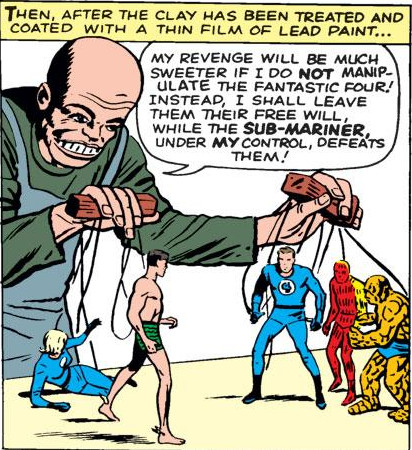
    • Villain: The Puppet Master
Phillip Masters (Earth-616) | Marvel Database | Fandom
via Marvel Database
    • Cameos by the rest of the FF, particularly Thing who brawls with Torch
    • Alicia Masters also features.  It turns out she's the Puppet Master's step-daughter!
  • Dr. Strange story
    • Villain: Nightmare

Strange Tales #117
February 1, 1964
Lee/Ditko

Leopold Stryke (Earth-616) | Marvel Database | Fandom
via Marvel Database
  • Human Torch villain: The Eel (artist: Ayers)
  • Dr. Strange villain: Baron Mordo

Friday, May 15, 2020

Star Trek: The Measure of a Man

Episode: "The Measure of a Man"
Series: Star Trek: The Next Generation
Season 2, Episode 9
Original Air Date: February 13, 1989

Image result for the measure of a man star trek
via Memory Alpha
Commander Bruce Maddox (Brian Brophy), a cyberneticist, has come aboard the Enterprise with the intention of stealing Data away so he can dismantle him for study.  Data attempts to resign from Starfleet in order to decline the transfer order but Maddox fights it.  In a legal hearing with the JAG - Captain Philippa Luvios, another old flame of Jean Luc's - Picard argues for Data's rights as a sentient being to make his own choices.  As second-in-command, Riker is assigned to argue for Maddox, an awkward position to say the least.

"The Measure of a Man" is a popular choice for all-time best lists and has, in fact, been called TNG's first truly great episode.  It is certainly one with reach beyond Star Trek.  The parallel drawn to human slavery provides a provocative historical perspective, of course.  Additionally, the story has been referenced in real-world computer ethics academia.  Within big-franchise sci-fi, I perceive influence - from Data in general and from "The Measure of a Man" specifically - on The Clone Wars.  As I have written before (here, among several posts), the most interesting stories in that series revolve around the plight of the clone troopers themselves in their complicated relationship with the Jedi who lead them.  The issues are rarely if ever confronted as directly as they are regarding Data but the moral tension is implied throughout.  Perhaps the episode "The Deserter" relates most closely.

As for being the best so far, it's a strong candidate but not a slam dunk for me.  In "Elementary, Dear Data," I find Moriarty to be a more appealing adversary than Maddox and nothing in "The Measure of a Man" offers the same visual dazzle as the Sherlock Holmes-scape of the earlier story.  However, this week's episode presents the strongest statement yet for the moral compass of TNG - certainly compatible with TOS's but different in important ways.  With the more developed principal characters, TNG allows for a deeper exploration of the challenges for the individual in a pluralistic society.  Data's arc has, to this point, brought the most opportunities for such questions but we've seen it with others, too: Worf reconciling his Klingon identity with the life he has lived among humans, Geordi's conflicted feelings about his disability, Deanna's choice to keep her baby as well as her sense of responsibility to her family and culture, Beverly's parenting challenges and so forth.  For TOS, the moral dilemmas generally revolve around confronting the new.  In TNG, while we still get the awkward alien encounters from time to time, the more interesting stories involve our heroes' struggles with more personal matters.  While the specific threat to Data's autonomy is new in this story, the prejudices behind it are not.


Game Notes

The story opens with a poker game, the first of many over the TNG run.  These games offer important character insights and critical lessons for Data in understanding human nature.  This time, Data falls for a bluff by Riker, greatly confusing for our favorite android.


Acting Notes

Image result for amanda mcbroom
via Memory Alpha
Amanda McBroom (Captain Luvois) was born August 9, 1947 in Woodland Hills, California.  While she has numerous acting credits, she is more accomplished as a musician, especially as a songwriter, particularly as the writer of "The Rose," the Bette Midler classic.  The song brought a Golden Globe award for McBroom and a Grammy for Midler: