Showing posts with label Fables. Show all posts

Monday, June 12, 2017

On the Coffee Table: Storybook Love

Title: Fables, Vol. 3: Storybook Love
Writer: Bill Willingham
Artist: Mark Buckingham
via Amazon
In the excellent Fables comic book series, fairy tale characters live among us in secret within their own New York City enclave, Fabletown.  This third collection includes issues #11-18. The Storybook Love arc itself only takes up four of those issues, #14-17.  It's a great story with significant character and relationship development, particularly between the series's two leads: Bigby (Big Bad Wolf) and Snow White.  It also ends with a great cliffhanger.

Issue #11, "Bag o' Bones," tells the adventures of Jack (he of the beanstalk) during the American Civil War.  The story gives a sense of how long the Fables have been in our world.  It also made me grateful for the time I have spent with the source material since I last visited this series.  The tale is straight out of Grimm: Jack wins a magic bag in a card game, then uses it to cheat Death.  Disastrous consequences follow.

Issues #12 and 13 are a two-part arc in which the Fables must cover their tracks when a nosy reporter gets way too close to their secret.  Just as the Potterverse wizards must hide their true nature from Muggles, so must the Fables preserve the ignorance of the Mundies.  The Fables, though, are inclined towards darker, more violent tactics to achieve their ends. 

#18 is a Lilliputian story.  Jonathan Swift's minifolk play a meaningful role in the Storybook Love arc so it's only appropriate they should get their own tale.  "Barleycorn Brides" tells of how the Lilliputians, initially all male, managed to find female mates.

I continue to be impressed by the series and curious about the source material.  I'm definitely up for more.  Next up, Volume 4: The March of the Wooden Soldiers.

Friday, April 29, 2016

The Cephalopod Coffeehouse: April 2016

Welcome one and all to the Cephalopod Coffeehouse, a cozy gathering of book lovers, meeting to discuss their thoughts regarding the works they enjoyed most over the previous month.  Pull up a chair, order your cappuccino and join in the fun.  If you wish to add your own review to the conversation, please sign on to the link list at the end of my post.

Title: The Complete Fairy Tales of the Brothers Grimm
Translator: Jack Zipes
via Amazon
Inspired by the comic book series Fables, I decided to seek out the original versions of the Grimms' fairy tales, a major source material for the series.  Many of Fables's most important characters derive from the Grimm stories, including Snow White, the lead female character.  The tales are much rougher than Disney would have one believe and Fables reflects that well.

There are many lessons to be learned from Grimm:
  • Be kind to a beggar on the road because it might be God in disguise.
  • If you are forced to marry a talking animal or an ugly person, tough it out because s/he is likely to be a gorgeous prince(ss) under enchantment.
  • Everyone gets what they deserve, though both rewards and punishments can be a bit over the top.
  • Don't leave a trail of edible goods, be they beans, bread crumbs, whatever.  Fairy tale characters make this mistake with shocking frequency.
  • Animals are more likely to remember your good deeds than people are. 
  • Don't make a pact with the Devil unless you have a clever plan for getting out of your obligation at the last minute.
  • Don't send your wife down to the cellar to draw beer from the barrel - at least, not if you expect her to come back up again.
  • Women are prizes to be won.  Men, too, though they usually have more choice in the matter.
  • Be cautious in any situation where you are being granted wishes, especially when a talking fish is involved.
  • Do not, under any circumstances, mess with St. Peter.
  • There are few sins worse than being ugly.
  • If you are dark skinned or Jewish, you should probably steer clear of fairy tales altogether.  The people in them are not likely to be kind to you.
I enjoyed the stories immensely.  There were plenty I'd never been exposed to before in any medium.  I am left wondering, though, why particular stories have become so deeply entrenched in western culture while others have not, especially when so many narrative elements are repeated from one tale to another.  "Snow White" I understand.  That story has unusual depth to it compared with others in the collection.  But why "Hansel and Gretel" when so many other stories involve children in miserable circumstances?  Why "Cinderella" when so many other stories involve wicked stepmothers?

Please join us and share your own review of your best read from the past month.  This month's link list is below.  I'll keep it open until the end of the day.  I'll post May's tomorrow.  Meetings are the last Friday of each month.  Next gathering is May 27th.


Monday, January 18, 2016

On the Coffee Table: Aesop

Title: Aesop's Fables retold by Blanche Winder
Author: Aesop
via Wikipedia
I first read Aesop's Fables in the seventh grade but, of course, some of the stories have been a part of my life for longer than that.  Tales such as "The Tortoise and the Hare" and expressions such as "sour grapes" are so firmly entrenched in Western Civilization that most people probably have no idea of their origin.  My own venture back to them was inspired by the character Bigby in the Fables comic book series.  The other animal characters in the series forbid Bigby from going anywhere near their Farm sanctuary and these ancient legends remind us why.

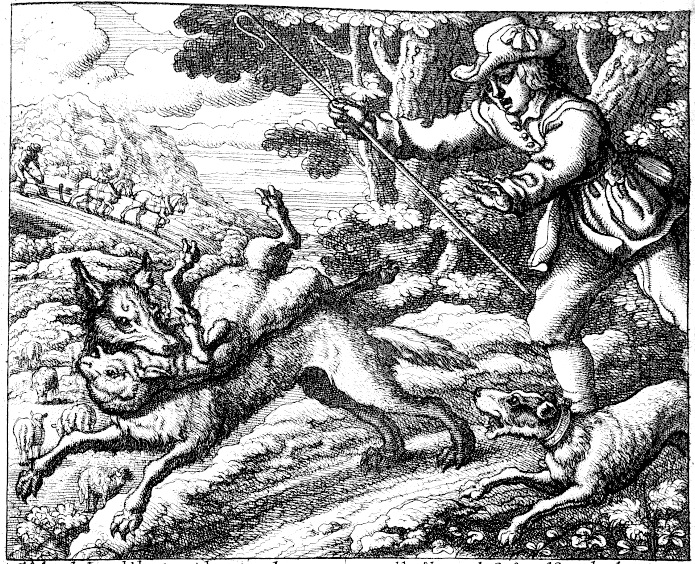
The Big Bad Wolf looms large in world folklore.  The Wolf is the tyrant of the forest, the embodiment of remorseless greed.  Aesop's most famous lupine story is "Crying 'Wolf,'" a timeless cautionary tale. Wolves are no joke, though.  They have posed a threat to domesticated livestock for thousands of years.  Given that they probably inspired the idea of domestication to begin with, the relationship between wolf and human is inextricably tied to the history of civilization itself.

The Blanche Winder edition bills itself as "Complete and Unabridged," a ridiculous understatement.  48 stories is a lot but the known fables number in the hundreds.  Fortunately, in the age of the Internet, everything in the public domain is easily accessible online.  If you're interested, look no further.  The Winder book, first published in 1965, is a bit dated for other reasons.  In "The Boys and the Frogs," a group of boys throw stones at frogs.  Ms. Winder expresses hope that "there were no little girls among them."  Personally, I see killing frogs for sport more as mean than unladylike but I realize the world has changed a little in 50 years.  The Winder book is engaging and certainly accessible to children, if not the most scholarly objective work.

Monday, August 17, 2015

On the Coffee Table: Animal Farm

Title: Fables, Vol. 2: Animal Farm
Writer: Bill Willingham
Artist: Mark Buckingham
via Amazon
If you were expecting Orwell, you might be surprised but I wouldn't say you'd be entirely disappointed.  In Willingham's excellent Fables comic book series, fairy tale characters have been run out of their imaginary realms and must make do in the real world.  All those who can't pass as human live on a secluded farm in upstate New York.  But not all is well on The Farm.  While on a routine visit from the city, Snow White and Rose Red stumble upon a political rally in the barn led by the Three Little Pigs - a scene familiar to anyone who knows Orwell's dystopian allegory.  The animals are tired of living in what amounts to a prison.  The social structure is in upheaval and Snow and Rose are clearly in danger.
via DC Comics Database
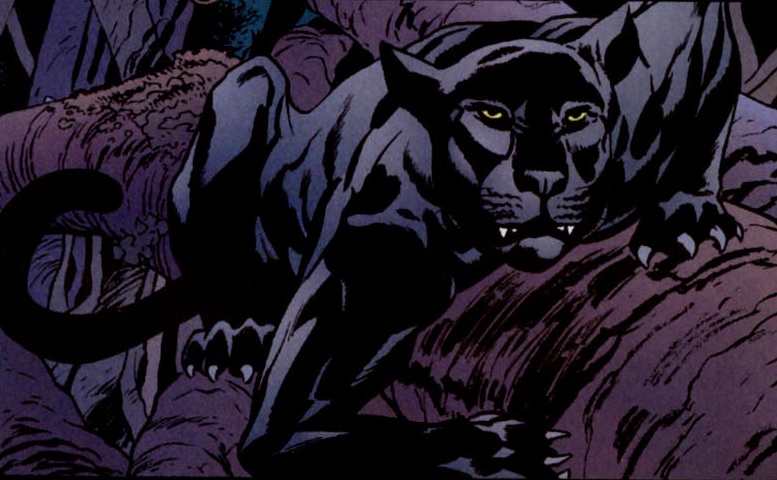
The story is very compelling and the artwork wonderful.  Of course, half the fun is wondering who will turn up next.  The most welcome inclusion is Kipling's Jungle Book characters.  The rendering of Baghera is especially striking.  If you plan to check out the series - and you should - don't expect your everyday wholesome fairy tales.  Even Once Upon a Time is fairly tame by comparison.

Wednesday, July 16, 2014

On the Coffee Table: Fables

Title: Fables, Vol. 1: Legends in Exile
Writer: Bill Willingham
Artist: Lan Medina
via Amazon
Fables is another popular comic book series which I tried a while back and it didn't take.  It is one of Mock's favorites and my college friend Zander Cannon has contributed artwork to the series so it was with a touch of regret that I didn't pursue the franchise further.  Goodreads recommended it, though, and I have to say that Goodreads has done pretty well by me recently so I decided to try again from the beginning.  Just as with Chew, I'm glad that I did.

For those unfamiliar with the story, fairy tale characters, led by Bigby (The Big Bad) Wolf and Snow White, inhabit a New York City subculture known as Fabletown.  They were driven out of their Homelands by The Adversary and are now doing their best to make a go of it in the mundane world.  Legends in Exile (issues #1-5) is a murder mystery.  Jack of beanstalk fame runs into Bigby's police detective office to report that his girlfriend, Red Rose, has gone missing, her apartment drenched in blood.

At first, I was resistant once again.  The setup felt a lot like Watchmen - a member of the team is killed, apparently by one of their own.  One sees this plot structure over and over again in comic books, everyone imitating the Alan Moore masterpiece.  But the story plays out differently, more along the lines of a classic mystery tale.  I guess I prefer my cliches on the older side.

I can't deny that I'm a sucker for the trappings.  Just as with The League of Extraordinary Gentlemen, I'm inspired to go back to the source material in order to better appreciate the characters.  Just as the narrative keeps me interested, I'm ever eager to see who from folklore will pop up next.  The comic book series is coming to an end soon.  #150 will be the final issue, set to publish in 2015.