Sunday, July 28, 2013

Family Movie Night: The Secret Garden

Title: The Secret Garden
Director: Agnieszka Holland
Original Release: 1993
Choice: Our Girl's
My Overall Rating: 4 stars out of 5
Image via Wikipedia

Our Girl is currently reading The Secret Garden, a 1911 novel by Frances Hodgson Burnett so this choice for Family Movie Night was not much of a surprise.  Holland's 1993 movie is the third and most recent film version.  Mary is an English girl born into privilege in colonial India.  When her neglectful parents are killed in an earthquake, she's sent to live with an aunt and uncle in Yorkshire.  Upon arrival, she finds that her aunt (mom's sister) had actually died many years before.  The ten-year-old Mary is, for all intents, left alone with the servants on the estate as her uncle is never home.


All told, it's a miserable set up for Mary.  She doesn't help matters by being a rotten child in the beginning - spoiled, entitled, anti-social.  Yet, despite her best efforts to alienate herself further, Mary makes friends who ultimately save her - first Martha, a servant girl.  Next, Martha's brother Dickon becomes her guide/companion in exploring the gardens.  The real surprise, however, is a cousin she didn't even know she had: the bed-ridden Colin.

The Secret Garden is a tale of yearning and redemption.  The book is often categorized as fantasy, but I don't see it that way - at least, not if the movie is anything to go by.  There are fantastical allusions but the magical elements aren't exactly the hocus-pocus variety. 

The movie is beautifully filmed on location at Allerton Castle and Fountains Hall, both in North Yorkshire.  Casting is excellent.  The children are all strong and the ever-dependable Maggie Smith plays the horrible (but of course, redeemed) Mrs. Medlock.

Saturday, July 27, 2013

The Cephalopod Coffeehouse: August Blog List


Greetings to all!  I hope you'll join us for the next installment of the Cephalopod Coffeehouse, an online gathering of bloggers who love books.  The next meeting is set for Friday, August 30th.  If you're interested, please sign on to the link list at the end of this post.

The idea is simple: on the last Friday of each month, post about the best book you've finished over the past month while visiting other bloggers doing the same.  In this way, we'll all have the opportunity to share our thoughts with other enthusiastic readers.  Please join us:


Friday, July 26, 2013

The Cephalopod Coffeehouse: July 2013

Welcome one and all to the Cephalopod Coffeehouse, a cozy gathering of book lovers, meeting to discuss their thoughts regarding the tomes they enjoyed most over the previous month.  Pull up a chair, order your cappuccino and join in the fun.  If you wish to add your own review to the conversation, please sign on to the link list at the end of my post.

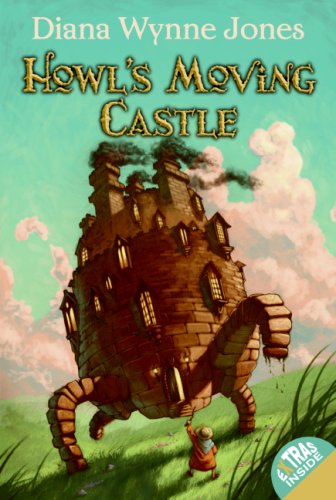
Title: Howl's Moving Castle
Author: Diana Wynne Jones
Image via Amazon

Frequent visitors to The Squid already know of my family's tremendous affection for the films of Hayao Miyazaki.  One of my favorites among them is Howl's Moving Castle (my review here).  As such, I didn't need much convincing when fellow blogger Charles the Reader recommended that I try the original novel.  Our Girl read it first, using it for a book project during the past school year and enjoying it very much.

There are perils in watching a film before reading the source material, just as there are in the opposite direction.  In either case, one comes to the second medium with strong preconceptions, sure to be challenged.  I tend to favor the book as I believe strongly in following the intent of the original author.  So, reading the story second often undermines things I thought I liked about the movie.  There are many differences between novel and movie in the case of Howl's Moving Castle, some inevitable in light of the works' relative scale but some of Miyazaki's choices sent the story on entirely different vectors.  Both stories work, though, and to the credit of both creators, Jones gave Miyazaki her blessing.

Sophie is the oldest of three sisters working in the family hat shop.  When their father dies, the two sisters are sent off for apprenticeships elsewhere but Sophie stays.  One day, the Wicked Witch of the Waste comes in and turns Sophie into an elderly woman, for reasons our heroine does not understand.  She leaves home to wander the world and find her new place in it.  She encounters, as the title suggests, a moving castle and manages to get inside.  There she befriends Calcifer, the fire demon who steers the ship, as it were; Michael, a teenage boy who serves as a wizard's assistant and, eventually, Howl the wizard who owns the castle.  With a few changes in details, the basic set up of the movie is the same.

In the book, the area Howl and his castle roam is significantly broadened, including trips to modern Wales - a story element abandoned for the film.  In the novel, Howl engages in direct battle with the Witch whereas he avoids all conflict in Miyazaki's interpretation.  The end result is essentially the same for Sophie but the adventures that bring her there are quite different between the two media.  I'll be curious to watch the movie again sometime to know how my exposure to the original impacts my perception.

I'm also interested in further Sophie and Howl adventures.  Moving Castle was the first of a three-part series.  Castle in the Air was published in 1990, House of Many Ways in 2008.  Diana Wynne Jones passed away in 2011 at the age of 76.

Please join us and share your own review of your best read from the past month.  This month's link list is below.  I'll keep it open until the end of the day.  I'll post August's tomorrow.  Meetings are the last Friday of each month.  Next gathering is August 30th.


Wednesday, July 24, 2013

Double Barrel #11

Title: Double Barrel
Issue: #11
Release: July 2013
Writers: Kevin and Zander Cannon
Artists: Kevin and Zander Cannon

Image via Top Shelf Productions

The Cannons have been quite busy over the past few months with the release of the trade publications of their Double Barrel serials.  Zander's Heck and Kevin's Crater XV are both available wherever books are sold.  Due to the hectic schedule, it's been a couple of months since web issues were posted but #11 is now on sale.  I got my copy at comiXology.

In this, the penultimate installment, both stories race to the finish line.  Heck strives to rescue his sidekick Elliott while the stage is set for revelations about the key players in Crater XV.   Also included are The Clandestinauts by Tim Sievert, True Tales of Jin by Zander and How to Make Distinctive Looking Characters, also by Zander.  Frequent visitors already know that the How to: section is usually my favorite.  Zander opens his treatise with the assertion that Bruce Wayne is the most famous cartoon character in the world without a distinctive look.  I'd never thought of that before.

Monday, July 22, 2013

Baseball Tunes: Detroit Rock City


"Detroit Rock City" was the third single released from Kiss's 1976 album Destroyer. While the single did not sell well initially, the long-term legacy is a strong one.  VH1 featured it at #6 on their Greatest Metal Songs countdown.  Baseball's Detroit Tigers often uses the song at the beginning of games as the team takes the field.  Hockey's Red Wings also make frequent use of the tune.


My Baseball Fantasy

Vermont League: lost, 4-6 (82-57-11 overall, 1st place out of 12 teams)
Maryland League: won, 7-3 (81-60-9, 4th of 10)
Public League: 78 Rotisserie points (4th of 12)
My Player of the Week: Kenley Jansen (Relief Pitcher, Dodgers) with 4 strikeouts, a 0.00 ERA, a 0.00 WHIP and 2 net saves plus holds
Photo via Wikipedia


Sunday, July 21, 2013

Family Movie Night: The Trouble with Harry

Title: The Trouble with Harry
Director: Alfred Hitchcock
Original Release: 1955
Choice: My Wife's
My Overall Rating: 3 stars out of 5
Image via Amazon

Alfred Hitchcock did not direct a lot of comedies.  I suppose it shouldn't be a surprise that one of the few he did make tended towards darkness.  The Trouble with Harry is based on the novel of the same name by Jack Trevor Story.  Harry is a corpse in the woods.  Three different characters, at one point or another, claim accidental responsibility for Harry's death.  The body is buried and dug up again repeatedly throughout the story as the principals wrestle with the best way to address the situation.

The movie, a commercial flop for Hitch, was notable as the film debut of Shirley MacLaine in the role of Jennifer Rogers.  Jerry Mathers (better known as the title character in Leave It to Beaver) plays Jennifer's son Arnie.  Harry was filmed primarily in Craftsbury, Vermont, an hour or so east of us.  Apparently, natural forces were not especially cooperative.  Poor weather and an early foliage season were highly disruptive to the filming schedule.  Some of the external shots are actually California trees with Vermont leaves pinned to the branches.

Wednesday, July 17, 2013

On the Coffee Table: Roger Kahn

Title: The Boys of Summer
Author: Roger Kahn
Image via By the Book Reviews

I sought out The Boys of Summer after it was recommended by a commenter on one of my blog posts - a Paul S? anyone?  His profile is no longer active.  Kahn's book consists of two distinct parts, essentially two books in one.  The first chronicles the author's childhood in Brooklyn and his early career in  journalism.  The second part of the book recounts Kahn's later efforts to track down all of the key members of the Brooklyn Dodgers from the era he covered the baseball team in the early '50s, including Hall of Famers Roy Campanella, Pee Wee Reese, Duke Snider and Jackie Robinson.

The newspaper world of the 1940s and '50s was quite different from what it is now, in as much as it survives at all.  Kahn's paper, the New York Herald Tribune, went out of business in 1966.  He climbed the rungs from copy boy to baseball beat writer on the brink of the team's glory years.

Kahn was a boyhood fan of the team, though I have discovered quite a lot of writers who have been drawn to the bittersweet tale of the Brooklyn Dodgers - seemingly ready-made for literature.  The team was awful for years, living in the oppressive shadows of both the Yankees and the hated rival Giants.  The Dodgers finally came into their own in the 1940s, but still didn't manage to win the World Series until 1955 after several close-shave heartaches.  In 1958, the team was gone - off to California. What's not for a sentimental writer to love?

Inextricably intertwined with the tale of those Dodgers is that of Jackie Robinson, probably the single greatest story in all of American sports.  Robinson started at first base for Brooklyn on April 15, 1947, effectively integrating baseball for the first time in 60 years.  Kahn knew Robinson personally (as he did all of the players featured in the book) and as such, his presentation of the story is more textured than most.  Hero?  Of course.  Transcendent figure in American society?  Most definitely.  But he was also a human being and Kahn writes eloquently of his multiple dimensions.

While the first part of the book is interesting, the real fun is in the second.  Over the course of three years, 1968-71, Kahn traveled the country to interview 13 members of the team he'd covered in the early '50s.  He asked them all how they first came to the game - delightful tales of being discovered in schoolyards and such, marvelously quaint in today's world of independent scouting agencies and consultant coaches.  The economics of player contracts have changed exponentially since the book was published so most of the retired players still had to work for a living.  Kahn also asked all of them about playing with Jackie Robinson - marvelous perspective from the people in best position to comment.

Social politics have come a long way since the early '70s.  Most noticeable is the discussion of Clem Erskine's son who has Down syndrome.  Kahn uses terminology which was normal for the time but wouldn't come anywhere close to acceptable 40 years later.  Comments on race and gender also frequently fall short of 21st century sensibilities.