Showing posts with label baseball. Show all posts

Sunday, November 10, 2013

On the Coffee Table: Once More Around the Park

Title: Once More Around the Park: A Baseball Reader
Author: Roger Angell
via Amazon

Roger Angell, now 92 years old, is one of America's foremost baseball writers.  I have reviewed two of his books previously: Five Seasons and Game Time.  Once More Around the Park cobbles together essays from several previous collections but also includes some new material.  Of the chapters I'd read before in other books, the best is "Distance," a profile of Hall of Famer Bob Gibson.  Thoughts on the new stuff - at least, new to me - is on offer below.

My least favorite part of Angell's books is usually the season recaps.  Occasional piercing insights creep in from time to time but generally speaking, those sections suffer from a one-thing-after-another feel.  He is a much stronger writer when he takes the broad view.  Many of the essays in this particular collection address the joys of fandom, following the game through box scores, daydreaming during the off-season and pitting the stars of yesteryear against one another in our mind's eye.  For Angell, this is serious stuff, his own passion for the game anything but casual.  He lives it and in his finest moments, I want to live it with him. 

"In the Country" was probably my favorite chapter.  In that August 1981 essay, Angell profiles Ron, a pitcher in his late-20s trying to work his way back into the game in the semi-pro leagues, and his wife Linda.  That particular story takes place mostly in northwest Vermont, not too far from our home.  My own familiarity with the setting adds significant charm.

"No, But I Saw the Game," first published in Summer 1989, is a brief survey of baseball movies and their varying reflections of the real game.  Angell poured effusive praise upon Bull Durham and, to be honest, I might have stopped reading if he hadn't.  He felt it was the first and only baseball film to present the game and its players in a realistic light.  He was less impressed by Eight Men Out and Major League and thoroughly panned Field of Dreams.  He touched on a few of the older movies, too, most notably Pride of the Yankees and Bang the Drum Slowly.

I am not prepared to devote as much of my own life to following baseball as Roger Angell has but his books always leaving me wishing I could.  Never content with any one perspective, he seeks out stories from fans, executives, coaches, umpires and, of course, players both amateur and legendary.  Baseball is one sport that is almost as much fun to read about as it is to watch and Angell is one of my favorite guides.

Monday, August 19, 2013

Baseball Tunes: Wild Thing


In the 1989 film Major League, protagonist relief pitcher Rick Vaughn (played by Charlie Sheen) adopted "Wild Thing" as his theme song, to play over the PA system whenever he came into a game from the bullpen.  The movie used a cover version by the punk band X, rather than the better-known Troggs recording.

I don't know if entrance music was a big thing in baseball before the movie but the idea has certainly taken hold since.  These days, it seems half the players - both batters and pitchers - have a song that plays when they enter a ballgame.  I actually think it's highly inappropriate for a team sport but I suppose the marketing people know what they're doing.

The song itself was first recorded by The Wild Ones in 1965.  However, it was the Troggs' 1966 cover that went to the top of the charts.  The middle instrumental section features an ocarina - certainly unusual for a pop song.


My Baseball Fantasy

Vermont League: won, 7-3 (112-67-11 overall, 1st place out of 12 teams)
Maryland League: tied, 5-5 (99-81-10, 4th of 10)
Public League: 81.5 Rotisserie points (4th of 12)
My Player of the Week: Jason Heyward (Right Fielder, Braves) with 3 home runs, 5 runs, 4 RBI and a .385 batting average

via New York State of Sports

Sunday, August 18, 2013

On the Coffee Table: Neil Lanctot

Title: Negro League Baseball
Author: Neil Lanctot
via Baseballisms

Negro League Baseball: The Rise and Ruin of a Black Institution is the result of an ambitious project to provide an honest, nuanced history of African American baseball, specifically that of the teams in the Negro National League (NNL) from the early 1930s onward.  When told from the 21st century perspective, the story of the Negro leagues is that of six decades of exclusion from white professional baseball, generations of athletes denied the opportunity to exhibit their skills on the grandest stage.  While such portrayal is certainly historically accurate, it only tells part of the story.

There aren't a lot of balls and strikes in Lanctot's book.  In depth profiles of such star players as Satchel Paige, Josh Gibson and even Jackie Robinson should be sought elsewhere.  Instead, the author focuses more on the business of baseball.  Before televisions invaded nearly every home in America, independent professional and semi-pro baseball teams - both black and white - were ubiquitous.  Baseball teams, like many other black-owned and operated institutions, were culturally essential to African American communities throughout the United States during segregation.  Such teams were symbolically important to those cultural leaders who supported the idea of self-sustaining black institutions.  Black baseball was not an industry in a vacuum either.  It suffered through the Great Depression, boomed during the war years, then suffered a slow, inevitable decline once the Major Leagues started to integrate in the late 1940s.  Lanctot's tome covers all of it evenhandedly, celebrating the successes but also critical of the mismanagement which contributed to the industry's demise.

I learned plenty I didn't know before.  Most intriguing, though also the most troubling depending on your perspective, were the Indianapolis Clowns, a baseball version of the Harlem Globetrotters.  Many saw clowning sports teams as detrimental to integration efforts, compromising the image of African Americans in the broader culture.  The Clowns, to be fair, took the act quite a bit further than the basketball squad, posing for team photos in war paint and grass skirts, for example.  Both the eastern-based NNL and western/southern Negro American League (NAL) banned their member teams from scheduling exhibitions with the Clowns for many years.  However, the Clowns were ultimately admitted into the NAL in 1943 and were the only affiliated team to remain profitable into the 1950s.  The Clowns didn't even officially disband until 1988.  Despite their controversial history, the Clowns do lay one undeniable claim to baseball legacy: they were the first team to sign Hank Aaron to a professional contract.

The book is a bit academic for my tastes, certainly informative but dry for light summer reading.  I need pure escape in August with a return to the mines imminent.  On the other hand, I might not even have finished reading it if I'd tried during the school year.  I certainly feel better-informed and will likely refer back to the book from time to time.

Monday, August 12, 2013

Baseball Tunes: Don't Stop Believin'

Millennia from now, cultural historians will ponder the eternal appeal of two songs released in 1981.  The first they will know because it never truly died.  As long as there are dance clubs in the universe, Soft Cell's "Tainted Love" shall live forever (Dr. Who fans know this to be true but I actually had the theory first - wife will confirm). The second one they'd forgotten about for a time.  In fact, it had a funny habit of disappearing for years, even centuries at a time.  Then it would emerge again to capture the imagination of a new era.  It is a song of hope, of determination, of destiny used to inspire athletic heroes and angst-ridden preteens alike.  Even the name of the band suggests epic adventure.  That second song, of course, shall be...

"Don't Stop Believin'" by Journey


As far as sports go, my strongest association with the song is Detroit Red Wings hockey games.  The sound system cuts out so the crowd can yell the "born and raised in south Detroit" line.  Never mind the fact that there is no south Detroit.  Or, there is but it's more commonly known as Windsor, Ontario.

Other teams frequently co-opt the song, though.  In recent years, baseball's Chicago White Sox, Los Angeles Dodgers and San Francisco Giants have all used it as an inspirational anthem.  Lead singer Steve Perry is himself a native Californian and a die-hard Giants fan.  Apparently, he didn't like the Dodgers using it one bit!

"Don't Stop Believin'" was one of three top 10 singles released from the band's most successful studio album, Escape.  Both "Open Arms" and "Who's Crying Now" charted higher but 32 years on, there's little doubt as to which track has the strongest legacy. 

I must credit Suze with finding this one a while back - definitely worth sharing:


Some will win.
Some will lose.
Some were born to sing the blues.
Oh, the movie never ends.
It goes on and on and on and on...


My Baseball Fantasy

Vermont League: won, 9-1 (105-64-11 overall, 1st place out of 12 teams)
Maryland League: lost, 4-5-1 (94-76-10, 4th of 10)
Public League: 82 Rostisserie points (4th of 12)
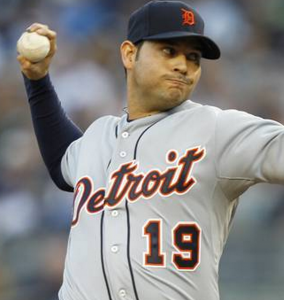
My Player of the Week: Anibal Sanchez (Starting Pitcher, Tigers) with 1 win, 19 strikeouts, a 2.45 ERA and a 0.75 WHIP
via Wikipedia

Sad tale: I lost to my daughter in the Maryland league this week - my daughter who stopped paying attention to her team almost the same instant she started, back in March.

Monday, August 5, 2013

Baseball Tunes: Build Me Up Buttercup


"Build Me Up Buttercup" was written by Mike d'Abo and Tony Macaulay and released as a single by the Foundations in 1968.  The song made it to #3 on the Billboard charts.  Side note: d'Abo is most famous as the lead singer for Manfred Mann but he's also the father of Olivia d'Abo, whom Wonder Years fans will remember as Karen, Kevin's older sister.

"Build Me Up Buttercup" is the seventh-inning stretch song for the Los Angeles Angels of Anahaeim (most cumbersome name in American sports?).  It is played right after "Take Me Out to the Ballgame."


My Baseball Fantasy

Vermont League: won, 7-3 (96-63-11 overall, 1st place out of 12 teams)
Maryland League: lost, 4-6 (90-71-9, 4th of 10)
Public League: 83 Rotisserie points (tied for 2nd of 12)
My Player of the Week: Dustin Pedroia (Second Baseman, Red Sox) with 2 home runs, 8 RBI, 5 runs and a .233 batting average
Photo via BlackSportsOnline

Monday, July 29, 2013

Baseball Tunes: Cleveland Rocks


Ian Hunter rose to fame as lead singer of the glam rock band Mott the Hoople.  The band split in 1974 but Hunter kept writing songs.  He wrote "Cleveland Rocks" in tribute to a city he felt was undeservedly the butt of jokes.  An earlier version was called "England Rocks" in order to get the song released as a single but Hunter claims it was always Cleveland's song.  "Cleveland Rocks" is best known to those outside of Ohio as the theme song for The Drew Carey Show (covered in this case by The Presidents of the United States of America).


Almost immediately upon its release in 1979, "Cleveland Rocks" became the city's unofficial anthem.  All of Cleveland's professional teams, including baseball's Indians, use the tune as a victory song.  Then-mayor Dennis Kucinich gave Hunter a key to the city in 1979. 

Full disclosure: my mother is from Cleveland so while I've never lived there myself, I do have some affection for the old rust belt town.  I haven't been back since my grandmother died in '97 and have never visited either the Rock and Roll Hall of Fame or Jacobs Field, the two crown jewels of the city's modern renaissance.  There are quite a lot of other places I'd like to visit first but a pilgrimage might be in order someday.


My Baseball Fantasy

Vermont League: won, 7-3 (89-60-11 overall, 1st place out of 12 teams)
Maryland League: tied, 5-5 (86-65-9, 4th of 10)
Public League: 83 Rotisserie points (3rd of 12)
My Player of the Week: Jon Lester (Starting Pitcher and Cancer Survivor, Red Sox) with 2 wins, 16 strikeouts, a 1.35 ERA and a 0.98 WHIP
Photo via PlayerWives.com

Monday, July 22, 2013

Baseball Tunes: Detroit Rock City


"Detroit Rock City" was the third single released from Kiss's 1976 album Destroyer. While the single did not sell well initially, the long-term legacy is a strong one.  VH1 featured it at #6 on their Greatest Metal Songs countdown.  Baseball's Detroit Tigers often uses the song at the beginning of games as the team takes the field.  Hockey's Red Wings also make frequent use of the tune.


My Baseball Fantasy

Vermont League: lost, 4-6 (82-57-11 overall, 1st place out of 12 teams)
Maryland League: won, 7-3 (81-60-9, 4th of 10)
Public League: 78 Rotisserie points (4th of 12)
My Player of the Week: Kenley Jansen (Relief Pitcher, Dodgers) with 4 strikeouts, a 0.00 ERA, a 0.00 WHIP and 2 net saves plus holds
Photo via Wikipedia


Wednesday, July 17, 2013

On the Coffee Table: Roger Kahn

Title: The Boys of Summer
Author: Roger Kahn
Image via By the Book Reviews

I sought out The Boys of Summer after it was recommended by a commenter on one of my blog posts - a Paul S? anyone?  His profile is no longer active.  Kahn's book consists of two distinct parts, essentially two books in one.  The first chronicles the author's childhood in Brooklyn and his early career in  journalism.  The second part of the book recounts Kahn's later efforts to track down all of the key members of the Brooklyn Dodgers from the era he covered the baseball team in the early '50s, including Hall of Famers Roy Campanella, Pee Wee Reese, Duke Snider and Jackie Robinson.

The newspaper world of the 1940s and '50s was quite different from what it is now, in as much as it survives at all.  Kahn's paper, the New York Herald Tribune, went out of business in 1966.  He climbed the rungs from copy boy to baseball beat writer on the brink of the team's glory years.

Kahn was a boyhood fan of the team, though I have discovered quite a lot of writers who have been drawn to the bittersweet tale of the Brooklyn Dodgers - seemingly ready-made for literature.  The team was awful for years, living in the oppressive shadows of both the Yankees and the hated rival Giants.  The Dodgers finally came into their own in the 1940s, but still didn't manage to win the World Series until 1955 after several close-shave heartaches.  In 1958, the team was gone - off to California. What's not for a sentimental writer to love?

Inextricably intertwined with the tale of those Dodgers is that of Jackie Robinson, probably the single greatest story in all of American sports.  Robinson started at first base for Brooklyn on April 15, 1947, effectively integrating baseball for the first time in 60 years.  Kahn knew Robinson personally (as he did all of the players featured in the book) and as such, his presentation of the story is more textured than most.  Hero?  Of course.  Transcendent figure in American society?  Most definitely.  But he was also a human being and Kahn writes eloquently of his multiple dimensions.

While the first part of the book is interesting, the real fun is in the second.  Over the course of three years, 1968-71, Kahn traveled the country to interview 13 members of the team he'd covered in the early '50s.  He asked them all how they first came to the game - delightful tales of being discovered in schoolyards and such, marvelously quaint in today's world of independent scouting agencies and consultant coaches.  The economics of player contracts have changed exponentially since the book was published so most of the retired players still had to work for a living.  Kahn also asked all of them about playing with Jackie Robinson - marvelous perspective from the people in best position to comment.

Social politics have come a long way since the early '70s.  Most noticeable is the discussion of Clem Erskine's son who has Down syndrome.  Kahn uses terminology which was normal for the time but wouldn't come anywhere close to acceptable 40 years later.  Comments on race and gender also frequently fall short of 21st century sensibilities.

Monday, July 15, 2013

Baseball Tunes: Let's Go, Go-Go White Sox


The cumbersomely titled "Let's Go, Go-Go White Sox" was written in 1959 by Al Trace and Walter "Li'l Wally" Jagiello.   The emergence of the college-fight-song style tune coincided with Chicago's American League pennant that same year, the team's first since the scandal-ridden squad of 1919.  The song essentially disappeared until an unearthing on the JumboTron in 2005, the next year the team won its league and, in fact, went on to win the World Series.  It is now used quite often when the team is rallying.


My Baseball Fantasy

Vermont League: currently leading, 5-4-1 (2-week matchup) (78-51-11 overall, 1st place out of 12 teams)
Maryland League: currently leading, 7-3 (74-57-9, 4th of 10)
Public League: 81 Rotisserie points (3rd of 12)
My Player of the Week: Adrian Beltre (Third Baseman, Rangers) with 3 home runs, 8 RBI, 4 runs and a 1.245 OPS

Photo via Saber Analysis

Monday, July 8, 2013

Baseball Tunes: Meet the Mets

The New York Mets had a song before they even had a baseball team.  "Meet the Mets" was written by Ruth Roberts and Bill Katz in 1961.  The ball club did not officially take the field until 1962.  The song has made at least two appearances in television sit-coms - Seinfeld and Everybody Loves Raymond - and still serves as theme music for game broadcasts.


Monday, July 1, 2013

Baseball Tunes: High Hopes

"High Hopes", written by Jimmy Van Heusen and Sammy Cahn, was an Oscar-winning song in 1959, featured in the movie A Hole in the Head.  The most popular version was sung by Frank Sinatra.


Harry Kalas, the longtime play-by-play announcer for the Philadelphia Phillies, sang the song after the team won the National League Championship in 1993 and again when they won the World Series in 2008.


Since Kalas's passing in 2009, fans at Citizens Bank Park sing the song after every Phillies home run while a video of Kalas plays on the scoreboard.


My Baseball Fantasy

Vermont League: lost, 4-5-1 (70-49-11 overall, 1st place out of 12 teams)
Maryland League: won, 8-2 (67-56-7, 4th of 10)
Public League: 90 Rotisserie points (2nd of 10)
My Player of the Week: Buster Posey (Catcher, Giants) with 4 home runs, 6 RBI, 4 runs and a 1.742 OPS
Photo via Celebrity Net Worth

Monday, June 24, 2013

Baseball Tunes: We Are Family

The disco classic "We Are Family" by Sister Sledge was released in September of 1979, right in the middle of baseball's pennant race.  Willie Stargell, star of the Pittsburgh Pirates, claimed the song as an anthem for his team.  The Pirates went on to win their division by two games, sweep the NLCS and beat the heavily-favored Orioles in the World Series in seven games.  Memories of the '79 Pirates are forever inextricably linked to the song.


My own favorite use of the song is the opening shot of The Birdcage. Pure cinema magic:


My Baseball Fantasy

Vermont League: won, 5-4-1 (66-44-10 overall, 1st place out of 12 teams)
Maryland League: tied, 5-5 (59-54-7, 4th of 10)
Public League: 85.5 Rotisserie points (2nd of 12)
My Player of the Week: David Wright (Third Baseman, Mets) with 3 home runs, 5 RBI, 5 runs and a .361 batting average

Photo via DraftStreet.com

Saturday, June 22, 2013

On the Coffee Table: Tom Swift

Title: Chief Bender's Burden
Author: Tom Swift
Image via University of Nebraska Press

Charles Albert Bender (1884-1954) was the go-to pitcher on one of the greatest teams in the history of baseball: the Philadelphia Athletics club that won four American League pennants and three World Series titles between 1910 and 1914.  When legendary manager Connie Mack needed a big win, Bender was his first choice to take the mound.  Then, after one terrible game, Game 1 of the '14 World Series, everything fell apart.  Bender started the day as one of the most reliable players in the sport.  At the end of the day, he was a has-been.  It is one of the cruelest, most mystifying tales in the game.  As Swift's biography clearly attests, the reality was more complicated.

The Chief Bender story is about a lot more than baseball.  Bender was a member of the Ojibwa tribe, thus the sadly inevitable nickname.  While not the first Native American in Major League baseball, he was almost certainly the most successful.  Racial prejudice was a fact of his life from beginning to end.  An alumnus of the now infamous Carlisle Indian School, Bender endured taunts and slurs from players, fans and journalists throughout his career.  Even the obituary writers couldn't resist.  "Chief Bender Answers Call to Happy Hunting Grounds," wrote The Sporting News.

Swift's account is very engaging.  The story is told in medias res, interspersing tales of that fateful day in 1914 with summaries of earlier triumphs.  As a result, it's occasionally confusing to remember which game is presently under examination.  Regardless, the point is clearly made: Bender was a phenomenal pitcher and his "one bad day" and its aftermath were the culmination of numerous external factors.  His baseball contemporaries held him in very high regard.  Ty Cobb, one of history's most notoriously bigoted athletes, considered him the most intelligent pitcher he'd ever faced.  Discussion of his life after pitching is relatively brief, but warming.  Bender managed to stay in the sport in one capacity or another for the rest of his life and was remembered with affectionate admiration by those who knew him. 

Monday, June 17, 2013

Baseball Tunes: Go, Cubs, Go

Steve Goodman, folk singer and lifelong Chicago Cubs fan, wrote the song "Go, Cubs, Go" in 1984 at the request of WGN, the team's broadcast partner.


In 1981, Goodman had written "A Dying Cubs Fan's Last Request" about the team's long history of futility (last World Series championship in 1908 - the longest title drought of any team in US professional sports).  Baseball people being notoriously superstitious, the Cubs had banned him from performing it at Wrigley Field.  In the video, he is playing from one of the nearby "Wrigley rooftops" - not actually on stadium grounds:


In September of that same season of '84, Goodman died of leukemia at the age of 36.  Four days later, the Cubs clinched their first playoff berth since 1945.  In the years since, "Go, Cubs, Go" has at various times been the official team song and the official victory song.  In April 1988, some of Goodman's ashes were scattered at Wrigley Field.


My Baseball Fantasy

Vermont League: won, 6-4 (61-40-9 overall, 1st place out of 12 teams)
Maryland League: lost, 3-7 (54-49-7, 5th of 10)
Public League: 87 Rotisserie points (2nd of 12)
My Player of the Week: Carlos Gonzalez (Left Fielder, Rockies) with 3 home runs, 6 runs, 8 RBI, 1 stolen base and a .476 batting average

Photo via Colorado Pro Sports

Monday, June 10, 2013

Baseball Tunes: O Canada

"O Canada" is, of course, Canada's national anthem. The music was composed by Calixa Lavallée in 1880.  The French lyrics were written that same year by Adolphe-Basile Routhier, the original English lyrics in 1908 by Robert Stanley Weir.  The English lyrics have since been revised twice, adopted in their present form in 1980 when the song officially became Canada's anthem.

"O Canada" is performed at every game played by the Toronto Blue Jays, home or away.  The song is also performed, along with "The Star-Spangled Banner," at the Major League Baseball All-Star Game.  Sarah McLachlan in 1996:


My Baseball Fantasy

Vermont: won, 7-3 (55-36-9 overall, 2nd place out of 12 teams)
Maryland: won, 6-4 (51-42-7, 4th of 10)
Public: 86 Rotisserie points (2nd of 12)
My Player of the Week: Jordan Zimmerman (Starting Pitcher, Nationals) with 1 win, 12 strikeouts, a 0.00 ERA and a 0.60 WHIP

Photo via Wikimedia Commons

Monday, June 3, 2013

Baseball Tunes: Here Come the Yankees

"Here Come the Yankees" has been the official song of the New York Yankees since 1967.  It was composed by Bob Bundin and Lou Stallman, recorded by the Sid Bass Orchestra and Chorus.  I mean no disrespect to Messrs. Bundin and Stallman, who were just doing their job.  However, this is the city that spawned Tin Pan Alley, Broadway, The Cotton Club, Aaron Copland, the Met and Leonard Bernstein.  And, love 'em or hate 'em (for me, it's the latter), this is one of the greatest sports franchises in the world.  Something classier than a 1960s ad jingle is in order.


No doubt thinking along the same lines has led the following to become the Yanks' unofficial song, also quite fittingly played by teams in the organization's farm system.


Sinatra was a Jersey native and a devoted Yankee fan.

My Baseball Fantasy

Vermont League: won, 6-4 (48-33-9 overall, 1st place out of 12 teams)
Maryland League: won, 7-2-1 (45-38-7, 4th of 10)
Public League: 84.5 Rotisserie points (2nd of 12)
My MVP for the Week: Jarrod Parker (Starting Pitcher, A's) with 2 wins, 11 strikeouts, a 1.35 ERA and a 0.75 WHIP

Photo via The Afroed Elephant

Monday, May 27, 2013

Baseball Tunes: Tessie

"Tessie" has been associated with Boston baseball since the 1903 World Series.  The team then known as the Boston Americans came from behind to win that year's championship with the support of their Royal Rooters who bellowed the song from the stands.  The song itself comes from a long-forgotten Broadway musical called The Silver Slipper.
 

The Dropkick Murphys, a Boston institution in their own right, updated the song in 2004:


The song more closely associated with the Red Sox these days is "Sweet Caroline" by Neil Diamond.  After the Boston Marathon bombing in April, the song was played and sung in baseball stadiums across America in tribute to the victims.  Most notably, the song was played at Yankee Stadium, home to the Red Sox' hated arch-rivals.  I really want the following video to be more than it is but it's the best recording I could find of that moment:


More satisfying is the following from the Salt Lake City Marathon:


Eyes still dry?  This one might do the trick. Neil Diamond himself showed up at Fenway in Boston to show his support and lead the crowd in a rousing rendition:


The lesson is clear.  Music can heal and small gestures are powerful.  "Where it began, I can't begin to knowin'..."

 
My Baseball Fantasy

Vermont League: won, 6-2-2 (42-29-9 overall, 1st place out of 12 teams)
Maryland League: won, 4-3-3 (38-36-6, 4th of 10)
Public League: 84 Rotisserie points (2nd of 12)
My Player of the Week: Anibal Sanchez (Starting Pitcher, Tigers) with 1 win, 12 strikeouts, a 0.00 ERA and a 0.44 WHIP
Photo via Bleacher Nation

Sanchez only had one start last week but it was a beauty: a one-hit, complete game shutout against the Twins.  It wasn't even the best game of his career.  He pitched a no-hitter in just his 13th Major League start on September 6, 2006.  I've got him in both the Vermont and Maryland leagues. 

Monday, May 20, 2013

Baseball Tunes: Thank God I'm a Country Boy


Since the glory days of the 1970s, the Baltimore Orioles have played John Denver's "Thank God I'm a Country Boy" during the seventh-inning stretch.  I have never understood this tradition.  I grew up in Maryland - granted DC area, not Baltimore.  I know the town well enough to say that it's about as urban as an American city can be.  How anyone in Baltimore can claim to be a country boy (or girl) is beyond me.  Maybe Earl Weaver was a John Denver fan.

At any rate, it's a fun song.  My favorite rendition, however, is Jim Nabors's performance on The Muppet Show:


Nabors is actually quite an accomplished singer - his recordings a fair sight better than the usual celebrity vanity project.  He made his television singing debut as Gomer Pyle - his career-defining role - on The Andy Griffith Show:


My Baseball Fantasy

Vermont League: won, 6-4 (36-27-7 overall, 1st place out of 12 teams)
Maryland League: lost, 3-6-1 (34-33-3, 4th of 10)
Public League: 84 Rotisserie points (2nd of 12)
My Player of the Week: Carlos Gonzalez (Left Fielder, Rockies) with 3 home runs, 8 RBI, 8 runs, 3 stolen bases and a .375 batting average

Photo via Denver Westword Blogs

Monday, May 13, 2013

Baseball Tunes: God Bless America


Since the terrorist attacks of September 11, 2001, "God Bless America" has become the seventh-inning stretch song of choice at many American ballparks, supplanting "Take Me Out to the Ballgame."  Tin Pan Alley legend Irving Berlin wrote the song in 1918 while serving in the Army.   While the song does have a verse, most performers skip it and go straight to the chorus.


My Baseball Fantasy

Vermont League: tied, 5-5 (30-23-7 overall, 1st place out of 12 teams)
Maryland League: won, 6-3-1 (31-27-2, 4th of 10)
Public League: 85.5 Rotisserie points (3rd of 12)
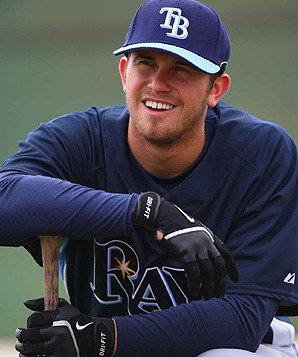
My Player of the Week: Evan Longoria (Third Baseman, Rays) with 3 home runs, 11 RBI, 8 runs and a .464 batting average
 Photo via Tumblr

Monday, May 6, 2013

Baseball Tunes: Centerfield


John Fogerty's 1985 single "Centerfield" had only modest chart success, topping out at #44 on the Billboard Hot 100.  28 years later, it is on the must-play list at every baseball game with an adequate sound system.  The song references players both real - Mays, Cobb and DiMaggio - and fictional - Casey at the Bat.  Part of Fogerty's inspiration came from a Chuck Berry song, "Brown Eyed Handsome Man."  The following lyric was lifted directly from the Berry tune:
Rounding third he was headed for home,
It was a brown eyed handsome man.
To me, "Centerfield" is so much more than a baseball song.  No rock tune better encapsulates the pure joy of a beautiful summer day.  Eat your hearts out, Beach Boys!

Wanna get your music geek on/drive yourself insane?  Try to do the claps and sing the guitar riff at the same time without messing up the rhythm of either.  It's a cross-rhythm.  If you can do it, go sign yourself up for percussion lessons right now!


My Baseball Fantasy

Vermont League: lost, 4-5-1 (25-18-7 overall, 1st place out of 12 teams)
Maryland League: lost, 1-9 (25-24-1, 6th of 10)
Public League: 80.5 Rotisserie points (3rd of 12)
My Player of the Week: Mike Trout (Center Fielder, Angels) with 3 home runs, 10 RBI, 7 runs, 1 stolen base and a .313 batting average
Photo via The Sports Quotient

I am playing in three very different fantasy baseball leagues this year.  This is my fourth year in the Vermont league with Mock and his cousins.  It's a live online draft, head-to-head league.  I am commissioner and three-time defending champion (coincidence, I swear).  The Yahoo! public league is live online draft, Rotisserie.  New this year is the Maryland league, started by a high school friend who wanted a league his kids could join - an auto draft, head-to-head league. 

My daughter technically has a team in the Maryland league, too, though she is essentially a non-participant.  Her one parameter as I helped her set up for the auto-draft was that she didn't want any Yankees on her team.  She has ignored her team ever since.  Oh well, free win for everyone else.

For the most part, all three teams are doing well.  My Maryland league team survived a weak start - partially due to not entirely understanding the league rules - to climb to second place as recently as a week ago.  As you can see, though, I had my hat handed to me in my most recent matchup and my standing tumbled.

Mike Trout, one of last year's wunderkinds, also started the season slow but has been a beast of late.  I had first pick in the public league draft and grabbed the Angel outfielder, Yahoo!'s top-rated fantasy player heading into the season.  His performance will be key to my own success.