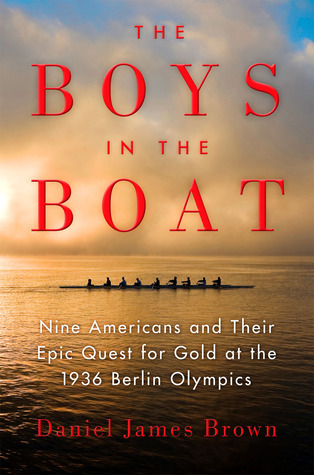
Title:
The Boys in the Boat: Nine Americans and Their Epic Quest for Gold at the 1936 Berlin Olympics
Author: Daniel James Brown
In the 1930s, rowing was one of the most popular
sports in the United States, the major races being broadcast on radio
nationwide. The annual Harvard-Yale regatta, inaugurated in 1852, was
the first intercollegiate sporting event. By the '30s, UC-Berkeley and
the University of Washington had overtaken the eastern schools as the
major powers in the sport. The Washington Huskies, though, were still
playing second-fiddle to their rivals in California.
The Boys in the Boat
tells the tale of the crewmen who changed all of that, nine young men
of humble origins in troubled times in what was still a remote part of
the country.
For the most part, the story is told from
the point of view of Joe Rantz, one of the oarsmen. Essentially
abandoned by his own family in his teens, he learned to survive on his
own and put himself through college. Crew provided a sense of purpose
and belonging. It also gave him a fantastic tale to tell for the rest
of his life. Through him, we get a sense not only of the group's
extraordinary achievements but of the devastating impact the Great
Depression had on the lives of families all over the country.
The
most endearing characters of the book, however, are George Pocock, the
boat builder at Washington, and Bobby Moch, the crew's coxswain. Pocock
overcame his own humble London origins to become a giant in the rowing
world. He supplied boats for Washington as well as most of the other
major programs in the United States. He also provided sage, invaluable
mentoring for the coaches and rowers who came through the Washington
program.
As for Moch, a crew's coxswain is inevitably
the object of curiosity. The little man or woman in a sport of giants,
the cox steers the boat and manages the stroke rate for the oarsmen. He
(or she) is the only one facing forward and therefore the one with the
best sense of the boat's position in relation to the competition, not to
mention the finish line. Moch, in particular, is quite the fearless
smart ass. His downright ballsy decision-making leads the team to
greatness. His personal history also provides an astonishing wrinkle
towards the end of the book.
Of course, there's another essential backstory to all of this.
The Boys in the Boat
also covers the Third Reich's preparations for the 1936 Olympics. I
visited Berlin's Olympic Stadium when I was eleven. My knowledge of the
event was limited to that of an average sports fan - i.e., I knew about
Jesse Owens and not much else. Jesse Owens, by any measure, was one of
the most extraordinary athletes of his era and his four gold medals,
heralded as the symbolic victory of a black man over the Nazis, is one
of the great sports stories of the 20th century. But the sad fact of
the matter - for Owens, for the Washington crew, for the whole Olympic
movement - is that the USA and its allies probably should have stayed
away completely. The Olympics were a triumphant, public relations
bonanza for Hitler and his cronies. They successfully deceived the
world into believing that the horrifying rumors surrounding their regime
were exaggerated. If ever there were an Olympics to boycott, it was
the '36 Games in Berlin. But the world chose to look the other way, a
decision made all the easier here by the plague of anti-Semitism in the
United States. And before we all wear out our arms patting ourselves on
the back over Jesse Owens, it's worth remembering that it would still
be another 28 years before the Civil Rights Act passed. Brown's book
pulls few punches, providing a sobering picture indeed.
The Boys in the Boat
is an emotional experience. As a sports fan, I was grateful for the
insight into a sport I know nothing about. As a student of history, I
am humbled by those who overcame the considerable challenges of the
era. I recommend the book highly to anyone with an interest in the time
period, whether they know anything about rowing or not.