Tuesday, August 4, 2015

Clone Wars: Lair of Grievous

My friends and I are embarking on an exploration of Star Wars: The Clone Wars.  Every Tuesday, we will be featuring an episode from the series which began in 2008 (as opposed to the one that started in 2003).  All are welcome to join us for all or parts of the fun.

Episode: "Lair of Grievous"
Series: Star Wars: The Clone Wars
Season 1, Episode 10
Original Air Date: December 12, 2008
via Wookieepedia
Phew, not a jail break...

Last week, Separatist leader Nute Gunray escaped Jedi imprisonment.  Now Jedi Kit Fisto and his former Padawan, Nahdar Vebb, head off in pursuit.  The trail leads them to General Grievous's castle.  The inevitable confrontation is steeped in significance for both sides.  GG, after numerous embarrassments, is eager to get back in the good graces of his master, Count Dooku.  Meanwhile, Vebb is eager to prove he has the skill and bravery to match his new status as Jedi Knight.  Foreshadowing is nearly always dripping from the walls in The Clone Wars and "Lair of Grievous" is no exception.

*****
via The Clone Wars Wiki
Kit Fisto was first introduced in Attack of the Clones.  He was originally intended as a Sith character but ended up with the good guys in the end.  He is a Nautolan from the planet Glee Anselm, a water world.
via The Mortal Kombat Wiki
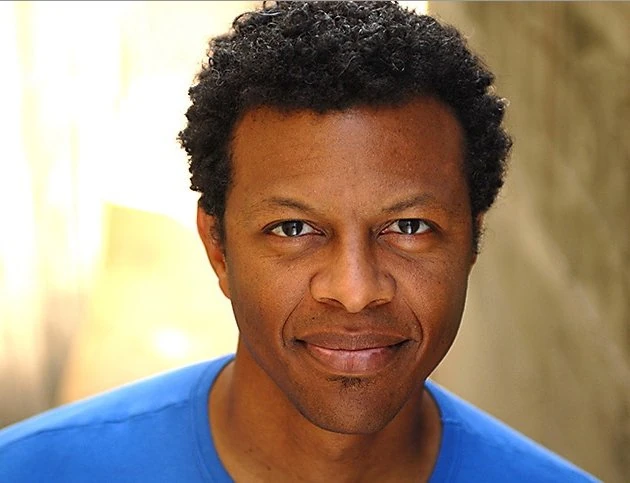
In The Clone Wars, Fisto is voiced by Phil LaMarr.  LaMarr was born January 24, 1967 in Los Angeles.  A graduate of the Yale Drama School, LaMarr is an accomplished improv actor.  At Yale, he was a co-founder of the improv troupe Purple Crayon.  After graduating, he became a member of the Groundlings.  He was also one of the original cast members of MADtv.  Film enthusiasts would recognize him from the vital yet regrettably brief role of Marvin in Pulp Fiction. 

LaMarr's voice work dates back to high school when he performed a role in the Mister T cartoon.  He played the title role in Samurai Jack, John Stewart/Green Lantern in Justice League and Hermes Conrad in Futurama.  In the new Star Wars series, Rebels, he plays Bail Organa.

If you would care to join us for all or part of our travels, sign on to the list below.  Please visit the other participants today.  Next week: "Dooku Captured."


Saturday, August 1, 2015

The Cephalopod Coffeehouse: August 2015 Blog List

Greetings to all!  I hope you'll join us for the next installment of the Cephalopod Coffeehouse, an online gathering of bloggers who love books.  The next meeting is set for Friday, August 28th.  If you're interested, please sign on to the link list at the end of this post.

The idea is simple: on the last Friday of each month, post about the best book you've finished over the past month while visiting other bloggers doing the same.  In this way, we'll all have the opportunity to share our thoughts with other enthusiastic readers.  Please join us:


Friday, July 31, 2015

The Cephalopod Coffeehouse: July 2015

Welcome one and all to the Cephalopod Coffeehouse, a cozy gathering of book lovers, meeting to discuss their thoughts regarding the works they enjoyed most over the previous month.  Pull up a chair, order your cappuccino and join in the fun.  If you wish to add your own review to the conversation, please sign on to the link list at the end of my post.

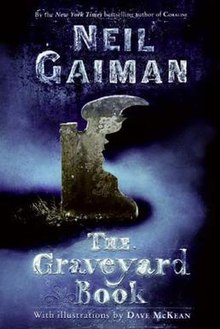
Title: The Graveyard Book
Author: Neil Gaiman
via Wikipedia
Imagine The Jungle Book set in an English cemetery rather than an Indian rainforest.  That, in a nutshell, is The Graveyard Book.  As I've written before, Neil Gaiman's work is hit or miss for me.  This one was a bullseye.

The basic narrative structure is Kipling but the world-building is Gaiman, with an assist from illustrator Dave McKean, his longtime collaborator.  A little boy, on the run from a man who had just murdered his family, wanders into an old cemetery.  The ghostly inhabitants take him in and do their best to raise him as clearly not one of their own.  They give him a near-anonymous name: Nobody Owens, Bod for short.  Bod's friends - truly his extended family - span centuries and social classes, including the outcasts in the Potter's Field.  His Bagheera is Silas, a being who resides between the worlds of the dead and the living.

Bod does have occasional interactions with the world beyond the graveyard.  He befriends a little girl.  He goes to school briefly.  Unfortunately, such adventures leave him vulnerable to the man who is still out to kill him for reasons unknown.  So he spends most of his life behind the gates of the graveyard where Silas and the others can keep him safe.

It occurs to me in reading this book that my issues with Gaiman have nothing to do with his style.  He's a wonderful writer.  But his stories tend toward horror and I've never been so keen on the trappings of that genre.  I prefer wizards to vampires and elves to ghosts.  But I'm always up for suspense and The Graveyard Book delivers nicely.  It's one of those reads where the pace picks up considerably at the end, as the reader sorts out what's going on just ahead of the characters. 

The Graveyard Book was my daughter's choice for me in our most recent family book swap.  The story has been adapted into a graphic novel in two volumes.  A film is in the works, too, to be directed by Ron Howard.
 
Please join us and share your own review of your best read from the past month.  This month's link list is below.  I'll keep it open until the end of the day.  I'll post August's tomorrow.  Meetings are the last Friday of each month.  Next gathering is August 28th.


Thursday, July 30, 2015

On the Coffee Table: Carol S. Dweck, Ph.D.

Title: Mindset: The New Psychology of Success
Author: Carol S. Dweck, Ph.D.
via Amazon
Our superintendent gave each of us a copy of Mindset to read over the summer.  There was much grumbling among the faculty over assigned reading but my own reaction was "Cool, free book!"  In truth, the book is extraordinary, the sort that challenges one's perceptions of life and the world.

Dr. Dweck, on the basis of decades of research, asserts that the key to sustained success in any endeavor comes not from talent but from mindset.  In the fixed mindset, one believes that our personal qualities can never change.  We're only as intelligent as we're ever going to be.  However, in the growth mindset, we believe that personal qualities can be developed over a lifetime.  Some of the book documents her clinical studies but most of the text is devoted to anecdotal demonstrations of the two mindsets in action.  The sections on education and parenting are the most obvious applications to my own line of work but Dweck also explores the worlds of business, sports and interpersonal relationships.

For me, the chapter on sports is the most fun.  Throughout the book, John McEnroe - a tennis player notorious for extraordinary talent paired with terrible attitude and work ethic - is Dweck's punching bag for the fixed mindset.  The more successful Pete Sampras is presented as an exemplar of the growth mindset.  She also compares three Hall of Fame basketball coaches. Bob Knight is the tyrant, shaming his players when they fail to live up to his expectations and thereby threaten his own sense of self-worth (fixed mindset).  John Wooden is the interpersonal master who won ten national titles over twelve years by investing in demanding but respectful relationships with all of his players, from all-time superstars like Kareem Abdul-Jabbar and Bill Walton to the last guy on the bench (growth mindset).  Pat Summitt is the extraordinary leader behind Tennessee's Lady Vols, one of the most successful programs in women's college ball.  She started off in the fixed mindset but found greater success once she embraced the growth mindset.

Summitt's experience is really the whole point of the book.  Most people live with a combination of both mindsets rather than one or the other.  The growth mindset is something we can learn.  By doing so, we can find greater success and meaning in any endeavor.

I have read better-written books, though not many that make me think so deeply.  I expect I'll keep Mindset handy as I approach my relationship with my daughter, my job, my own personal goals, perhaps even the 2016 election.  I'd like to believe that I have more of a growth mindset than a fixed one but I know better than to believe that I always do.  I am grateful for having been "forced" to read the book.  I hope my colleagues will give it a chance.  I'm even thinking of sending copies to my extended family.

Wednesday, July 29, 2015

Star Trek: The Counter-Clock Incident

My friends and I have completed our journey, watching all 22 episodes of Star Trek's animated series. 

Episode: "The Counter-Clock Incident"
Series: Star Trek: The Animated Series
Season 2, Episode 6
Original Air Date: October 12, 1974
via Memory Alpha
Star Trek's animated series wraps up with a mind bender.   The Enterprise is unwillingly pulled into a negative universe: black stars against white space, movement, language and aging all running in reverse.  In a further time bending I don't entirely understand, the crew all revert to their childhood selves and very rapidly at that on their way back to their own dimension.  While the suspenseful tension was genuine, it's just the sort of Trek episode that drives me nuts.  The negative universe elements are fun to ponder but they stretch the narrative integrity to troubling limits.  I get anxious for all the wrong reasons.

That said, as a series finale, it has some nice elements.  The moral of the story pertains to the usefulness of the aged, a theme Trek has explored before in TOS's "The Deadly Years."  It provides a metaphor for the show itself essentially being put out to pasture.  "The Counter-Clock Incident" is certainly stronger than the finale for the original series, "Turnabout Intruder."

*****

Thoughts on Season 2


General Impressions

I expected a drop in quality for the second season.  After all, the original series started strong and finished weak.  It seemed reasonable to expect the same with the animated series.  But if there was a decline, it was negligible.  As I wrote regarding the first season, the best episodes don't measure up to the best of TOS but the worst are nowhere near as poor as the weakest originals, either.


Favorite Episode: "Albatross"

Six episodes don't leave much for picking.  "Albatross," I'm certain, would not be the choice of most critics but I liked it.  In any Trek series, I enjoy the episodes in which I am amazed by the complex problems the crew can solve in the last ten minutes.  "Albatross" resides comfortably in that fine tradition with two brutal crises pressing in on our heroes simultaneously: a plague aboard the ship and Dr. McCoy facing what is sure to be an unfair trial on an alien planet.  Plus, one of the characters looks like a six-foot-three Yoda.


Least Favorite Episode: "The Practical Joker"

I'm not opposed to a goofy episode.  We need one from time to time.  In fact, I want a "KIRK IS A JERK" shirt like the one the captain wears at one point.  The story also introduces the predecessor to TNG's holodeck.  But there is a scene with everyone on the bridge giggling for far too long.  It feels like an uncomfortable dinner party.  Again, as clunkers go, it's not bad.  But for the sake of the exercise, I had to pick one.


Favorite New Character: Bem

Bem is the cause of great mischief in the episode that bears his name.  He is a colony creature, meaning he is a cooperative organism composed of multiple composite organisms.  As such, he is able to separate parts of his body from one another.  He also has a most amusing way of referring to himself as "this one."  For example, he might say "this one has a hankering for some Saurian brandy" or "this one must excuse himself to use the loo."


Onward?

At some point, I may tackle more Trek, likely the movies, TNG or perhaps both.  But for now, it's back to regularly scheduled programming.  I'll have one more wrap-up post for the entire series next week.  Family adventure posts shall return, now on Fridays, beginning August 21st.

Please visit the other participants on the list below.  Next week: Series Wrap-Up.

Spacerguy
Maurice Mitchell

Tuesday, July 28, 2015

The Clone Wars: Cloak of Darkness

My friends and I are embarking on an exploration of Star Wars: The Clone Wars.  Every Tuesday, we will be featuring an episode from the series which began in 2008 (as opposed to the one that started in 2003).  All are welcome to join us for all or parts of the fun.

Episode: "Cloak of Darkness"
Series: Star Wars: The Clone Wars
Season 1, Episode 9
Original Air Date: December 5, 2008
via Wookieepedia
Okay, I have had my fill of prison break stories.  I realize it's bread-and-butter for the Star Wars franchise but variety in narrative structure is always appreciated in a TV series.  This time, it's Grievous's minions breaking Viceroy Gunray - captured in the last episode - out of the Republic's ship, Tranquility.  There is nice development for Ahsoka in this one and excellent swordplay between Jedi Luminara Unduli (with Ahsoka assisting) and Grievous's agent, Asajj Ventress.  A few plot twists along the way are gratifying, too.  Even so, I'm ready for something other than a prison break.  Maybe next week?

*****

via Wookieepedia
The character of Luminara Unduli first appeared in the novel Cloak of Deception by James Luceno, published in 2001.  She is a Mirialan.  Apparently, her headdress conceals extra-sensory organs.
via Wookieepedia
Luminara is voiced by Olivia d'Abo.  D'Abo was born in London, January 22, 1969.  Hers was a show biz family.  Mother Maggie London was a model and actress, father Mike d'Abo, for a time the lead singer of Manfred Mann.  She went to junior high and high school in the Los Angeles area.  She made her film debut in Conan the Destroyer when she was 15.

D'Abo is most familiar to television audiences as Karen Arnold, Kevin's much troubled, hippie older sister in The Wonder Years.   Her geek cred was secured in her memorable guest star appearance in Star Trek TNG's "True Q."  Full disclosure, I have long considered her to be one of the most beautiful women in the business.  Sadly, she has spent way too much on plastic surgery in recent years.

The voice work has been steady.  She has had roles in Batman Beyond, The Legend of Tarzan and Justice League.  She was married to music producer Patrick Leonard for ten years.  She has one son, Oliver, born in 1995.

If you would care to join us for all or part of our travels, sign on to the list below.  Please visit the other participants today.  Next week: "Lair of Grievous."


Monday, July 27, 2015

On the Coffee Table: Daniel James Brown

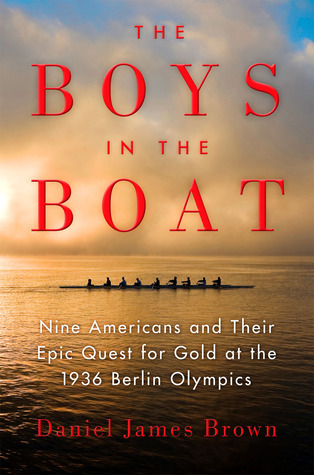
Title: The Boys in the Boat: Nine Americans and Their Epic Quest for Gold at the 1936 Berlin Olympics
Author: Daniel James Brown
via Goodreads
In the 1930s, rowing was one of the most popular sports in the United States, the major races being broadcast on radio nationwide.  The annual Harvard-Yale regatta, inaugurated in 1852, was the first intercollegiate sporting event.  By the '30s, UC-Berkeley and the University of Washington had overtaken the eastern schools as the major powers in the sport.  The Washington Huskies, though, were still playing second-fiddle to their rivals in California.  The Boys in the Boat tells the tale of the crewmen who changed all of that, nine young men of humble origins in troubled times in what was still a remote part of the country.

For the most part, the story is told from the point of view of Joe Rantz, one of the oarsmen.  Essentially abandoned by his own family in his teens, he learned to survive on his own and put himself through college.  Crew provided a sense of purpose and belonging.  It also gave him a fantastic tale to tell for the rest of his life.  Through him, we get a sense not only of the group's extraordinary achievements but of the devastating impact the Great Depression had on the lives of families all over the country.

The most endearing characters of the book, however, are George Pocock, the boat builder at Washington, and Bobby Moch, the crew's coxswain.  Pocock overcame his own humble London origins to become a giant in the rowing world.  He supplied boats for Washington as well as most of the other major programs in the United States.  He also provided sage, invaluable mentoring for the coaches and rowers who came through the Washington program.

As for Moch, a crew's coxswain is inevitably the object of curiosity.  The little man or woman in a sport of giants, the cox steers the boat and manages the stroke rate for the oarsmen.  He (or she) is the only one facing forward and therefore the one with the best sense of the boat's position in relation to the competition, not to mention the finish line.  Moch, in particular, is quite the fearless smart ass.  His downright ballsy decision-making leads the team to greatness.  His personal history also provides an astonishing wrinkle towards the end of the book.

Of course, there's another essential backstory to all of this.  The Boys in the Boat also covers the Third Reich's preparations for the 1936 Olympics.  I visited Berlin's Olympic Stadium when I was eleven.  My knowledge of the event was limited to that of an average sports fan - i.e., I knew about Jesse Owens and not much else.  Jesse Owens, by any measure, was one of the most extraordinary athletes of his era and his four gold medals, heralded as the symbolic victory of a black man over the Nazis, is one of the great sports stories of the 20th century.  But the sad fact of the matter - for Owens, for the Washington crew, for the whole Olympic movement - is that the USA and its allies probably should have stayed away completely.  The Olympics were a triumphant, public relations bonanza for Hitler and his cronies.  They successfully deceived the world into believing that the horrifying rumors surrounding their regime were exaggerated.  If ever there were an Olympics to boycott, it was the '36 Games in Berlin.  But the world chose to look the other way, a decision made all the easier here by the plague of anti-Semitism in the United States.  And before we all wear out our arms patting ourselves on the back over Jesse Owens, it's worth remembering that it would still be another 28 years before the Civil Rights Act passed.  Brown's book pulls few punches, providing a sobering picture indeed.

The Boys in the Boat is an emotional experience.  As a sports fan, I was grateful for the insight into a sport I know nothing about.  As a student of history, I am humbled by those who overcame the considerable challenges of the era.  I recommend the book highly to anyone with an interest in the time period, whether they know anything about rowing or not.