We drove up to Montreal for ComicCon on Saturday, the first time for any of us to visit a comic book convention. Ever since jumping into the comics hobby a few years back, my curiosity about the geek culture surrounding the industry has steadily increased. One catches glimpses at comic book stores, of course, and I got more meaningful exposure when I went to the midnight showing of The Avengers with Mock. But the ComicCons are the ultimate gatherings. San Diego (home to the biggest convention) is three time zones away but Montreal's only a couple of hours drive from our house - seemed worth a try.
Originally, we were going to go with Mock and his family but other developments for him (becoming an uncle, for instance) took precedence. So, it was just the three of us. Our Girl was none too happy about getting up early on a Saturday but she soldiered on and we arrived just before the doors opened at 10.
Not wanting to spend the entire visit standing in line, we decided to forego the celebrity autographs - George Takei, Edward James Olmos and Gillian Anderson were all on hand among others - and panels. Instead, we devoted our time to the vendors. Obviously, there were loads of comic books on sale but also toys, t-shirts and so forth. My own best find of the day:
We also really enjoyed the Doctor Who display, taking pictures with Daleks and the TARDIS.
Of course, ComicCon's most amusing attraction is the geeks themselves. Costumed enthusiasts abound: superheroes, Star Wars, Star Trek, Harry Potter, Men in Black, you name it. My favorite was a woman in a gas mask with an "Are you my mummy?" sign (Doctor fans will understand). Our daughter was most impressed by the Dalek who scolded a passing Stormtrooper for failing to find the droids he'd been looking for!
If I were to go again, I'd want to devote more time to Artist's Alley, where the comics creators themselves hawk their wares. Practically on our way out the door, I was drawn to the table of Conor McCreery, co-creator of the Kill Shakespeare series. I was on the look out for a t-shirt for Drama Guy, my teaching partner. DG is a serious Shakespeare nut and McCreery's t-shirt with Shakespearean characters posed as the Justice League was nearly irresistible (see link here). Alas, I had no cash (stupid ATMs weren't working) and he was not set up for plastic. I felt bad. "I don't even have anything for you to sign," I said sheepishly, "but I'd like to shake your hand."
He looked up and smiled at that, a wonderfully human moment in the midst of a zany day, probably for both of us. We shook. I met the girls in the hallway so we could go home. DG will just have to be satisfied with a Firefly shirt.
I'm glad we went - an experience to cross off the life list. I don't know if I'd go again, though I must admit that it would be great fun to watch Mock in this environment. DG asked when I got to work this morning if I'd go to the one in San Diego but I don't think bigger would make it better. As I told My Wife, I'd much rather go to a good book store.
However, in preparing for and attending ComicCon, I've made what I believe is an important self-discovery regarding my own geek identity: I am a science fiction fan first, a comic book fan second. I think I already knew that but hadn't previously articulated it. My native language is Star Wars but I'm reasonably conversant in Star Trek, Doctor Who, Firefly and others - currently learning Battlestar Galactica. There you have it, folks: my statement of geek self.
"If more of us valued food and cheer and song over hoarded gold, it would be a merrier world." - J.R.R. Tolkien
Monday, September 16, 2013
Wednesday, September 11, 2013
Star Trek: The Naked Time
Episode: "The Naked Time"
Series: Star Trek: The Original Series
Season 1, Episode 4
Original Air Date: September 29, 1966
The last 10 minutes. I am always impressed by the seemingly impossible problems the Star Trek crew manages to resolve in the last 10 minutes of an episode. With each passing moment of the opening acts, the rope tightens and hope of survival grows more remote. You know they're going to make it because there are still 700+ episodes to go but even the most devoted fan is pushed to the edge of doubt. Finally, after the last commercial break, someone - and it's not always the same person - saves the day. It's as good a formula for building a cult following as any.
"The Naked Time" finds our heroes orbiting the dying planet Psi 2000. A landing team discovers the researchers on the surface have all suddenly and mysteriously died. Upon returning to the ship, an intoxicating affliction claims one member of the crew at a time. With each new infection, the Enterprise falls into greater peril. All comes to a head when Lt. Riley locks himself in engineering and takes control of the ship. Meanwhile, the ship is being pulled into the collapsing planet. Just in time, Riley is subdued and Spock concocts an escape plan based on an untested theory. Of course, the day is saved.
Phew!
There are moments of levity along the way. Lt. Sulu spends much of the episode running around shirtless, challenging everyone he meets to a fencing duel. Surely not coincidentally, George Takei has always claimed "The Naked Time" as his favorite episode.
DeForest Kelley (Dr. McCoy) was born January 20, 1920 in Toccoa, Georgia. The son of a Baptist minister, he was named for Lee de Forest, an American inventor. During the Second World War, Kelley served in the army's First Motion Picture Unit. His first feature film appearance was in 1947's Fear in the Night. His television debut was on You Are There. He first worked with Leonard Nimoy in a 1963 episode of The Virginian. Kelley was actually Gene Rodenberry's original choice to play the role of Spock but he turned it down.
Series: Star Trek: The Original Series
Season 1, Episode 4
Original Air Date: September 29, 1966
![]() |
| via Victory Tastes Yellow |
The last 10 minutes. I am always impressed by the seemingly impossible problems the Star Trek crew manages to resolve in the last 10 minutes of an episode. With each passing moment of the opening acts, the rope tightens and hope of survival grows more remote. You know they're going to make it because there are still 700+ episodes to go but even the most devoted fan is pushed to the edge of doubt. Finally, after the last commercial break, someone - and it's not always the same person - saves the day. It's as good a formula for building a cult following as any.
"The Naked Time" finds our heroes orbiting the dying planet Psi 2000. A landing team discovers the researchers on the surface have all suddenly and mysteriously died. Upon returning to the ship, an intoxicating affliction claims one member of the crew at a time. With each new infection, the Enterprise falls into greater peril. All comes to a head when Lt. Riley locks himself in engineering and takes control of the ship. Meanwhile, the ship is being pulled into the collapsing planet. Just in time, Riley is subdued and Spock concocts an escape plan based on an untested theory. Of course, the day is saved.
Phew!
![]() |
| via The Internet Killed the Television Star |
There are moments of levity along the way. Lt. Sulu spends much of the episode running around shirtless, challenging everyone he meets to a fencing duel. Surely not coincidentally, George Takei has always claimed "The Naked Time" as his favorite episode.
![]() |
| via Star Trek Daily Pic |
DeForest Kelley (Dr. McCoy) was born January 20, 1920 in Toccoa, Georgia. The son of a Baptist minister, he was named for Lee de Forest, an American inventor. During the Second World War, Kelley served in the army's First Motion Picture Unit. His first feature film appearance was in 1947's Fear in the Night. His television debut was on You Are There. He first worked with Leonard Nimoy in a 1963 episode of The Virginian. Kelley was actually Gene Rodenberry's original choice to play the role of Spock but he turned it down.
![]() |
| via Shatner's Toupee |
Labels:
comics,
family adventures,
film,
good reading,
sources,
star trek,
TV
Monday, September 9, 2013
US Open 2013: The Rich Get Richer
| via bettor.com |
![]() |
| via Wikipedia |
Sunday, September 8, 2013
Family Movie Night: After the Revolution
Title: After the Revolution
Director: AndrĂ¡s Szirtes
Original Release: 1990
Choice: My Wife's
My Overall Rating: 2 stars out of 5
My Wife gave this one a good sell over the course of the week, always with the impish laugh I love so dearly. After the Revolution is an experimental Hungarian film produced immediately after the fall of communism. The basic idea is highly amusing: a struggling writer labors to finish his novel and complains constantly to his cat. The story is told from the cat's point of view. Sounds quirky and charming, right? My Wife thought it would be a great way to introduce Our Girl to experimental film.
Grainy. Lots of extreme closeups. Random clips from old Soviet propaganda films. Footage from interviews of... friends? Many of the interviews are actually in English. One woman gives herself a mud bath - full frontal for that one, though not exactly sexy. Loads of sketchy language. I suppose if we'd watched the whole thing, we'd all have been experts at swearing in Hungarian. Alas, we did not. Even My Wife decided she'd had enough after a while. We switched over to Battlestar Galactica and were all much happier.
So, why a 2 and not a 1? I didn't care for it but I'm still not willing to say it's a terrible film. Experimenting is good, even if all goes kablooey.
Director: AndrĂ¡s Szirtes
Original Release: 1990
Choice: My Wife's
My Overall Rating: 2 stars out of 5
![]() |
| via The Callum's Wood Notebooks |
My Wife gave this one a good sell over the course of the week, always with the impish laugh I love so dearly. After the Revolution is an experimental Hungarian film produced immediately after the fall of communism. The basic idea is highly amusing: a struggling writer labors to finish his novel and complains constantly to his cat. The story is told from the cat's point of view. Sounds quirky and charming, right? My Wife thought it would be a great way to introduce Our Girl to experimental film.
Grainy. Lots of extreme closeups. Random clips from old Soviet propaganda films. Footage from interviews of... friends? Many of the interviews are actually in English. One woman gives herself a mud bath - full frontal for that one, though not exactly sexy. Loads of sketchy language. I suppose if we'd watched the whole thing, we'd all have been experts at swearing in Hungarian. Alas, we did not. Even My Wife decided she'd had enough after a while. We switched over to Battlestar Galactica and were all much happier.
So, why a 2 and not a 1? I didn't care for it but I'm still not willing to say it's a terrible film. Experimenting is good, even if all goes kablooey.
Wednesday, September 4, 2013
Star Trek: Where No Man Has Gone Before
Episode: "Where No Man Has Gone Before"
Series: Star Trek: The Original Series
Season 1, Episode 3
Original Air Date: September 22, 1966
It would seem that Trekkies owe an enormous debt of gratitude to Lucille Ball, of all people. It was Ms. Ball who convinced NBC management to consider a second pilot for Star Trek, entitled "Where No Man Has Gone Before." Apparently, she really liked creator Gene Roddenberry and believed in the project. Luckily for all of us, the idea took the second time and the successful pilot was the third episode to air. "Where No Man Has Gone Before" is the first-filmed episode to feature Captain Kirk (William Shatner), Lt. Sulu (George Takei) and Chief Engineer Montgomery Scott (James Doohan). In this second pilot, Sulu is the ship's physicist, not the helmsman he would become in the regular series run.
A magnetic space storm ignites intensified ESP abilities in helmsman Gary Mitchell, also revealed as a former student and long-time friend of Kirk's. As Mitchell's powers increase and he shows signs of hostility, Spock recommends killing Mitchell before it's too late. Kirk resists the idea, of course, and contrives an alternate plan to maroon Mitchell on an isolated planet.
So, why did the second pilot work better? Some of the answers are easy. Shatner is a better and more charismatic actor than Jeffrey Hunter who played Captain Christopher Pike in the first pilot (my reflections here). Also, the character of Spock is better developed - a crucial element in the long-term appeal of the show. But most importantly, at least in my opinion, "Where No Man Has Gone Before" is a stronger story.
Taking in the grand sweep of Star Trek history, I believe there are some narrative templates the franchise handles better than others. Basic mystery/puzzle solving stories are the default and usually work out well. Tales involving children, on the other hand, tend to fall flat. I feel that the very best Trek stories usually revolve around an ethical dilemma. The question of what to do with Mitchell is an excellent example.
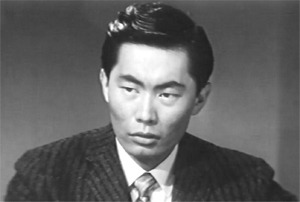
George Takei (rhymes with okay) was born on April 20, 1937 in Los Angeles, California. The story of his early life is, unfortunately, typical of the Japanese Americans of his generation. His family spent three years in internment camps during World War II.
Takei originally went to UC-Berkeley to study architecture but ultimately graduated from UCLA in theater. Roles for Asians were hard to come by in the 1950s and '60s but Takei found work. His first television appearance came in the third season of Perry Mason in 1959. His first film role was in 1960's Hell to Eternity.
Series: Star Trek: The Original Series
Season 1, Episode 3
Original Air Date: September 22, 1966
![]() |
| via Fez talks Star Trek and Phase 2 |
It would seem that Trekkies owe an enormous debt of gratitude to Lucille Ball, of all people. It was Ms. Ball who convinced NBC management to consider a second pilot for Star Trek, entitled "Where No Man Has Gone Before." Apparently, she really liked creator Gene Roddenberry and believed in the project. Luckily for all of us, the idea took the second time and the successful pilot was the third episode to air. "Where No Man Has Gone Before" is the first-filmed episode to feature Captain Kirk (William Shatner), Lt. Sulu (George Takei) and Chief Engineer Montgomery Scott (James Doohan). In this second pilot, Sulu is the ship's physicist, not the helmsman he would become in the regular series run.
A magnetic space storm ignites intensified ESP abilities in helmsman Gary Mitchell, also revealed as a former student and long-time friend of Kirk's. As Mitchell's powers increase and he shows signs of hostility, Spock recommends killing Mitchell before it's too late. Kirk resists the idea, of course, and contrives an alternate plan to maroon Mitchell on an isolated planet.
So, why did the second pilot work better? Some of the answers are easy. Shatner is a better and more charismatic actor than Jeffrey Hunter who played Captain Christopher Pike in the first pilot (my reflections here). Also, the character of Spock is better developed - a crucial element in the long-term appeal of the show. But most importantly, at least in my opinion, "Where No Man Has Gone Before" is a stronger story.
Taking in the grand sweep of Star Trek history, I believe there are some narrative templates the franchise handles better than others. Basic mystery/puzzle solving stories are the default and usually work out well. Tales involving children, on the other hand, tend to fall flat. I feel that the very best Trek stories usually revolve around an ethical dilemma. The question of what to do with Mitchell is an excellent example.
George Takei (rhymes with okay) was born on April 20, 1937 in Los Angeles, California. The story of his early life is, unfortunately, typical of the Japanese Americans of his generation. His family spent three years in internment camps during World War II.
![]() |
| via Travel Arkansas |
Takei originally went to UC-Berkeley to study architecture but ultimately graduated from UCLA in theater. Roles for Asians were hard to come by in the 1950s and '60s but Takei found work. His first television appearance came in the third season of Perry Mason in 1959. His first film role was in 1960's Hell to Eternity.
![]() |
| via All hail the glow cloud |
Labels:
comics,
family adventures,
film,
good reading,
sources,
star trek,
TV
Sunday, September 1, 2013
Family Movie Night: Star Wars
Title: Star Wars
Director: George Lucas
Original Release: 1977
Choice: Mine
My Overall Rating: 5 stars out of 5
Star Wars has been the center of my pop culture universe from the first time I saw the original film on the big screen. I was four years old in 1977. I am willing to admit, 36 years on, that certain elements of the movie do not hold up so well now. The visual effects have all since been eclipsed, of course, though I think the explosions are still pretty impressive. The acting is generally underwhelming and the editing at times comically poor. However, there is one area in which the original Star Wars trilogy stands alone in the history of cinema. No other movie uses music and sound so effectively. As far as I'm concerned, it's not even close. R2's bleeps and bloops, Vader's breath and Chewbacca's roar are every bit as iconic as images of the Millenium Falcon or Imperial Stormtroopers. The most crucial sound effect of all was John Williams's incomparable musical score.
It's nearly impossible to avoid superlatives when discussing the music of Star Wars. The horn blast that opens the film is, in my humble opinion, one of the two greatest musical moments in all of film (I'll share the other one in a few weeks). The dead silence of the "long time ago" screen explodes into blaring fanfare as the title comes into view. I have watched Star Wars movies dozens of times and that moment, shared by all of them, never gets old.
Star Wars is the perfect movie for demonstrating leit motif, a musical theme used to represent a character, setting or idea. Luke has his theme. Leia has hers. Even the droids get one. Any fan worth his or her salt can hum a few bars of the Cantina band's tune. Interestingly, Han Solo does not have a theme. Oh well. He nearly managed to steal the show without one.
Only Walt Disney has been nominated for more Academy Awards than John Williams. For the world's most decorated composer, the first Star Wars film score was the greatest triumph. Williams won his third Best Score Oscar for the movie in addition to a Golden Globe, three Grammys, a BAFTA and a Saturn. In total, Williams has won five Best Score Oscars. At age 81, he shows few signs of slowing down, either, with three Academy Award nominations in just the past two years.
Multi-generational considerations:
Director: George Lucas
Original Release: 1977
Choice: Mine
My Overall Rating: 5 stars out of 5
| via Wookieepedia |
Star Wars has been the center of my pop culture universe from the first time I saw the original film on the big screen. I was four years old in 1977. I am willing to admit, 36 years on, that certain elements of the movie do not hold up so well now. The visual effects have all since been eclipsed, of course, though I think the explosions are still pretty impressive. The acting is generally underwhelming and the editing at times comically poor. However, there is one area in which the original Star Wars trilogy stands alone in the history of cinema. No other movie uses music and sound so effectively. As far as I'm concerned, it's not even close. R2's bleeps and bloops, Vader's breath and Chewbacca's roar are every bit as iconic as images of the Millenium Falcon or Imperial Stormtroopers. The most crucial sound effect of all was John Williams's incomparable musical score.
It's nearly impossible to avoid superlatives when discussing the music of Star Wars. The horn blast that opens the film is, in my humble opinion, one of the two greatest musical moments in all of film (I'll share the other one in a few weeks). The dead silence of the "long time ago" screen explodes into blaring fanfare as the title comes into view. I have watched Star Wars movies dozens of times and that moment, shared by all of them, never gets old.
Star Wars is the perfect movie for demonstrating leit motif, a musical theme used to represent a character, setting or idea. Luke has his theme. Leia has hers. Even the droids get one. Any fan worth his or her salt can hum a few bars of the Cantina band's tune. Interestingly, Han Solo does not have a theme. Oh well. He nearly managed to steal the show without one.
Only Walt Disney has been nominated for more Academy Awards than John Williams. For the world's most decorated composer, the first Star Wars film score was the greatest triumph. Williams won his third Best Score Oscar for the movie in addition to a Golden Globe, three Grammys, a BAFTA and a Saturn. In total, Williams has won five Best Score Oscars. At age 81, he shows few signs of slowing down, either, with three Academy Award nominations in just the past two years.
Multi-generational considerations:
- In one DVD release, Lucas included the original theatrical versions of the first three Star Wars movies along with the ones with all of his later, completely unnecessary edits. I'm very glad I snatched them up when I had the chance as the originals are the only versions of the films my daughter has ever watched.
- Our Girl was impressed by how many of the lines I knew by heart and at one point while we were watching, I looked over and saw that she was working on memorizing them herself! Rolling her eyes, My Wife said, "You must be so proud." Like you wouldn't believe, dear.
- Why Star Wars Is Vitally Important
- Chewbacca: A Lost Opportunity
- Posts about the old Marvel comics here, here and here.
Labels:
comics,
family adventures,
film,
good reading,
movie music,
music,
sources,
Star Wars
US Open 2013: Middle Sunday
![]() |
| via bethubb |
Kohlschreiber is now 29 years young and still going strong, having reached the finals of three tournaments this year. He won the doubles title in Doha with countryman Christopher Kas. Next up, he faces the hottest player in tennis: Rafael Nadal (2nd, Spain). He actually has one victory over Nadal (Halle 2012) but has lost to the Spaniard nine times. I would say Kohlschreiber has a better chance of derailing the dream Federer/Nadal quarterfinal than Tommy Robredo (19th, Spain) does but that's not saying much. Robredo has never beaten Fed (7th, Switzerland) in 10 tries. The best weapon Kohlschreiber has is force of will and no one's ever going to beat Rafa at that game.
Subscribe to:
Comments (Atom)