Showing posts with label business books. Show all posts

Friday, April 24, 2026

Star Trek: Alter Ego

Episode: "Alter Ego"
Series: Star Trek: Voyager
Season 3, Episode 14
Original Air Date: January 15, 1997

via Memory Alpha

Ensign Harry Kim is in love with Marayna, a holodeck character in Neelix's luau program.  He's got it bad.  It's interfering with his work.  He goes to Tuvok for guidance on emotional control.  The Lieutenant goes to the holodeck to check out Marayna.  She ends up falling for Tuvok instead.  Perhaps there is more to Marayna than originally suspected.

"Alter Ego" is a great Tuvok episode.  I'm finding there are a lot of those.  Tuvok provides more in-depth exploration of Vulcan culture and philosophy than Spock ever did.  Kim's questions and especially Marayna's challenges reveal much of Tuvok's own thinking, even bringing new and unexpected self-awareness.   "Alter Ego" also introduces kal-toh, a complicated and beautiful Vulcan strategy game.  

via Memory Alpha

Solution via Memory Alpha

The story is a meaningful continuation of a couple TNG holodeck threads.  Falling in love with a holodeck character hearkens back to "11001001," NextGen's best Season 1 offering.  Such a character taking over the ship is an expansion of Moriarty's efforts in "Ship in a Bottle."


Acting Notes

via Memory Alpha

Sandra Nelson (Maryana) was born in Madison, Wisconsin, December 29, 1964.  "Alter Ego" is her first of two Trek appearances.  She played Phyllis Summers for two years on The Young and the Restless.  Films include Life as a House, De-Lovely and The Wolf of Wall Street.  Other television guest roles include ER, Monk and NCIS.  

Monday, July 1, 2024

Family Book Swap: Starter Villain

Title: Starter Villain
Author: John Scalzi
via Amazon

Charlie Fitzer is down on his luck.  Once happily married and gainfully employed as a business reporter, he is now divorced and working as a substitute teacher.  He moved back into his childhood home to take care of his ailing father, now deceased.  His financial situation is dire.  On the bright side, he has two cats who clearly adore him.

Charlie's world gets turned inside out when he learns an estranged billionaire uncle has died.  Charlie is his only living relative so much to Charlie's own shock, he is placed at the head of an international financial empire that extends way beyond owning parking lots.  He becomes, in effect, a supervillain based in a remote Caribbean volcano cave.

The story that unfolds is a combination of The Hitchhiker's Guide to the Galaxy, Doctor No and The Cat from Outer Space.  The ties to James Bond are the most obvious with direct references to Goldfinger, Blofeld and SPECTRE.  But the Douglas Adams narrative elements are many: a lovable loser who learns his world is not at all what he thought it was; animals (including dolphins) who turn out to be a lot more intelligent than expected; Ford Prefect- and Zaphod Beeblebrox-like characters plus a generally irreverent sense of humor.  We're talking laugh out loud funny.  As for the cats, well, some surprises are worth preserving for anyone intending to read the book.

Scalzi is a well-established scifi novelist. He has won several Hugos in various categories, including Best Novel.  Starter Villain has been nominated for that award for 2024, the winner to be announced in Glasgow on August 11th.  The fantastical elements aside, the basic premises of the billionaire playground world are surprisingly believable.  The typically incompetent super rich play by their own rules with minimal accountability to anyone besides, only occasionally, each other.  Sounds about right.  

I'm not sure how I feel about the ending.  It's not all tied up quite so neatly as one expects which I suppose it's a good thing.  Fortunately, Charlie is certainly better off than when the book started and the most important characters are still devoted to him.  There's just enough of a crack in the door to allow for a sequel but perhaps better to leave the story as it is.

Overall, it's definitely a strong book.  I'll be keeping an eye out for Scalzi's other work and certainly will check in for the Hugo results in August.

Wednesday, June 26, 2024

On the Coffee Table: Cal Newport

Title: Deep Work: Rules for Success in a Distracted World
Author: Cal Newport

via Amazon

Cal Newport defines deep work as "professional activities performed in a state of distraction-free concentration that push your cognitive capabilities to their limit.  These efforts create new value, improve your skill and are hard to replicate."  If you can program a computer to do it, it's not deep work.  If you can do it with minimal focus, it's not deep work.  His broader point: if you need to set aside time in your life for demanding intellectual enterprises, deep work is an approach to making it happen efficiently, mainly by creating a distraction-free environment.  Obviously, this isn't easy in our hyper-connected, distraction-rich world.  Fear not.  Newport has some advice.

I liked the book.  In fact, I think I'll get a lot out of the advice in the long run.  I feel I need to say that before I dig into the bits that irk me.  I also feel it's important, for myself, to bear in mind who Cal Newport is and for whom he is writing.  His day job is computer science professor at Georgetown so the output he has in mind for himself is primarily the academic publishing required to get tenure.  Deep Work reads like an advance brochure for speaking gigs, a lucrative source of supplemental income.  So his audience is corporate "business" types, always out to get more value out of everyone's time, including their own.  With all that in mind...

I take issue with the implicit limits on meaningful work.  Surely, the daily efforts of teachers, nurses, social workers and many others add "value to the world" even if they're not creating new, profound ideas for the general public to digest.  Indeed, is not parenting a child adding value?  Aren't there other - typically identified as "soft" - skills that are valuable in the work place?  How many CEOs and other corporate big shots have gotten to the top on the strength of their interpersonal skills as much as their financial wizardry?  How many people thrive thanks to their improvisatory gifts?

And so on.  Fortunately, there's more to the book than that.  Moreover, even though I am not in the target audience, I believe I can gain a lot from Newport's ideas.

According to the author, the most important requirement for attaining the mental state enabling deep work is the elimination of distractions.  The global scope of the problem is obvious.  The Internet (still capitalized, you'll notice) is ubiquitous.  As I write this, I have seven other browser tabs open.  My smartphone is within arm's reach and I don't need to lean too far forward to grab the television remote.  Delayed gratification is a quaint, archaic concept, especially in our post-COVID society and overall, that reality has undoubtedly done as much harm as good.  I cannot deny that reducing such distractions could only add value and meaning to my life.  In light of the awareness Newport's book has brought, I have already discovered what a huge difference it makes to be in a separate room from my phone. 

Late June is an interesting time to be reading such a book.  With the school year just finished, work motivation is at a low ebb indeed so the idea of taking on a huge project like Newport has in mind is not remotely appealing.  On the other hand, there's plenty of brain space for new ideas even if I'm not quite ready to put them into action.  In particular, it's a fantastic time to experiment with disconnection.

Coincidentally, I made significant progress with this book while lounging at a hydro spa in Bromont, Quebec.  Phones are forbidden once you enter the spa area, a wonderfully liberating inconvenience.  Silence - not quiet, but silence - is encouraged and even occasionally gently enforced.  So for the most part, there's "nothing to do" except sit in hot water and stare off into the distance.  It took a while for me to adjust to this intentional idleness.  Small, self-conscious preoccupations like what to do with my arms crept in.  When I settled on simply letting them float, I made real progress on relaxing.

Of course, we can't afford such indulgences very often so I'll need to find other means of achieving this mental state on a regular basis.  Newport recommends walking in nature most highly - easily accomplished in my neighborhood, at least in non-winter months.  He also suggests casual conversation, listening to music, playing a game (off-screen) or going for a run.  He didn't mention it but I certainly believe in meditation, something I've experimented with in the past.

I also want to remember Newport's advice regarding email: ignore what you can, avoid the knee-jerk tendency to respond to everything and when you do write, take the time to craft meaningful messages that get to the point and avoid endless back and forth.  

Overall, Deep Work is a good book and I'm glad to have read it.  While I'm not prepared to put all of Newport's advice into action tomorrow, he's provided tools for pursuing a more meaningful life.  At my age, that's my most important goal anyway.

Monday, May 15, 2023

On the Coffee Table: Paul Freedman

Title: Ten Restaurants That Changed America
Author: Paul Freedman

via Amazon

Paul Freedman's book is an ambitious project.  As advertised, the author tells the stories of ten American restaurants: Le Pavillon, Chez Panisse, Antoine's, Howard Johnson's, Schrafft's, Mamma Leone's, The Mandarin, Demonico's, The Four Seasons and Sylvia's.  I would argue that the restaurants have reflected American culture more than changed it - except for maybe one, because I know of the impact it's had on my own life.  That said, maybe I'm underestimating the influence of the others.  More on that in a bit.

The history goes back two centuries.  Delmonico's is the earliest establishment documented in the book, opening initially as a pastry shop in 1827.  The history of the industry offered is fascinating, along with the accompanying cultural histories of New York City, New Orleans, the Bay Area and the American highway.  Freedman also presents thoughtful insights into the impact of Italian, Chinese and Black cultures on our nation's food.  In this, there's a lot of crossover with Krishnendu Ray's The Ethnic Restaurateur (my reflection here).

As with Ray's book, Freedman's has changed my view of the restaurant world.  A couple of specific revelations, both noted previously in this post (comments inclusive):
  • Using actual train cars for diners is not the mere quaint cultural custom I'd always assumed.  What we think of as "roadside diners" are the transplanting of an entire process of food preparation and service from the railroad industry.  
  • Fried chicken and waffles doesn't come from the South at all.  The dish was invented at Sylvia's in Harlem.
The restaurant of the ten which I will concede has had an impact on my own life is Chez Panisse in Berkeley, California.  No, I've never been to Chez Panisse.  In fact, I've never even been to Berkeley.  Owner Alice Waters was a pioneering force behind the locavore, farm-to-table and Slow Food movements which have changed the eating habits of thousands if not millions in the half-century since she first opened her restaurant.  Among those profoundly influenced is my own wife who works hard to follow these principles with, I'm not shy to say, magnificent results.  

I enjoyed the book tremendously and learned a great deal.  It fuels a question I've pondered for a long time: what is American cuisine, really?  Is there such a thing?  Freedman doesn't answer the question but his book adds a lot to the discussion.

Monday, June 27, 2022

On the Coffee Table: Tilar J. Mazzeo

Title: The Widow Clicquot: The Story of a Champagne Empire and the Woman Who Ruled It
Author: Tilar J. Mazzeo

via Amazon

The Widow Clicquot is the biography of Barbe-Nicole Ponsardin Clicquot, builder of a Champagne empire through the most tumultuous stretch of French history.  Her life stretched from the Revolution to the Second French Empire.  Women entrepreneurs have rarely been encouraged in European history, rarely less so than in the 19th century.  Yet, Clicquot's company survives to the present day as one of the most dependable brands in the industry.  Certainly, she had some good luck along the way - Russian troops who didn't loot her cellars at the end of the Napoleonic Wars, for instance.  But she also survived plenty of bad.  Her courage, ingenuity and obsessive work ethic carried her and her company through.  

Mazzeo certainly leaves a solid impression of an impressive woman.  Unfortunately, it's not the world's most well-written biography.  Mazzeo needed a better editor.  There's loads of unnecessary repetition - at one point, I counted three consecutive sentences that said exactly the same thing.  I also found a triple negative - or was it, in fact, quadruple?  My wife's take: Mazzeo didn't actually have enough material to make for a decent story.  The author generated loads of suppositional filler where surviving personal correspondence was lacking - a clumsy and ineffective effort to make the subject more relatable.

I enjoyed the subject matter.  Both the wine production and the French cultural history were fascinating.  I'd love to read better-written books about similar subjects.

I am curious about the product, apparently drier than it was during The Widow's own tenure.  One of our local wine shops does carry it.  Standard bottle?  $66.99.  Double magnum: $399.99.  So, I doubt we'll be trying it anytime soon.  But maybe someday when we're in the mood to splurge...

Thursday, May 5, 2022

On the Coffee Table: Charles Duhigg

Title: The Power of Habit: Why We Do What We Do in Life and Business
Author: Charles Duhigg

via Amazon

Habits rule our lives in ways we don't even notice.  That's the point, after all.  Habits are the things we do without thinking.  It's the simple routines: you floss before you brush, you put on the right sock before the left, you always leave your keys in the same place so you can find them easily, etc.  It's the more complex operations, too: you always follow the same route when you walk your dog.  Some of them, like smoking after a meal or always having dessert even if you're not exactly hungry for it, are deeply unhealthy.  Others, like eating fruits and vegetables every day, can prolong your life.  Charles Duhigg explores all of this and more.  Most importantly, and optimistically, he demonstrates how bad habits can be transformed into good ones.

Duhigg devotes a lot of the book to self-destructive personal habits: alcoholism, gambling addiction, overeating, etc.  However, he also explores how the manipulation of habits - on both the individual and interpersonal levels - can transform organizations like Starbucks, Alcoa or the Indianapolis Colts.  Further, he chronicles how all-time champion swimmer Michael Phelps used the power of habit to excel.  On the Big Brother end of things, he exposes how companies, particularly Target, are able to monitor customers' habits in order to successfully predict who is likely to buy what and when.  

A couple of principles were particularly interesting to me.  The first is the idea of "keystone" habits.  Exercise is a good example.  When someone successfully establishes a habit of regular exercise, they start to form other good habits along with it.  They sleep better.  They eat better.  I can confirm: my life definitely feels better balanced when I am exercising regularly.  Other keystone habits are less appealing to me: bed making, for instance.  I don't believe in it.

"Inflection points" are moments when an individual is confronted with a choice.  For instance, a Starbucks barista is chewed out by an angry customer.  The employee can react in a variety of ways, many of them reflexive and counterproductive.  But if such an employee plans a different, healthier reaction ahead of time, the likelihood of a positive outcome increases significantly.  The possible applications to public education, my own profession, are obvious.

I'll definitely be keeping The Power of Habit around.  I didn't read the book's appendix (I usually skip that, along with any Roman numeral pages in the beginning) but I expect I will at some point as it's all about how to use Duhigg's principals in one's own life.  

But I'm still not going to make my bed.

Thursday, February 17, 2022

On the Coffee Table: Dale Carnegie

Title: How to Win Friends and Influence People
Author: Dale Carnegie

via Amazon

How to Win Friends and Influence People is a self-help classic.  First published in 1930, its advice still has merit nearly a century later.  What's more, many of the books I've read in the genre obviously mimic its structure and its persuasive elements.  Anecdotal evidence - as opposed to anything backed by data - abounds.  The style is conversational, engaging and, despite my skepticism going in, quite convincing.

Carnegie got his start in this biz teaching public speaking and eventually expanded to create a series of workshops to help people work more effectively with others.  In truth, his advice isn't complicated: listen to people, be positive rather than critical, prop people up rather than shooting them down, be sincere.  I can attest that at least some of it works because, even though I didn't learn it from Carnegie, I already use some of his principles.  One I use and and encourage others to use: if you can, when making a proposal to a superior/customer/client/spouse/whomever, always present it as a solution to their problem rather than your own.  People hear you differently when they feel you've considered their point of view.  Some of the advice can come across as manipulative but the sincerity is key to making it work.

So, since I know some of it works, I see no reason not to give his other ideas a shot.  My industry, education, is as political as ever and effectively advocating for yourself, your program, your students, your professional community, your right to exist is a vital skill for any teacher.  I have nothing to lose by trying new tactics.  So, I'm likely to keep the book around for a while.

Carnegie writes a lot about his inter-personal skill heroes.  Abe Lincoln's his favorite, though he also refers a lot to Andrew Carnegie (no relation), Ralph Waldo Emerson and Teddy Roosevelt.  Given the time of origin, it's not surprising that attitudes towards gender roles and mental illness are rather dated.  Somewhat jarringly, he includes an inspiring story about Stevie Wonder.  Dale Carnegie died in 1955.  How does he know about a pop star who was only five years old at that time?  Well, as his former wife explains in the forward, the book has been updated numerous times since, even after his death.

Anyway, it's a fun read - better than I was expecting.  And it might even prove useful.

Tuesday, February 1, 2022

On the Coffee Table: The MVP Machine

Title: The MVP Machine: How Baseball's New Noncoformists Are Using Data to Build Better Players
Authors: Ben Lindbergh and Travis Sawchik

via Amazon

Baseball's Moneyball era is over.  Billy Beane's revolutionary concepts for evaluating player talent and how various individual strengths contribute to runs and ultimately wins on the field are no longer the exclusive purview of a select few.  Every team is using data these days and in fact, quite a lot of them are using the information a lot more effectively than Beane's Oakland A's ever have.  The Tampa Bay Rays are probably setting the standard these days.

A new revolution is underway.  Technology allows for the minute examination of player performance - pitch spin, launch angle, etc. - in more exacting detail than ever before.  Pair this newly available data with a far more prevalent growth mindset and player development becomes the new frontier.  A player's capacities are no longer a fixed point, nor do the growth or degradation of such skills follow predictable patterns.  Teams and players who are open to new approaches have gained significant advantages.  Minor leaguers who were never even considered prospects are being elected to All-Star teams.  Seasoned veterans are finding new life late in their careers.  Teams like the Astros have transformed from eternal doormats into perennial powers.  Coaching, scouting and administrative staffs are being overhauled at all levels of the game - out with the old guard, in with the new, many of the new folks having never played even high school baseball.  Shocker: even a few women have made their way into the coaching ranks.  It's a new day and anyone stuck in the ways of the past is quickly being left in the dust.

In their book The MVP Machine, Lindbergh and Sawchik document the sport's new wave, offering anecdotal evidence from all over the baseball world.  In particular, they focus on the journeys of Trevor Bauer, a data-obsessed Cy Young-caliber pitcher, and Kyle Boddy, one of many independent coach-consultants from outside the professional ranks who have revolutionized player development.  Major League franchises are quickly finding that investing in player development is the most cost effective way to improve their teams.  In the more progressive systems, every player, even those not believed destined for The Show, is considered worthy of data-driven training.  And the philosophy goes beyond the physical athletic processes.  For the first time, teams are feeding their minor leaguers on a nutritious diet rather than expecting them to survive on a minimal salary and per diem.  My personal hero in the book is Doris Gonzalez who works with the Astros' many Spanish-speaking players to help them assimilate, learn the language and quite often, stick with baseball when the going gets tough.  Many of her former charges, now Major League superstars, call her "Mom."  In short, learning to play professional baseball has become a more thoughtful, methodical, healthy and humane process.

There are downsides.  The emphasis on technology has made baseball a more expensive sport to play, even at the youngest levels.  With the increased importance of travel teams, more economically challenged families have been gradually priced out of youth sports over the past few decades.  The expensive tech has only widened the gap.

A surprise gift for me: eleven pages of the afterword are devoted to my team, the Baltimore Orioles.  The Orioles now are where the Astros were ten years ago, scraping the bottom of the standings barrel, minimizing payrolls while stockpiling high draft picks in hopes of a brighter future.  Fortunately, they have former Astro executives leading the way: general manager Mike Elias and assistant general manager for analytics, Sig Mejdal.  Both men are quoted extensively earlier in the book, in fact, as pioneers in player development while they were in Houston.  

So far, despite the terrible win-loss records for the varsity team, the O's are headed in the right direction.  The Birds now have the top-ranked farm system in baseball, including both the highest-rated position player prospect - catcher Adley Rutschman, future face of the franchise - AND the highest-rated pitching prospect, righty Grayson Rodriguez.  Meanwhile, a couple of previously undervalued players have reinvented themselves.  Lindbergh and Sawchik write extensively about John Means, a lefty pitcher who learned to use his best pitch, a change-up, more often and more effectively.  Pitchers using their best pitches more often is a major theme of the book.  This past July, Means pitched a complete game no-hitter, the first for Baltimore since Jim Palmer did it in 1969.  2021's biggest surprise, too late to be included in the book, was Cedric Mullins, the Orioles' center fielder and lead off man.  Long a switch hitter, Mullins converted to batting left-handed exclusively and made adjustments to his swing.  The result: a journeyman struggling to stay at the major league level became a 30/30 man, hitting 30 homers and stealing 30 bases.  

Baseball season is drawing near.  I must decide whether or not I want to subscribe to MLB.tv this season which would allow me to watch all (or nearly all) of the Orioles' games.  I did it in 2020, the COVID-shortened season, and thoroughly enjoyed it.   I didn't in 2021 and didn't miss it too much.  But the next stage of the Orioles rebuild is set to begin this year.  Both Rutschman and Rodriguez should debut for the top flight this season.  It may still be a while before Baltimore is genuinely good but the seeds are being planted.  And who knows who this year's surprise might be?  The MVP Machine has provided new perspectives for watching baseball, from the best teams and players to the weakest.  I think I'm in.

Now we just need to get this lockout resolved.

Tuesday, August 17, 2021

On the Coffee Table: Simon Sinek

Title: The Infinite Game
Author: Simon Sinek

via Amazon


According to Simon Sinek, an organization (or indeed, a person) is rooted in one of two mindsets: the finite or the infinite.  A finite game is one with set objectives within a given timeframe: a basketball game, for instance.  You win or you lose.  Everyone knows the rules.  The infinite game is open-ended.  The objectives are less tangible.  A youth basketball program seeking to bring a sense of purpose and belonging to its players and a sense of pride to the community is playing the infinite game.  As the title of his book suggests, Sinek is advocating for the infinite mindset.

Sinek's primary focus is the corporate world.  A company, or a CEO, focused on increasing value for shareholders is playing the finite game.  On the other hand, one with a mission to improve the lives of customers and make the world a better place is playing the infinite game.  He gives numerous real world examples.  Four Seasons Hotels and Resorts and Navy SEALs: infinite game.  Blockbuster Video: finite game.  

Worth noting, I find Four Seasons and Navy SEALs are always the poster children in these sorts of books, no matter the thesis.

It's inspiring and compelling stuff.  The trouble for me is I can't help thinking about work so I tried to think of it in terms of baseball instead.  New York Yankees: finite.  St. Louis Cardinals: infinite.  I'm delighted to elaborate for anyone who cares.  But I have to admit, Sinek inspired some healthy work thinking in the end.  I'm 20+ years into my teaching career.  These days, I play multiple roles within my professional community.  I'm not just the music teacher any more.  In fact, I've been more than that for a long time.  What's it all for?  What is my infinite vision for the work I do over the course of a day?  How does each of these roles serve the big picture?  I haven't arrived at exact answers yet but I find that line of thinking more inspiring than planning for the next concert, next curriculum unit or just trying to get through the blessed day/week/term/year.  I have to do all that stuff anyway.  But it's all more meaningful with a sense of broader purpose.

Entertaining though they might be, I feel there are inherent problems with this type of book.  Sinek has delineated too neatly.  Everything good is due to the infinite mindset, everything bad to the finite.  The world is more complicated than that.  My more cynical view: a book like Infinite Game serves as a pamphlet for a writer like Sinek.  Book royalties are great but the really money is on the corporate speaker tour.  

I am, however, convinced that Sinek means what he says.  He's given me a lot to think about as I start the new school year.

Thursday, February 4, 2021

On the Coffee Table: Reframing Organizations

Title: Reframing Organizations: Artistry, Choice and Leadership
Authors: Lee G. Bolman and Terrence E. Deal

via Amazon

Reframing Organizations is another leftover from my Master's program, completed last summer.  Bolman and Deal first presented their idea in the 1970s: a four-frame model offering different perspectives for looking at the way organizations function.  There are perils in taking on such a book as "pleasure" reading.  It's nearly impossible to read without thinking about work, the very thoughts one is often trying to escape through pleasure reading.  As such, I did my best to consider the frames in terms of Star Trek instead.

Will Riker sees the Enterprise through the Structural Frame.  Everyone has a job and if everyone does that job properly, everything is hunky-dory.

Jean-Luc Picard prefers the Human Resources Frame.  While responsibilities are important, healthy relationships are essential to smooth operation.

Odo and Quark of Deep Space Nine (DS9) view the world through the Political Frame.  At the end of the day, everyone's looking out for their own interests.  Effective leadership begins with understanding the struggle for limited resources which results.

Worf and Kira (DS9) favor the Symbolic Frame.  Organizations - and societies - thrive with a sense of belonging and common purpose.  (Both characters's struggles stem from living with those whose meaningful symbols are different from their own).

I will readily admit that my analogy oversimplifies both the frames and the Star Trek characters.  But it gives us a starting point.

Despite being packaged as a text book, Reframing Organizations is a genuinely engaging read.  The authors offer case studies from a wide range of organizations: McDonald's, Harvard, Amazon, NASA, etc.  The differing group structures of team sports - baseball, football and basketball - provide apt metaphors for the Structural Frame in particular.

I'll spoil the ending.  The most effective leaders are those who are able to consider an organization through multiple frames, ideally all four.  Admittedly, there's a self-serving element to these "findings."  All successes are attributed to using the frames effectively.  All failures are blamed on failure to do so.  But the broader point is well made.  There are different ways to look at a problem.  The fact that individuals can read the same situation differently is important to understand.  Once you see that, it's easier to come up with a variety of solutions to one's challenges.

Makes perfect sense.

Getting back to my analogy, Benjamin Sisko navigates the frames beautifully.

Tuesday, July 7, 2020

On the Coffee Table: Please Understand Me

Title: Please Understand Me: Character & Temperament Types
Authors: David Keirsey and Marilyn Bates
Please Understand Me: Character and Temperament Types: Keirsey ...
via Amazon
Before we go further, the material of the book, and my post, will be more meaningful if you know your Myers-Briggs (MBTI) personality type.  I am INFJ.  If you don't know yours yet, I recommend the following quick online quiz:

https://www.16personalities.com/free-personality-test

I also recommend reading the type descriptions on the site.  Please share your result in the comments!  I find this stuff fascinating.

Keirsey and Bates's survey of the MBTI types was first published in 1978.  Their particular angle is relating the 16 types to Carl Jung's four temperaments.  They classify the SPs (sensing-perceiving) as Dionysian.  The SJs (sensing-judging) are Epimethean.  The NTs (intuiting-thinking) are Promethean.  The NFs (intuiting-feeling), like me, are Apollonian.  More of the book is devoted to delineating between these four temperaments than the 16 types, though each of those is afforded its due in the appendix.

The book is excellent, though dated.  The sex and gender politics reflect a very different era.  The working woman was not yet a normalized concept and the possibility of homosexuality not even considered.  The text also deals in absolutes and, of course, real people are a lot more complicated than that.  All of that acknowledged, I found the material quite insightful.

A quick rundown of the four dichotomies measured by the MBTI:

Extroverted vs. Introverted
Sensing vs. iNtuiting
Feeling vs. Thinking
Judging vs. Perceiving

To add to my own personal context, I asked everyone in my life to share their types.  I sent out solicitous emails and also posted on Facebook.  The responses were fascinating.  Additionally, I looked into those who have assigned types to characters within various fictional universes, specifically Star Wars, Star Trek, Harry Potter, Cheers, M*A*S*H and the Muppets

A modest sampling of my findings:

SPs, the Dionysians, those who love freedom
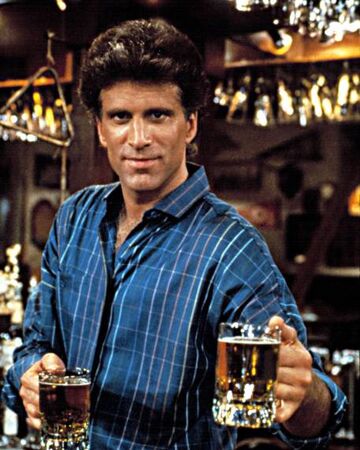
Sam Malone | Cheers Wiki | Fandom
via Cheers Wiki
ISTP: Harry Potter, Chewbacca
ESTP: Han Solo, Sam Malone
ISFP: my best friend, Hagrid
ESFP: Will Riker, Maxwell Klinger

SJs, the Epimetheans, those devoted to duty
Walter "Radar" O'Reilly | Monster M*A*S*H | Fandom
via The Monster M*A*S*H Wiki
ISTJ: Spock, Margaret Houlihan
ESTJ: Darth Vader, Carla Tortelli
ISFJ: Worf, C-3PO, Radar O'Reilly
ESFJ: my father, Dr. McCoy

NTs, the Prometheans, those who seek power
Tom Riddle | Harry Potter Wiki | Fandom
via Wikipedia
INTP: Data, Yoda, Hermione Granger
ENTP: my daughter, Dr. Crusher, R2-D2
INTJ: Jean-Luc Picard, Draco Malfoy
ENTJ: Leia Organa, Miss Piggy, Lord Voldemort

NFs, the Apollonians, those who strive for self-actualization
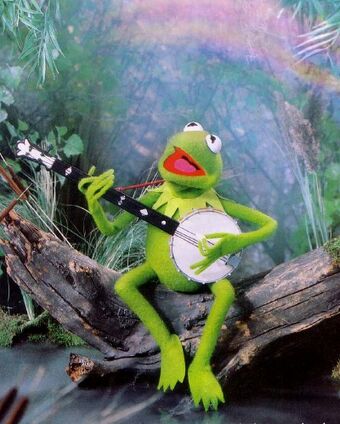
Kermit the Frog | Muppet Wiki | Fandom
via Muppet Wiki
INFJ: The Armchair Squid, Deonna Troi, Obi-Wan Kenobi
ENFJ: Diane Chambers, Albus Dumbledore
INFP: my wife, Luke Skywalker, Kermit
ENFP: my sister, James Kirk, Hawkeye Pierce, Animal

My most interesting discovery in the fictional world was that I could see the types most clearly in M*A*S*H.  I'm sure it helped that we'd recently binged the show as a family but I also think the series is particularly rich in clearly drawn and differentiated characters.  In my personal life, I was initially surprised to find the prevalence of NTs and especially NFs.  We are in the minority in terms of the broader population.  However, it was less surprising once I learned the NTs and NFs are more likely to go to college.  I expect they're also more likely to spend time on social media and more likely to answer personal, probing questions from me.

My biggest surprise, though, was the importance of SFJs in my life, both E and I.  I don't know so many of them but nearly all whom I do know have played meaningful roles in my personal history - even comparable roles.  I'm sure this fact says more about me than it does about them.  It says plenty about the sorts of people I've been drawn to, and even those who have been drawn to me.

And yes, INFJ has me nailed perfectly.  There are some interesting insights to share there, too.  I was an INFP for years, or at least I thought I was.  In reading the book's type descriptions, I'm not sure I was ever actually a P.  In the past, I may have answered the questions as to how I wanted to be as opposed to how I actually am.  Age has brought greater self-awareness.  The only one of the four factors I'm close on is F/T.  In fact, technically, I was INXJ according to the test in the book, meaning I was evenly split between the two.  However, in the test linked above, I'm an F and I can say with confidence that's closer to who I am.  Noneteless, the T tendencies are there and not insignificant to the broader picture that is me.

The Facebook thread got especially interesting.  One friend asserted that Myers-Briggs is inherently racist and thus unfairly used in hiring practices.  Poking around, there are strong arguments on both sides: it's racist and it's not.  I'm not sure what I think yet.  Obviously, I am fascinated by the types.  However, I can see the capacity for misuse.  Are the questions themselves culturally biased?  I have to acknowledge that's worth examining.  It depends on the particular test, of course, and there are plenty of different ones around.

The more important consideration, though, is how this sort of classification might be used.  Does an employer go into a candidate search with the assumption that some types are better than others or better-suited to particular roles?  Keirsey and Bates certainly devote plenty of material to the latter, if not the former.  To the authors' credit, they imply rather that a variety of types within an organization is ideal.  Also, the types do nothing to measure strengths or skills.  Being extroverted, for instance, does not mean you have better social skills than an introvert.  The differentiation merely identifies a preference in one's social interactions.  One can certainly see how an employer who misinterprets the data could use it unreasonably - if not intentionally unfairly - in hiring decisions.

Before leaving this topic, let me make very clear that there is plenty of racial bias in hiring practices.  That much is demonstrable fact.  I'm just not convinced MBTI is part of the problem.  I'm also not convinced it isn't.

Keirsey, who died in 2013, wrote several more books on the subject.  I'm definitely interested in reading more.

So, what's your type?  Do you think it describes you accurately?  Do you think MBTI is inherently racist?

Monday, August 5, 2019

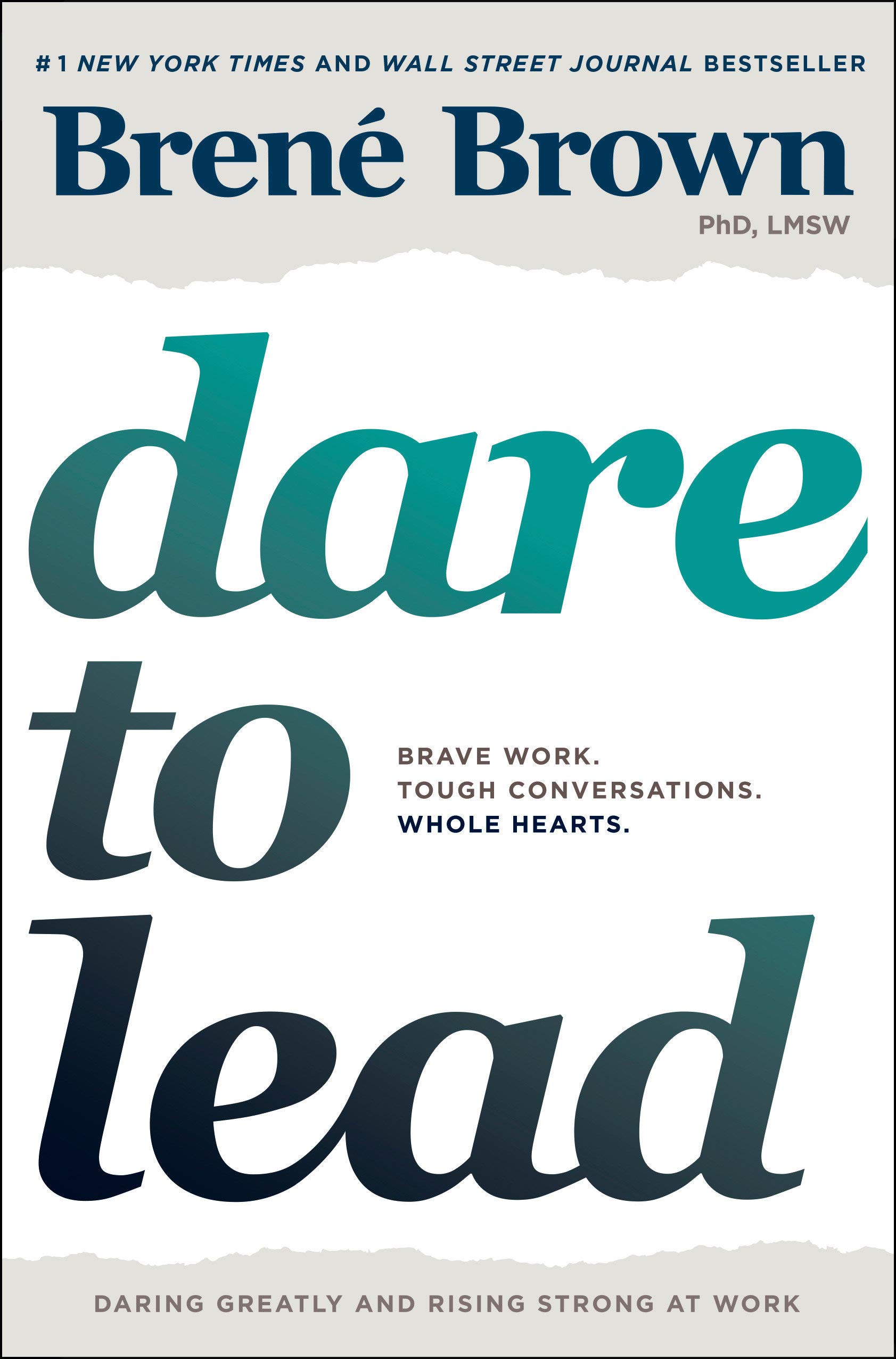
On the Coffee Table: Brené Brown

Title: Dare to Lead: Brave Work. Tough Conversations. Whole Hearts.
Author: Brené Brown

Image result for dare to lead
via Amazon

First of all, if you are new to the work of Brené Brown, you should watch her TED Talk on "The Power of Vulnerability."  Trust me.  This is important stuff:


While I first became aware of the author during my first summer graduate class three years ago, I didn't read any of her books until Dare to Lead was assigned to us for the most recent one.  In the intervening time, I've thought quite a lot about vulnerability and it truly has changed the way I think about my life, past, present and future. 

Dare to Lead explores how to "rumble with vulnerability" as a leadership approach in the workplace.  Brown defines such a rumble as
a discussion, conversation, or meeting defined by a commitment to lean into vulnerability, to stay curious and generous, to stick with the messy middle of problem identification and solving, to take a break and circle back when necessary, to be fearless in owning our parts, and, as psychologist Harriet Lerner teaches, to listen with the same passion with which we want to be heard.
She also encourages us to "live into our values," a concept close to the philosophy embraced by Po Bronson in What Should I Do with My Life? (see here).  In Brown's words, "Living into our values means that we do more than profess our values, we practice them."  From a list of dozens of values, she encourages the reader to narrow down to two as most important.  Rather unscientifically, I settled on curiosity and love.  Most of my life decisions are based primarily on those two factors.

Brown's writing is highly engaging.  I was grateful for the opportunity to live in her words for a while and will definitely seek out more.  A few of my favorite passages (admittedly some in which she quoted others):
  • "No matter how much we love Whitesnake - and, as many of you know, I do - we weren't really born to walk alone."
  • "We are not here to fit in, be well balanced, or provide exempla for others.  We are here to be eccentric, different perhaps strange, perhaps merely to add our small piece, our little clunky, chunky selves, to the great mosaic of being.  As the gods intended, we are here to become more and more ourselves." - Jim Hollis
  • "The opposite of play is not work - the opposite of play is depression." - Stuart Brown
At this point of the summer, I'm still trying really hard not to think too much about work.  Even so, it's good to take some inspiration from Brown pragmatic warmth as I approach a new school year.  

Monday, June 17, 2019

On the Coffee Table: Po Bronson

Title: What Should I Do with My Life?: The True Story of People Who Answered the Ultimate Question
Author: Po Bronson
Image result for what should i do with my life
via Amazon
Novelist Po Bronson, partly out of a need to make sense of his own journey, compiled a list of true stories confronting the question of what to do with their lives.  As one might expect, there are plenty of tales of those leaving conventional jobs in the corporate world to lead a non-profit or become a professional gardener or an inventor or what have you.  Some found new meaning in the work they were already doing.  Some were still working on the answers by the time Bronson left their stories.  In all cases, the answers came through effort and risk, not by sitting on the couch waiting for an epiphany.  His basic message is neatly summarized near the end of the book: "Bring what you do in alignment with who you are."

This book, unplanned, has come to me at an interesting time.  I like my job (music teacher) - much of the time.  I believe in the meaning of what I do - much of the time.  I'm not always sure it's what I'm meant to be doing.  I'm very good at parts of the gig and consistently struggle with others.  Sometimes I wonder if the strongest skills I bring to work would be put to better use in another context and with fewer or more tolerable struggles.  Bronson's book reminds me that such wonders are not unusual.  He hasn't given me any answers but I do have new ideas for how to approach the question.

It's always worth remembering the things I value.  I love music and sharing that love with others is always gratifying.  Students, even middle school students, can bring tremendous inspiration if you let them.  I enjoy the trust and respect from my colleagues that my long tenure in the district have brought me.  Perhaps most of all, I am grateful for one of the underappreciated privileges of teaching: the frequent opportunities to hit the reset button.  Each new school year, new term, new concert cycle, new day, new class period, new student brings an opportunity to reinvent if I need it.  Even if I do eventually find a new path, there are rich possibilities for the one I'm on.  It's good to remember that.

Also good to remember that a job can just be a job.  It need not define me.  I work to live and not the other way around.  I wouldn't want anything to change that.

One slight tangent: as I have written in previous posts (like this one), I love trees.  I have made big life choices, like living in Vermont and choosing a house to buy, based in part on my love for trees.  On page 301, Bronson offers this lovely thought: "Trees are like books - they have an intangible psychic significance far beyond their utility."

Monday, April 22, 2019

On the Coffee Table: Flash Boys

Title: Flash Boys: A Wall Street Revolt
Author: Michael Lewis
via Barnes & Noble
In his 2014 book, Michael Lewis offers a closer look at the mysterious world of high-frequency trading (HFT).  Apparently the exchange pits one sees in 1980s movies like Trading Places and Ferris Bueller's Day Off are extinct.  Everything's online now and literally lightning quick.  Anyone trader or firm who can shave microseconds off their transaction time has the advantage. 

Flash Boys covers a lot of ground in the HFT world but primarily focuses on Brad Katsuyama and his firm, IEX.  Brad is on a mission to right what he sees as a great wrong.  In short, HFT makes the traders rich but screws the customers who, once again, are intentionally kept in the dark about Wall Street's inner workings.  IEX is a new exchange intending to keep things fair. 

In my experience, Michael Lewis is best at character sketches.  The book flies when the focus is on the people and their relationships with each other.  Brad is not exactly Robin Hood as he still wants to make money for himself.  But the fact that he and his would-be merry men are willing to forego higher salaries with other firms in order to pursue a higher-minded ideal is endearing nonetheless.  All of Lewis's business books examine the complicated relationship between morality and the market.  At least in this case, it's pretty clear the protagonists are the good guys.

It's a muddier trudge when Lewis delves too deeply into the finance stuff.   As with his other books, I can't claim to understand all of it but the people help to make it relatable.

Apparently, Netflix has a movie in the works.


Thursday, January 3, 2019

On the Coffee Table: Andrew Tobias

Title: The Only Investment Guide You'll Ever Need
Author: Andrew Tobias

As I have written before, I don't understand high finance at all.  It's not the numbers.  I adore math.  It's simply that I've never had any money to invest so I've never needed to learn much.  However, through the work of Michael Lewis, I have come to enjoy reading about the financial world.  After all, I'm not exactly likely to become a professional baseball player, dragon treasure burglar or galactic hitchhiker either.  I can still enjoy the books about such characters.  So, when my mother gave me this Andrew Tobias treatise in an effort to clear out her own bookshelves, I figured why not?

Fortunately, much like Lewis, Tobias is an engaging and humorous writer.  Even better, for someone like me, he has plenty of sensible advice for saving money in the first place.  The title is tongue-in-cheek.  Tobias offers no magic formula for getting rich and readily admits to his own spectacular failures.  Instead, he offers simple, practical advice - mostly, how not to get hosed.  He asserts there are way too many authoritative-seeming books on the market while most people just need to remember a few basic principles and follow their own common sense.  Or be Warren Buffett.  If you can manage to simply be Warren Buffett, you're all set.

There's advice for those of means, too.  I didn't understand most of it but I am assuming it's equally sage.  As a cover-to-cover read, it wasn't half bad.  I laughed out loud several times and made it through quickly.  I'll keep the book around for reference.

Friday, May 25, 2018

Cephalopod Coffeehouse: May 2018

Welcome one and all to the Cephalopod Coffeehouse, a cozy gathering of book lovers, meeting to discuss their thoughts regarding the works they enjoyed most over the previous month.  Pull up a chair, order your cappuccino and join in the fun.  If you wish to add your own review to the conversation, please sign on to the link list at the end of my post.

Title: Working with Emotional Intelligence
Author: Daniel Goleman
This is the second Goleman emotional intelligence book I've read.  My reflection on the first is here.  This book is targeted to the business community, though I think much of the material pertains to any workplace, including education.  The overwhelming majority of ink is spilt over proving the existence and importance of EQ, much less on how to help.  Clearly the idea is to encourage people to hire him at great cost for workshops and seminars.

Even so, I do feel better equipped to recognize problems.  Unfortunately, Goleman's description of a work environment low on emotional intelligence fits my own current situation to a T.  Even if my own job is basically satisfying - and it is - too many of my colleagues are miserable everyday.  One deals with the problem in one of two ways: by hiding or by trying to help (a confidant also pointed out to me, one can also just leave but that's just an extension of hiding).  On a given day, I probably do some of each and neither is satisfying.  Goleman's thinking does fuel some new ideas on approaches to take.  Having been in my district a while, I have gained a certain measure of trust among my colleagues and even - dare I say it? - administrators.  A few thoughtfully planted suggestions in the right ears could potentially move things in a positive direction.  Food for thought. 

As with the first book, Working with Emotional Intelligence isn't a great cover-to-cover read.  I would read a bit, think a bit, read a bit, think a bit, etc.  The material is good, though.  I don't know if I would read more Goleman after this but I'm glad to have been exposed to his work.

Please join us and share your own review of your best read from the past month.  This month's link list is below.  I'll keep it open until the end of the day.  I'll post June's tomorrow.  Meetings are the last Friday of each month.  Next gathering is June 29th.


Wednesday, December 27, 2017

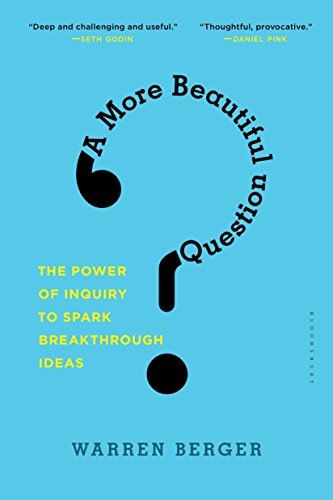
On the Coffee Table: Warren Berger

Title: A More Beautiful Question: The Power of Inquiry to Spark Breakthrough Ideas
Author: Warren Berger
via Amazon
This is yet another of the excellent books I've been assigned to read as part of my graduate school program.  This is one of our guiding texts as we embark upon the action research thread of our journey.

Berger advocates using the inquiry process to tackle all of life's big struggles.  Rather than always seeking answers, we should embrace the power of the questions themselves.  As he shares in the book, this approach has led to such innovations as the Polaroid camera, Netflix and better, stronger, more affordable prosthetic limbs.  Successful and innovative companies such as Google, IDEO and Airbnb have thrived on developing corporate cultures that encourage inquiry and exploration.  Berger outlines a simple process for incorporating the strategy in our own lives: developing innovations in our own work, in our schools, redefining personal relationships or even planning a career move.

It's an inspiring and liberating idea.  Too often, one bucks up against the How to? in life and gives up.  But Berger shows how you can get out of that trap: with more questions.  This is certainly a book I will come back to and share with others.

Thursday, October 19, 2017

On the Coffee Table: Strengths-Based Leadership

Title: Strengths-Based Leadership: Great Leaders, Teams, and Why People Follow
Authors: Tom Rath and Barry Conchie
via Target
Like Emotional Intelligence, this was a book from last summer's grad school course.  Strengths-based learning is a major theme of the program and while we usually talk about emphasizing our students' strengths, in our leadership class, we were encouraged to explore our own.  Rather than fretting over our deficiencies, not to mention those of others, we should all be building on what we do well.

The book includes a passcode to an online assessment (more on that later).  My own strengths shook out as follows:

Input - "People strong in the Input theme have a craving to know more.  Often they like to collect and archive all kinds of information."

Learner - "People strong in the Learner theme have a great desire to learn and want to continuously improve.  In particular, the process of learning, rather than the outcome, excites them."

Intellection - "People strong in the Intellection theme are characterized by their intellectual activity.  They are introspective and appreciate intellectual discussions."

Context - "People strong in the Context theme enjoy thinking about the past.  They understand the present by researching its history."

Connectedness - "People strong in the Connectedness theme have faith in the links between all things.  They believe there are few coincidences and that almost every event has a reason."

In total, the book highlights 34 themes which fall into four different categories: executing, influencing, relationship building and strategic thinking.  Four of my five (all except connectedness) are strategic thinking strengths.  As I am comfortable in that area, I should look to build teams around me of those with strengths in the other three areas.  For the record, connectedness falls into relationship building.

I am fully on board with the basic thesis: make the most of your own strengths and, when you can, those of others.  Here's the problem: you'll get the most out of the book if you take the online assessment and each individual book copy comes with its own passcode.  So, sharing books doesn't work.  Everyone needs to buy their own copy. 

If you're interested in strengths - and you should be - a more satisfying self-evaluation route might be the VIA Survey.  Their strengths cover a broader range of life endeavors AND the initial survey and the basic report are free.  For the record, my top five VIA strengths:
  1. Love of learning
  2. Judgment
  3. Curiosity
  4. Love
  5. Prudence

Wednesday, September 13, 2017

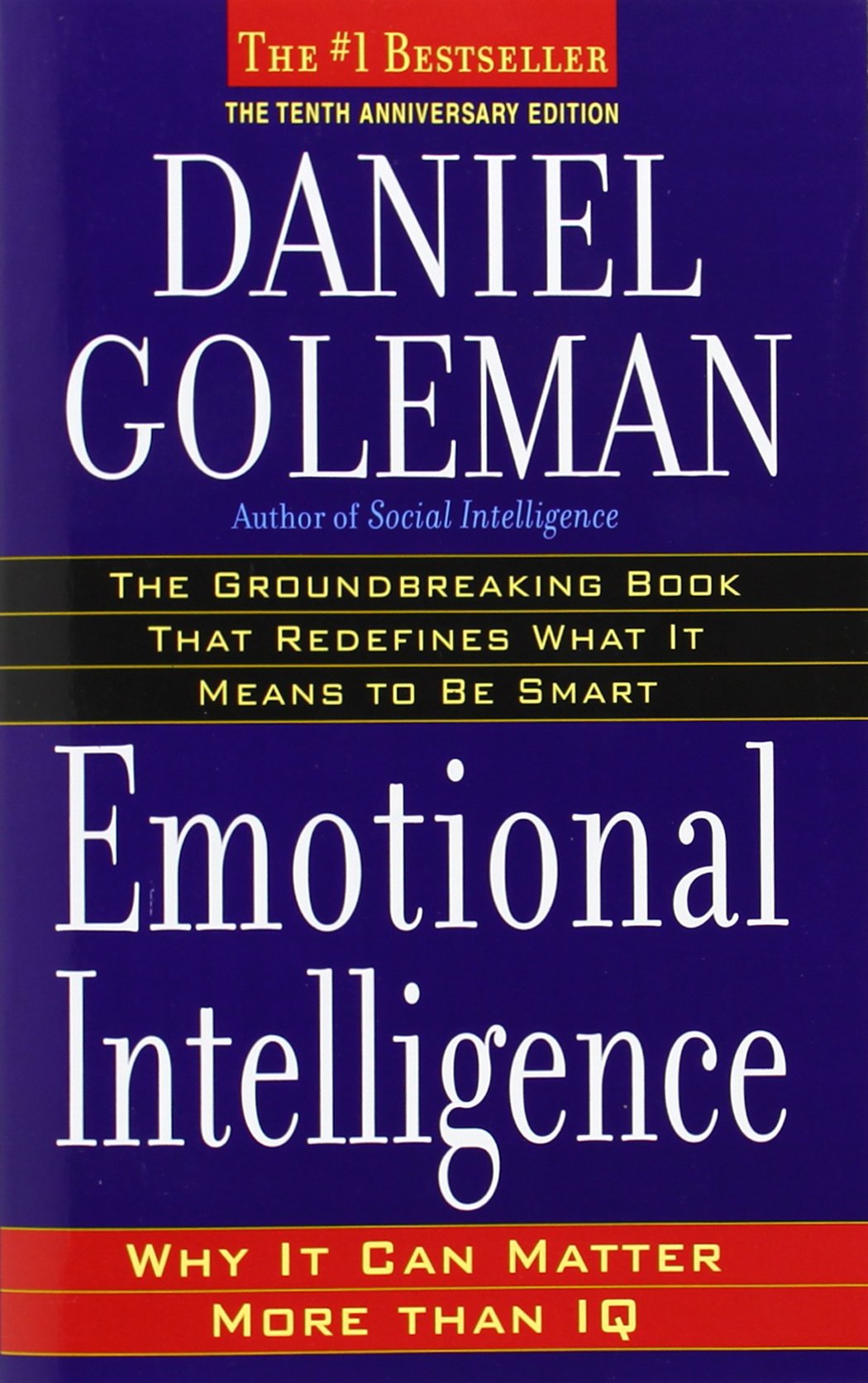
On the Coffee Table: Daniel Goleman

Title: Emotional Intelligence: Why It Can Matter More Than IQ
Author: Daniel Goleman
via Amazon
I am currently in a master's program - about 13 credits in, I think.   Last summer's class was on leadership and this book - or parts of it - was one of the assigned texts.  I finally got around to reading the whole thing.

The idea of emotional intelligence (EI, measured by EQ) comes from the theory of multiple intelligences set forth by Dr. Howard Gardner in 1983.  Wikipedia defines EI as "the capability of individuals to recognize their own and other people's emotions, discern between different feelings and label them appropriately, use emotional information to guide thinking and behavior, and manage and/or adjust emotions to adapt to environments or achieve one's goal(s)."  Goleman asserts that EI is a far greater indicator of success in life than the more traditional measures: grades, SATs, IQ tests. 

The book explores the role of EI in numerous contexts: work, school, family life, violent crime, etc.  Goleman's argument is thorough and convincing.  The material on brain function is less interesting to me personally, though admittedly essential to overall understanding.  Some of his real-life anecdotes are fairly intense, enough that it's difficult to concentrate on the text that follows - interesting as Goleman explains how such stories have been used in clinical studies.  It's not an easy book to digest in one sitting, at least not for me - lots of starting and stopping with time to ponder in between.

It's certainly a book that leaves me wanting to post-game various stages of my own life - childhood certainly.  Thinking back, I can remember several friends who were popular for all of the right reasons - i.e., people simply enjoyed being around them.  Emotional intelligence certainly played a role there.  The text shed new light on a lot of my own relationships, too: familial, romantic, collegial, what have you.  While it's not a book I'll instantly start recommending it to everyone I know, I am grateful for the insights and will suggest it to some.

Friday, July 28, 2017

Cephalopod Coffeehouse: July 2017

Welcome one and all to the Cephalopod Coffeehouse, a cozy gathering of book lovers, meeting to discuss their thoughts regarding the works they enjoyed most over the previous month.  Pull up a chair, order your cappuccino and join in the fun.  If you wish to add your own review to the conversation, please sign on to the link list at the end of my post.

Title: Crucial Conversations: Tools for Talking When the Stakes Are High
Authors: Kerry Patterson, Joseph Grenny, Ron McMillan, Al Switzler
via Amazon
I think it's fair to say that the school district where I work is struggling at the moment.  Turnover has been high at both the administrative and faculty levels.  An atmosphere of mistrust - festering for decades - has reached near toxic levels.  Even summer hasn't given us much of a break from the troubles.  Yup, we're in rough shape.

Administration gave us a book to read over the summer.  It was not required.  It was suggested.  It's a book about improving your communication skills.  Just as there was a couple years ago when we were required to read Mindset (read here), there has been resistance in the ranks.

"How dare they give us this book to read.  They're the ones who can't communicate."  And so on.  You know how it goes.  I was always going to read it but even I went into it with a pessimistic attitude, thinking maybe it might provide ammunition in a difficult meeting one day.

The truth is, the book's actually quite good.  The authors are business consultants who have spent years watching successful people, dissecting what they do differently from everyone else.  Their thesis: everyone has crucial conversations in their lives, both personal and professional.  The people who stand out are the ones who handle those conversations effectively.

According to the authors, a crucial conversation is one in which opinions vary, stakes are high and emotions run strong.  In education, such conversations happen all the time: teacher-student, teacher-admin, teacher-colleague, teacher-parent, student-student, student-bus driver, etc.  The book offers several tactics they have found to be effective in these tense situations.  Each chapter focuses on a particular skill.  For example:
  • Chapter 3: Start with Heart, How to Stay Focused on What You Really Want
  • Chapter 5: Make It Safe, How to Make It Safe to Talk About Almost Anything
  • Chapter 8: Explore Others' Paths, How to Listen When Others Blow Up or Clam Up
In the midst of reading the book, I attended a school board meeting and realized the deep levels of dysfunction we're currently experiencing.  The book's recommendations are good ones.  I am hopeful that at least a few of my colleagues will set their resentments aside and give it a go.  In all honesty, our communication difficulties predate our current troubles by decades, probably generations.  I am at a point in my own career where I'm starting to seriously ponder future leadership roles for myself and I expect the principles outlined in the book to be highly useful - both in considering if that's what I really want and in preparing myself to do the work.  It's a book I'll share with others and keep around for reference.  Relationships are everything in education - truly, in life.  How could one not want ideas about how to improve them?

Please join us and share your own review of your best read from the past month.  This month's link list is below.  I'll keep it open until the end of the day.  I'll post August's tomorrow.  Meetings are the last Friday of each month.  Next gathering is August 25th.