Greetings to all! I hope you'll join us for the next installment of
the Cephalopod Coffeehouse, an online gathering of bloggers who love
books. The next meeting is set for Friday, August 26th. If you're
interested, please sign on to the link list at the end of this post.
The
idea is simple: on the last Friday of each month, post about the best
book you've finished over the past month while visiting other bloggers
doing the same. In this way, we'll all have the opportunity to share
our thoughts with other enthusiastic readers. Please join us.
"If more of us valued food and cheer and song over hoarded gold, it would be a merrier world." - J.R.R. Tolkien
Saturday, July 30, 2016
Friday, July 29, 2016
The Cephalopod Coffeehouse: July 2016
Welcome one and all to the Cephalopod Coffeehouse, a cozy gathering of
book lovers, meeting to discuss their thoughts regarding the works they
enjoyed most over the previous month. Pull up a chair, order your
cappuccino and join in the fun. If you wish to add your own review to
the conversation, please sign on to the link list at the end of my post.
Title: Trinity: A Graphic History of the First Atomic Bomb
Writer and Artist: Jonathan Fetter-Vorm
This one was another Suze recommendation.
Trinity was the code name for the first test of an atomic bomb created by the Manhattan Project during World War II. Fetter-Vorm's graphic novel presents an excellent historical account of the project and its aftermath. I particularly appreciate the author's explanation of the science of atomic energy, a prime example of the effectiveness of sequential art over text alone. The book is particularly effective in the end as the scientists involved come to terms with what they had created. It's worth noting, most had no idea of the full scope of the Project, having been told only enough to complete their own small portion of the work. Even the lead scientist, J. Robert Oppenheimer, didn't understand the full power of the weapon until it was used in Hiroshima and Nagasaki.
One could design an entire college course around graphic novels about the atomic bomb. In addition to this book, the bomb is a topic well covered in Japanese manga. Keiji Nakazawa's Barefoot Gen series is a brutal account of the bomb's aftermath in Hiroshima. Shigeru Mizuki's Showa series includes the bombs but from a broader historical perspective. Both series are highly critical of Japan's own war record.
Please join us and share your own review of your best read from the past month. This month's link list is below. I'll keep it open until the end of the day. I'll post August's tomorrow. Meetings are the last Friday of each month. Next gathering is August 26th.
Title: Trinity: A Graphic History of the First Atomic Bomb
Writer and Artist: Jonathan Fetter-Vorm
![]() |
| via Amazon |
Trinity was the code name for the first test of an atomic bomb created by the Manhattan Project during World War II. Fetter-Vorm's graphic novel presents an excellent historical account of the project and its aftermath. I particularly appreciate the author's explanation of the science of atomic energy, a prime example of the effectiveness of sequential art over text alone. The book is particularly effective in the end as the scientists involved come to terms with what they had created. It's worth noting, most had no idea of the full scope of the Project, having been told only enough to complete their own small portion of the work. Even the lead scientist, J. Robert Oppenheimer, didn't understand the full power of the weapon until it was used in Hiroshima and Nagasaki.
One could design an entire college course around graphic novels about the atomic bomb. In addition to this book, the bomb is a topic well covered in Japanese manga. Keiji Nakazawa's Barefoot Gen series is a brutal account of the bomb's aftermath in Hiroshima. Shigeru Mizuki's Showa series includes the bombs but from a broader historical perspective. Both series are highly critical of Japan's own war record.
Please join us and share your own review of your best read from the past month. This month's link list is below. I'll keep it open until the end of the day. I'll post August's tomorrow. Meetings are the last Friday of each month. Next gathering is August 26th.
Labels:
Book Club,
comics,
good reading,
graphic novels,
science books
Thursday, July 28, 2016
On the Coffee Table: The Gastronomical Me
Title: The Gastronomical Me
Author: M.F.K. Fisher
The Gastronomical Me is the fourth book of five in Fisher's The Art of Eating collection. My reviews of the first three books are here, here and here. This installment is pure memoir, a summary of her life to that point (1943, age 35): her childhood in California, a brief college stint in Illinois, European adventures with two separate husbands and a stay in Mexico after the second one died. Always, the memories are punctuated by food.
As discussed in my previous posts on her work, Fisher writes of eating and preparing food as a sensuous, spiritual endeavor. Experiences like eating her first oyster or learning how to cook in each new kitchen are not incidental. They matter, deeply. In reading her work, I am always reminded of my own comparable experiences. This time, it was my daughter's first ice cream. Her favorite is vanilla, which always seemed like a dull choice in my pre-parenting life. But I know why vanilla is her love. The first taste of ice cream she ever had was her mother's homemade vanilla. If you, dear reader, have never had homemade vanilla ice cream, you've never truly eaten ice cream at all. I completely understand why she would want to return to the magic of the original experience. Fisher's writing contains stories such as this in nearly every paragraph.
Several of the chapters recount sea voyages made in moving back and forth between Europe and the States. Ocean liners don't feature in intercontinental travel so prominently these days but it was a meaningful part of the adventure for Fisher, one trip on an Italian freighter lasting several months. She also wrote about the difficulties of traveling alone as a woman. She enjoyed it but generally found that others, particularly men, didn't know quite how to deal with her. She developed an I-don't-require-your-company attitude that mostly kept them off her case.
We don't get all of the juicy details of her life, rather a shame considering how forthcoming she is about the gastronomical ones. We get no dirt on the divorce from her first husband, nor the most gruesome details from the death of her second. In fact, she doesn't even refer to the second by his real name, Dillwyn Parrish. She calls him Chexbres, a Swiss name in honor of the life they shared in Switzerland. But in both cases, she manages to convey the emotional journey, particularly the pain of loss.
Fisher continues to delight me. I have one more to go in the collection: An Alphabet for Gourmets. I'm looking forward to it.
Author: M.F.K. Fisher
![]() |
| via Goodreads |
As discussed in my previous posts on her work, Fisher writes of eating and preparing food as a sensuous, spiritual endeavor. Experiences like eating her first oyster or learning how to cook in each new kitchen are not incidental. They matter, deeply. In reading her work, I am always reminded of my own comparable experiences. This time, it was my daughter's first ice cream. Her favorite is vanilla, which always seemed like a dull choice in my pre-parenting life. But I know why vanilla is her love. The first taste of ice cream she ever had was her mother's homemade vanilla. If you, dear reader, have never had homemade vanilla ice cream, you've never truly eaten ice cream at all. I completely understand why she would want to return to the magic of the original experience. Fisher's writing contains stories such as this in nearly every paragraph.
Several of the chapters recount sea voyages made in moving back and forth between Europe and the States. Ocean liners don't feature in intercontinental travel so prominently these days but it was a meaningful part of the adventure for Fisher, one trip on an Italian freighter lasting several months. She also wrote about the difficulties of traveling alone as a woman. She enjoyed it but generally found that others, particularly men, didn't know quite how to deal with her. She developed an I-don't-require-your-company attitude that mostly kept them off her case.
We don't get all of the juicy details of her life, rather a shame considering how forthcoming she is about the gastronomical ones. We get no dirt on the divorce from her first husband, nor the most gruesome details from the death of her second. In fact, she doesn't even refer to the second by his real name, Dillwyn Parrish. She calls him Chexbres, a Swiss name in honor of the life they shared in Switzerland. But in both cases, she manages to convey the emotional journey, particularly the pain of loss.
Fisher continues to delight me. I have one more to go in the collection: An Alphabet for Gourmets. I'm looking forward to it.
Labels:
family adventures,
food,
food books,
good reading
Wednesday, July 27, 2016
Family Book Swap: The Night Manager
Title: The Night Manager
Author: John le Carré
My wife is a big fan of spy novels, especially the work of John le Carré, himself a former British agent. Together, we have watched several screen adaptations: Tinker, Tailor, Soldier, Spy, Smiley's People, The Tailor of Panama and The Constant Gardener. Just recently, BBC and AMC aired a six-part miniseries of The Night Manager, starring Tom Hiddleston, Hugh Laurie and Olivia Colman. We both enjoyed it thoroughly and my wife used it as an opportunity to share the book with me. For my side of the swap, I gave her Samskara by U.R. Anantha Murthy. Her Goodreads review is here.
As we meet Jonathan Pine, he is the night manager of a ritzy hotel in Zurich. The new guests for the evening are arms-dealing king pin Richard Roper and his entourage. Unknown to Roper, Pine is already aware of him and the source of his wealth from a previous encounter in Cairo. Roper had killed the woman Pine loved, or at least arranged for her killing. Out for personal revenge and spurred by his own needs for redemption, Pine makes contact with British intelligence and becomes the point man in a scheme to bring Roper down.
After devoting some time to developing a credible back story, Pine ingratiates himself with Roper by rescuing his son in a staged kidnapping attempt. Roper rewards Pine by giving him a cushy job in the operation. While trying to gather information for his intel handlers, Pine dances around the suspicions of Roper's inner circle as well as the increasing affections of his girlfriend, Jed.
The differences between book and miniseries are many. The novel was le Carré's first after the end of the Cold War. Latin American drug cartels were the big concern. The 2016 adaptation plays more on worries about armed militias in the Middle East. In the book, Olivia Colman's character Burr is a man. Jed is British in the book, American in the series with a different backstory. The endings are significantly different, particularly important for anyone who has experienced one but not the other.
I think Hugh Laurie's involvement in the project (both he and Hiddleston also have executive producer credits for the miniseries) is interesting. Laurie himself wrote a novel, The Gun Seller, which also dealt with the arms trade. Clearly it is an issue of importance to him, explaining his willingness to play the villain and also, perhaps, the different ending to the miniseries.
I definitely recommend the book. A lot of material is devoted to the bureaucratic battles behind the scenes in London. That bit's not as interesting to me but as long as the story sticks with Pine, it moves quickly.
Author: John le Carré
![]() |
| via Goodreads |
As we meet Jonathan Pine, he is the night manager of a ritzy hotel in Zurich. The new guests for the evening are arms-dealing king pin Richard Roper and his entourage. Unknown to Roper, Pine is already aware of him and the source of his wealth from a previous encounter in Cairo. Roper had killed the woman Pine loved, or at least arranged for her killing. Out for personal revenge and spurred by his own needs for redemption, Pine makes contact with British intelligence and becomes the point man in a scheme to bring Roper down.
After devoting some time to developing a credible back story, Pine ingratiates himself with Roper by rescuing his son in a staged kidnapping attempt. Roper rewards Pine by giving him a cushy job in the operation. While trying to gather information for his intel handlers, Pine dances around the suspicions of Roper's inner circle as well as the increasing affections of his girlfriend, Jed.
The differences between book and miniseries are many. The novel was le Carré's first after the end of the Cold War. Latin American drug cartels were the big concern. The 2016 adaptation plays more on worries about armed militias in the Middle East. In the book, Olivia Colman's character Burr is a man. Jed is British in the book, American in the series with a different backstory. The endings are significantly different, particularly important for anyone who has experienced one but not the other.
I think Hugh Laurie's involvement in the project (both he and Hiddleston also have executive producer credits for the miniseries) is interesting. Laurie himself wrote a novel, The Gun Seller, which also dealt with the arms trade. Clearly it is an issue of importance to him, explaining his willingness to play the villain and also, perhaps, the different ending to the miniseries.
I definitely recommend the book. A lot of material is devoted to the bureaucratic battles behind the scenes in London. That bit's not as interesting to me but as long as the story sticks with Pine, it moves quickly.
Labels:
Asian Lit,
family adventures,
Family Book Swap,
film,
good reading,
thriller books
Tuesday, July 26, 2016
The Clone Wars: Ghosts of Mortis
My friends and I are watching Star Wars: The Clone Wars.
Every Tuesday, we will be featuring an episode from the series which
began in 2008 (as opposed to the one that started in 2003). All are
welcome to join us for all or parts of the fun.
Episode: "Ghosts of Mortis"
Series: Star Wars: The Clone Wars
Season 3, Episode 17
Original Air Date: February 11, 2011
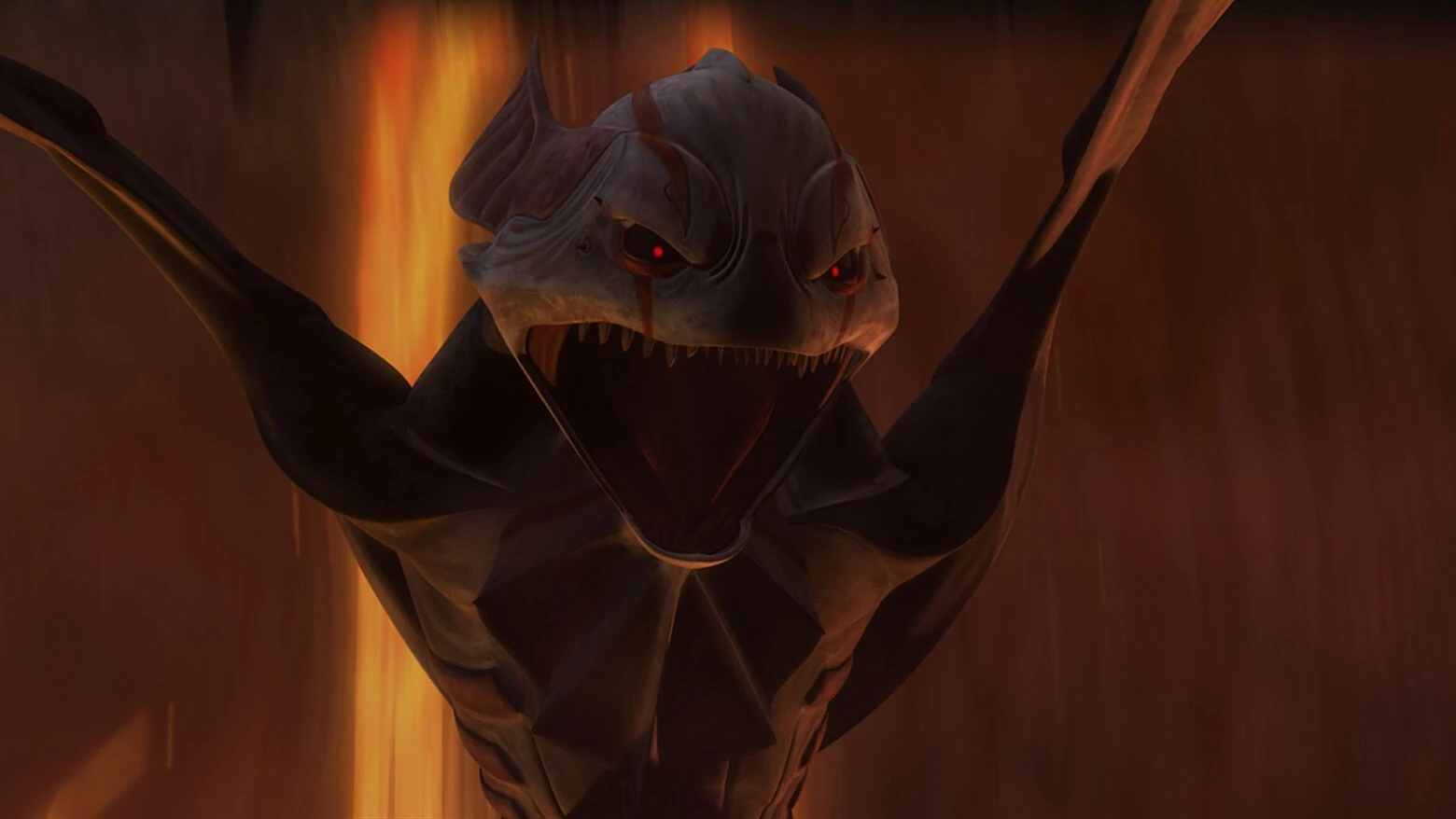
The Mortis story arc concludes with this week's episode. A quick catch up on our tale: Anakin, Obi-Wan and Ahsoka are embroiled in what amounts to a trans-dimensional morality play. The Father is the mediator in the struggle between his Daughter (champion of the light side of the Force) and Son (dark side). He wants Anakin to take his place. Anakin resists. Last week, the Son gained the upper hand by inadvertently killing his sister. Now the dark is in ascendance. The Son now turns his full attention to the matter of converting Anakin to the dark side. So as to avoid spoiling the story for anyone who hasn't watched it yet, I move that we now enter what amounts to a bloggers' executive session...
Now, the entire drama has played out. The Son's advantage is temporary. He converts Anakin, though not permanently. The Father sacrifices himself in order to prevent the Son's domination. Anakin kills the Son and thus balance is achieved. He is the Chosen One after all. The Mortis arc is, essentially, the entire Anakin story played out in miniature.
Following Star Wars in episode order, the prophecy regarding Anakin is made in Phantom Menace, he is converted to the dark side in Revenge of the Sith and he destroys the Sith from within in Return of the Jedi. In so doing, he brings balance to the Force and fulfills the prophecy. As the audience, we were fed this story in a frustrating, disjointed order but it does all fit together nicely in the end.
All of this is easy enough to follow in the Mortis arc. The more subtle side of the story is that of the Daughter. In the movies, too, the rise and fall of the dark side is obvious. The path of the light is quieter. Yoda assures Luke - and us - the dark is not stronger but it's difficult to believe most of the time. The dark wields its power through fear. It feeds off of anger, greed and jealousy. None is ever in short supply. How does the light manage to hold its own? When Obi-Wan duels Vader in A New Hope, he says "If you strike me down, I shall become more powerful than you can possibly imagine." It's a badass thing to say but what does it mean? Surely, it must mean more than becoming a ghost in order to play Jiminy Cricket to Luke's Pinnochio.
Mortis offers clues. All seems lost when the Daughter is killed. With no one to counter the rise of the dark, what hope is left for the galaxy? But has the Daughter's power actually diminished with her death? Perhaps her martyrdom only strengthens her symbolic significance. There are obvious real world parallels, after all. Even the Son mourns her: "you were the only one I ever truly loved," he says. The Father is finally able to defeat the Son through his own self-sacrifice.
Thus the conflict between dark and light is reduced to that between the selfish and the selfless. The battle is waged across the galaxy and within the heart and mind of each character. It is the story of Star Wars and perhaps that of our own world, too.
Last week, I criticized the story for its too explicit connection to the broader Star Wars saga. Now that it's over and the relationship between events on Mortis and the rest of the galaxy is less clear, I'm more comfortable.
The Force spirit of Qui-Gon Jinn appears to both Obi-Wan and Anakin during the Mortis arc. We first met Jinn in Phantom Menace as Obi-Wan's Jedi Master. It was Jinn who first identified Anakin as the Chosen One. In the Mortis arc, Qui-Gon Jinn is voiced by Liam Neeson, the actor who played him in Phantom Menace.
Liam Neeson was born June 7, 1952 in Ballymena, Northern Ireland. He was a gifted athlete in his youth, an accomplished boxer and football (soccer) player. He dropped out of university to work as a fork-lift operator for the Guinness Brewery. As is the case with so many Hollywood A-listers, his acting career began on the stage, joining the Lyric Players' Theatre in Belfast in 1976. Film work came in the '80s: Excalibur, The Bounty and The Mission among others. Of course, the big break came when Steven Spielberg offered him the lead role in 1993's Schindler's List, for which he received his first and so far only Oscar nomination. In 1997, Empire magazine included Neeson on its list of the top 100 movie stars in history.
If you would care to join us for all or part of our travels, sign on to the list below. Please visit the other participants today. Next week: "The Citadel."
Episode: "Ghosts of Mortis"
Series: Star Wars: The Clone Wars
Season 3, Episode 17
Original Air Date: February 11, 2011
![]() |
| via Wookieepedia |
!!!SPOILER ALERT!!!
Now, the entire drama has played out. The Son's advantage is temporary. He converts Anakin, though not permanently. The Father sacrifices himself in order to prevent the Son's domination. Anakin kills the Son and thus balance is achieved. He is the Chosen One after all. The Mortis arc is, essentially, the entire Anakin story played out in miniature.
Following Star Wars in episode order, the prophecy regarding Anakin is made in Phantom Menace, he is converted to the dark side in Revenge of the Sith and he destroys the Sith from within in Return of the Jedi. In so doing, he brings balance to the Force and fulfills the prophecy. As the audience, we were fed this story in a frustrating, disjointed order but it does all fit together nicely in the end.
All of this is easy enough to follow in the Mortis arc. The more subtle side of the story is that of the Daughter. In the movies, too, the rise and fall of the dark side is obvious. The path of the light is quieter. Yoda assures Luke - and us - the dark is not stronger but it's difficult to believe most of the time. The dark wields its power through fear. It feeds off of anger, greed and jealousy. None is ever in short supply. How does the light manage to hold its own? When Obi-Wan duels Vader in A New Hope, he says "If you strike me down, I shall become more powerful than you can possibly imagine." It's a badass thing to say but what does it mean? Surely, it must mean more than becoming a ghost in order to play Jiminy Cricket to Luke's Pinnochio.
Mortis offers clues. All seems lost when the Daughter is killed. With no one to counter the rise of the dark, what hope is left for the galaxy? But has the Daughter's power actually diminished with her death? Perhaps her martyrdom only strengthens her symbolic significance. There are obvious real world parallels, after all. Even the Son mourns her: "you were the only one I ever truly loved," he says. The Father is finally able to defeat the Son through his own self-sacrifice.
Thus the conflict between dark and light is reduced to that between the selfish and the selfless. The battle is waged across the galaxy and within the heart and mind of each character. It is the story of Star Wars and perhaps that of our own world, too.
!!!END OF SPOILER!!!
Last week, I criticized the story for its too explicit connection to the broader Star Wars saga. Now that it's over and the relationship between events on Mortis and the rest of the galaxy is less clear, I'm more comfortable.
*****
![]() |
| via Wookieepedia |
Liam Neeson was born June 7, 1952 in Ballymena, Northern Ireland. He was a gifted athlete in his youth, an accomplished boxer and football (soccer) player. He dropped out of university to work as a fork-lift operator for the Guinness Brewery. As is the case with so many Hollywood A-listers, his acting career began on the stage, joining the Lyric Players' Theatre in Belfast in 1976. Film work came in the '80s: Excalibur, The Bounty and The Mission among others. Of course, the big break came when Steven Spielberg offered him the lead role in 1993's Schindler's List, for which he received his first and so far only Oscar nomination. In 1997, Empire magazine included Neeson on its list of the top 100 movie stars in history.
If you would care to join us for all or part of our travels, sign on to the list below. Please visit the other participants today. Next week: "The Citadel."
Labels:
Clone Wars project,
comics,
family adventures,
film,
good reading,
sources,
Star Wars,
TV
Friday, July 22, 2016
On the Road: Nova Scotia
Pull up the screen and warm up the projector. That's right, you're in for a treat: vacation slides from our recent trip to Nova Scotia! I promise, there's just a few - hopefully enough to give you a taste of the adventure. Anybody want some popcorn?
Placemats:
A lobster club sandwich at Shore Road Seafood in Hillsburn. Once I discovered such a thing existed, I declared that I never wanted to leave Nova Scotia again.
A couple of quick travel recommendations:
We stayed on the Bay of Fundy coast, famous for its high tides:
Nearby Digby promotes itself as the scallop capital of the world. Images of scallops are everywhere.
Placemats:
Toilet roll bar frames:
The phone book:
Roses at the Annapolis Royal Historic Gardens:
A lobster club sandwich at Shore Road Seafood in Hillsburn. Once I discovered such a thing existed, I declared that I never wanted to leave Nova Scotia again.
In Canada, you can get free socks with a bottle of whiskey:
And finally, the best reason of all to visit the ocean:
A couple of quick travel recommendations:
- If you should ever have the good fortune of finding yourself in the charming town of Annapolis Royal, Nova Scotia, the candlelight graveyard tour at Fort Anne is a must.
- By luck, we encountered First World War Comes to Life:
The group will be making stops in Ottawa, Toronto, Niagara-on-the-Lake and Montreal later this summer. For more information, click here."a fully-animated exhibit that explores the lesser known wartime contributions of the Canadian men and women who served beyond the trenches, both at home and overseas. From home front relief efforts and wartime production to frontline communications and medical aid, the exhibit offers a series of dynamic displays and activities for visitors to experience the sights, sounds and smells of a world behind the front lines."
Tuesday, July 19, 2016
The Clone Wars: Altar of Mortis
My friends and I are watching Star Wars: The Clone Wars.
Every Tuesday, we will be featuring an episode from the series which
began in 2008 (as opposed to the one that started in 2003). All are
welcome to join us for all or parts of the fun.
Episode: "Altar of Mortis"
Series: Star Wars: The Clone Wars
Season 3, Episode 16
Original Air Date: February 4, 2011
In last week's episode, Anakin managed to beg off becoming referee for life between the Son (embodiment of the dark side of the Force) and Daughter (embodiment of the light) on the planet Mortis. Or did he? As this week's story opens, Anakin, Obi-Wan and Ahsoka are heading away in their ship but the Son manages to snatch Ahsoka and hold her captive, forcing a confrontation between himself and the Jedi.
I'm going to break one of my own self-imposed rules with this post. Up to this point, I've avoided giving away the ending of each episode. Once we move on to the next installment in a story arc, I figure it's fair game to talk about the end of the last one. But, on the off chance someone out there is watching along with us, I don't want to spoil anything for the current week. This week, however, I must. There's just too much to talk about this time. And so...
Important note before we dig deeper: as I write this, I have not yet watched the third episode of this three-part arc. I am sure there are other shoes yet to fall and I know I am making assumptions based on incomplete information. We'll reassess accordingly next week.
Predictably, the Daughter sides with the Jedi against her brother. In so doing, she takes a big risk and pays a steep price. She gives the Dagger of Mortis - a weapon capable of killing a Force wielder - to Obi-Wan. During the ultimate confrontation, the Son steals it from the Jedi and turns to use it against the Father. The Daughter sacrifices herself by stepping between them at the last minute. She dies and the balance of the Force is disrupted, for Mortis and for the rest of the galaxy. The rise of the Sith, according to the Father, is now inevitable.
While I certainly appreciate the allegorical nature of the Mortis arc, I am not entirely comfortable with this conclusion. As I have said before, I'm not a huge fan of the prequel trilogy but I do feel the turning of Anakin to the dark side is the part Lucas got right. In the young Jedi's pride and arrogance, Darth Sidious saw vulnerabilities he could manipulate. Anakin was seduced by power. People often are. To imply it all happened because of supernatural forces being thrown out of balance in a morality play on another astral plane is dissatisfying to me.
The Mortis story would work better, I think, without the explicit connection to the broader saga. The metaphors would be more effective if the viewer were left to interpret them for him/herself.
And yes, I know we're not quite done with this story yet...
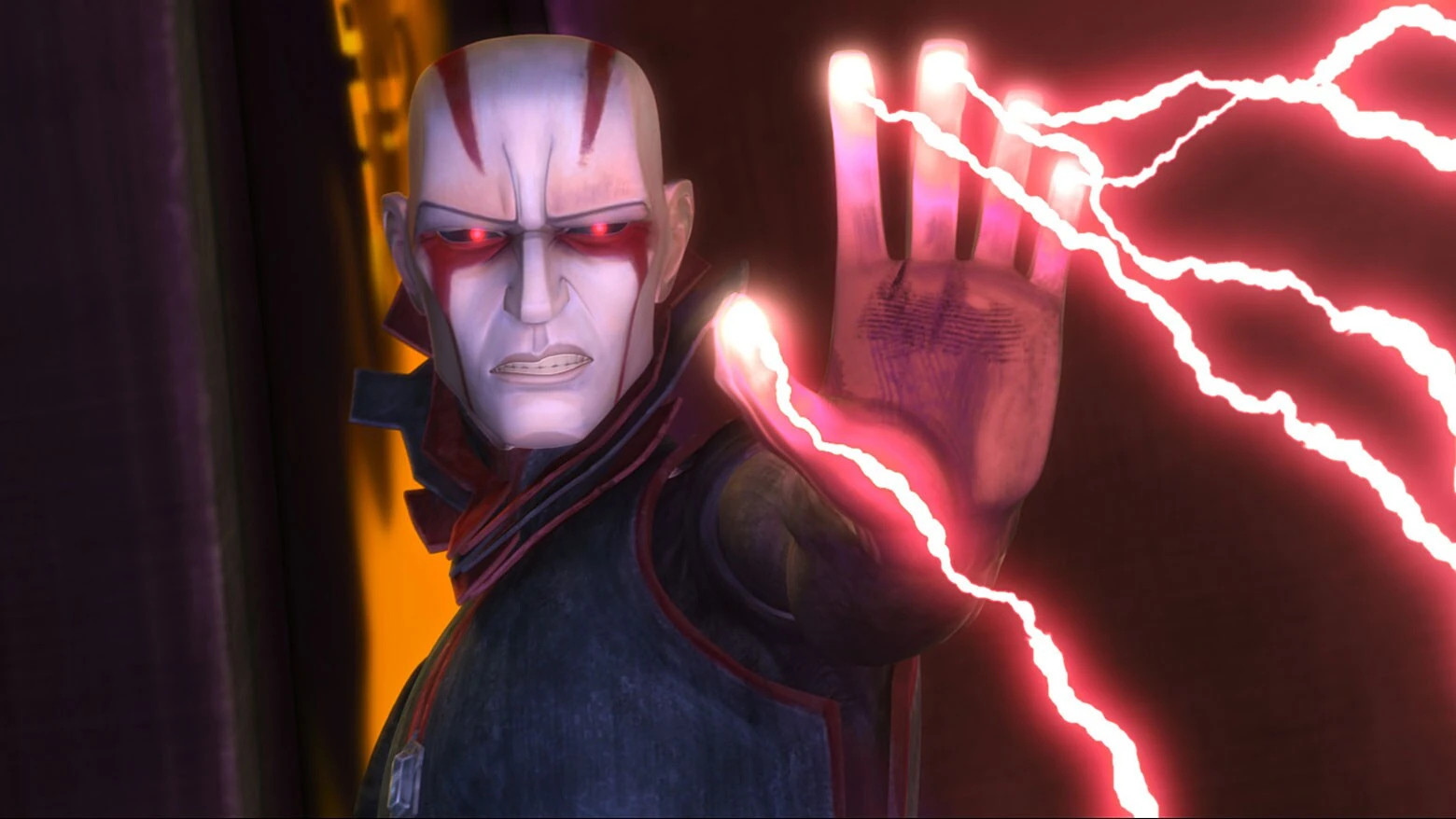
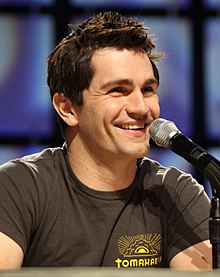
The Son is voiced by Sam Witwer. Witwer was born October 20, 1977 in Glenview, Illinois. He briefly attended Julliard before moving to Los Angeles to pursue an acting career.
Television has been kind to Witwer. He was Lt. Crashdown on Battlestar Galactica and Davis Bloome on Smallville. He's gotten a lot of Star Wars voice work. In addition to the Son, he has voiced Darth Maul for The Clone Wars and Emperor Palpatine for Rebels. He also voiced an alien in The Force Awakens. He is a role playing game enthusiast, especially the various Star Wars RPGs.
If you would care to join us for all or part of our travels, sign on to the list below. Please visit the other participants today. Next week: "Ghosts of Mortis."
Episode: "Altar of Mortis"
Series: Star Wars: The Clone Wars
Season 3, Episode 16
Original Air Date: February 4, 2011
![]() |
| via Wookieepedia |
I'm going to break one of my own self-imposed rules with this post. Up to this point, I've avoided giving away the ending of each episode. Once we move on to the next installment in a story arc, I figure it's fair game to talk about the end of the last one. But, on the off chance someone out there is watching along with us, I don't want to spoil anything for the current week. This week, however, I must. There's just too much to talk about this time. And so...
!!!SPOILER ALERT!!!
Important note before we dig deeper: as I write this, I have not yet watched the third episode of this three-part arc. I am sure there are other shoes yet to fall and I know I am making assumptions based on incomplete information. We'll reassess accordingly next week.
Predictably, the Daughter sides with the Jedi against her brother. In so doing, she takes a big risk and pays a steep price. She gives the Dagger of Mortis - a weapon capable of killing a Force wielder - to Obi-Wan. During the ultimate confrontation, the Son steals it from the Jedi and turns to use it against the Father. The Daughter sacrifices herself by stepping between them at the last minute. She dies and the balance of the Force is disrupted, for Mortis and for the rest of the galaxy. The rise of the Sith, according to the Father, is now inevitable.
While I certainly appreciate the allegorical nature of the Mortis arc, I am not entirely comfortable with this conclusion. As I have said before, I'm not a huge fan of the prequel trilogy but I do feel the turning of Anakin to the dark side is the part Lucas got right. In the young Jedi's pride and arrogance, Darth Sidious saw vulnerabilities he could manipulate. Anakin was seduced by power. People often are. To imply it all happened because of supernatural forces being thrown out of balance in a morality play on another astral plane is dissatisfying to me.
The Mortis story would work better, I think, without the explicit connection to the broader saga. The metaphors would be more effective if the viewer were left to interpret them for him/herself.
And yes, I know we're not quite done with this story yet...
!!!END OF SPOILER!!!
The Son is voiced by Sam Witwer. Witwer was born October 20, 1977 in Glenview, Illinois. He briefly attended Julliard before moving to Los Angeles to pursue an acting career.
| via Wikipedia |
If you would care to join us for all or part of our travels, sign on to the list below. Please visit the other participants today. Next week: "Ghosts of Mortis."
Labels:
Clone Wars project,
comics,
family adventures,
film,
good reading,
sources,
Star Wars,
TV
Subscribe to:
Posts (Atom)