Friday, September 8, 2017

Squid Mixes: Manhattan

via my wife
At this point, I would probably choose the Manhattan as my favorite cocktail.  Whiskey, in general, is my preferred liquor and the other ingredients enhance the flavor without overpowering.  The Angostura bitters, especially, add a pleasant cinnamon accent.  Plus, it's pretty with the red cherry at the bottom of the glass.  My recipe came from The New York Bartender's Guide: rye and sweet vermouth in 3:1 ratio with a dash of bitters.

The Manhattan was most certainly invented in New York, one of numerous cocktails named for the city's five boroughs.  Accounts date its creation as far back as the 1860s.  Several variations exist, some varying the base liquor, others switching to dry vermouth, still more toying around with different bitters.  The most intriguing to me is the Fourth Regiment which includes dashes of orange, celery and Peychaud's bitters.

Tuesday, September 5, 2017

The Clone Wars: Voices

Andrew Leon and I are watching Star Wars: The Clone Wars.  Every Tuesday, we will be featuring an episode from the series which began in 2008.

Episode: "Voices"
Series: Star Wars: The Clone Wars
The Lost Missions (Season Six), Episode 11
Original Air Date: March 1, 2014
via Wookieepedia
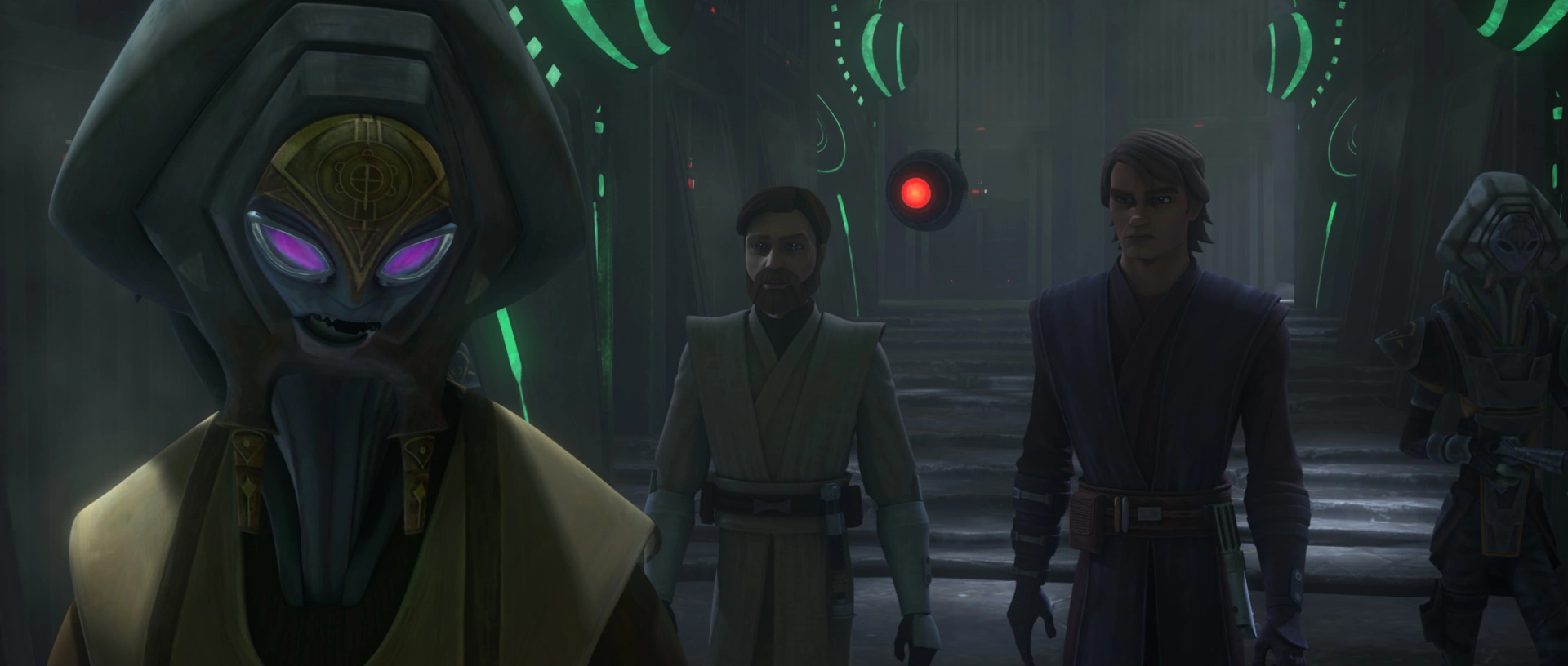
This week's episode is the second in a four-part arc.  Yoda is hearing voices, specifically that of Qui-Gon Jinn.  Worried that he may have come under the influence of the dark side, the Jedi Council advises medical observation.  With Anakin's help, Yoda escapes the Jedi Temple in order to pursue this voice on his own terms.  This story is interesting for a lot of reasons, not least for the fact that the idea of a Force Spirit is previously unknown in the timeline, apart from the experience on Mortis which was deemed an hallucination.

If I am honest with myself, my adoration for the Star Wars franchise mostly revolves around a single movie: The Empire Strikes Back.   I am thoroughly prepared to argue for Empire as greatest film ever made.  Wagner would have loved Empire: an extraordinary display of synthesis between all great art forms.  Most importantly to our current discussion, it is the heart of the Star Wars story and it introduces my own favorite character: Yoda, an adorable spiritual guru Muppet voiced by Frank Oz.  He was tailor-made for me.

In "Voices," Yoda's path leads him to Dagobah, apparently for the first time.  Of course, we all know the swamp planet as Yoda's future home, a world with deep connections to The Force.  With the familiar sights and sounds and the musical strains of Yoda's Theme, this episode tugged at my heart strings as no other has.  This is the Star Wars I love, the one that always leaves me wanting more.
via Wookieepedia
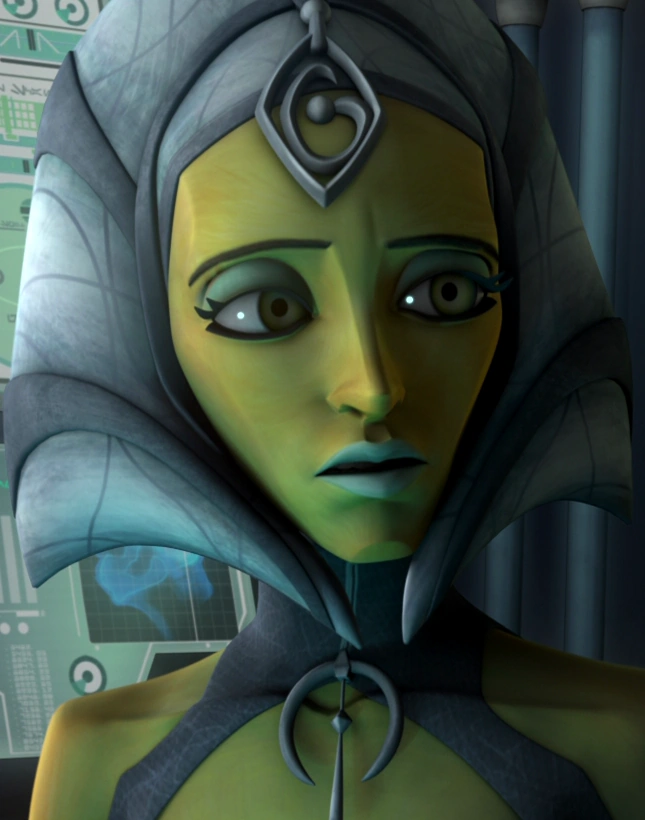
Rig Nema is the Jedi doctor who attends to Yoda at the Temple.  Her appearance is based on an early design for Mace Windu, drawn by Ian McCaig, before Samuel L. Jackson was cast.
via Wookieepedia
"Voices" is Nema's only Clone Wars appearance.  She is voiced by Catherine Taber.

Next week: "Destiny."

Friday, September 1, 2017

Squid Mixes: Gin Fizz

The gin fizz is the most popular of the broader category of fizz drinks which combine an alcoholic base with an acidic fruit juice and carbonated water.  Recipes first appeared in print in 1887.  Historically, they were particularly popular in New Orleans.  My gin fizz, from The New York Bartender's Guide, involves gin, lemon juice and seltzer.  Very refreshing.

Tuesday, August 29, 2017

The Clone Wars: The Lost One

Andrew Leon and I are watching Star Wars: The Clone Wars.  Every Tuesday, we will be featuring an episode from the series which began in 2008.

Episode: "The Lost One"
Series: Star Wars: The Clone Wars
The Lost Missions (Season Six), Episode 10
Original Air Date: March 1, 2014
via Wookieepedia
Well, here we are: the last arc of the series.  No, I'm not counting the unfinished "Legacy" episodes.  I won't be reviewing those.  For starters, they are, as noted, unfinished.  Also, they're not on Netflix.  Some were released as story reels on the StarWars.com site but I feel I've gotten whatever it was I needed from The Clone Wars.  It might be interesting to explore the other stories sometime just as it might be interesting to explore more of the novels, comics, etc.  For now, though, it's time to move on.  So, this arc is it for me.

The Jedi renew an investigation of the disappearance of Sifo-Dyas, a Jedi Master believed dead ten years before.  Anakin and Obi-Wan are sent to Oba Diah where Sifo-Dyas's ship and lightsaber have been found.  As it turns out, he wasn't just any old Jedi.  He's the one who ordered the creation of the clone army, against the wishes of the Jedi High Council.  It's an interesting twist on the clones story and the Jedi's moral position in regards to it.  They didn't approve of the program at first but see it as a good idea in hindsight, having since benefited from it considerably.  Obi-Wan readily admits he believes they'd been wrong at the time.

No need to get too twisted up over it, though.  Turns out, it was all Dooku's fault.
via Wookieepedia
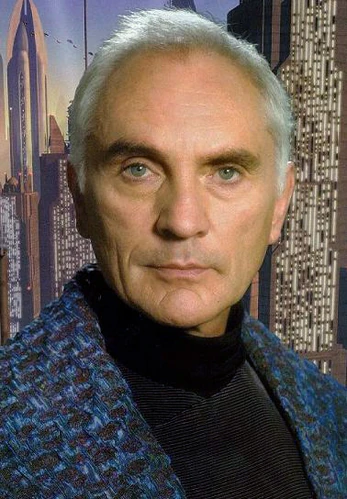
Before heading to Oba Diah himself, Yoda consults with Finis Valorum who had been Chancellor at the time of Sifo-Dyas's disappearance.  Valorum first appeared in The Phantom Menace, played by Terence Stamp.  George Lucas described the character to Stamp as being like (pre-impeachment trial) Bill Clinton: "a good man but he's beleaguered."

In The Clone Wars, Valorum is voiced by Ian Ruskin.  Ruskin has appeared in such films as Eragon and A Good Year and in such television shows as The X Files and Murder She Wrote.  Beyond his voice acting career, Ruskin has considerable stage credentials as both actor and writer.

Next week: "Voices."

Saturday, August 26, 2017

The Cephalopod Coffeehouse: September 2017 Blog List

Greetings to all!  I hope you'll join us for the next installment of the Cephalopod Coffeehouse, an online gathering of bloggers who love books.  The next meeting is set for Friday, September 29th.  If you're interested, please sign on to the link list at the end of this post.

The idea is simple: on the last Friday of each month, post about the best book you've finished over the past month while visiting other bloggers doing the same.  In this way, we'll all have the opportunity to share our thoughts with other enthusiastic readers.  Please join us:


Friday, August 25, 2017

Cephalopod Coffeehouse: August 2017

Welcome one and all to the Cephalopod Coffeehouse, a cozy gathering of book lovers, meeting to discuss their thoughts regarding the works they enjoyed most over the previous month.  Pull up a chair, order your cappuccino and join in the fun.  If you wish to add your own review to the conversation, please sign on to the link list at the end of my post.

Title: The Golden Ratio: The Story of Phi, The World's Most Astonishing Number
Author: Mario Livio
via Amazon
The number ϕ, approximately 1.6180339887, is the Golden Ratio, studied by mathematicians since Pythagoras and Euclid.  Imagine a line segment, AB.  There is a point on AB, let's call it C.  The ratio of the length of AB to that of AC is the same as the ratio of the length of AC to that of CB.  That ratio is ϕ (phi, pronounced "fee").  Here's a diagram:

Golden ratio line.svg
By Traced by User:Stannered - en:Image:Golden ratio line.png, Public Domain, Link

Over the centuries since, this number has proven to be deeply embedded in the fabric of universe.  No, I'm not exaggerating.  ϕ plays a role in the placement of petals on a rose and branches on a tree, in the shapes of nautilus shells and even the spiral arms of galaxies.

Mario Livio explains it all in his marvelous book, covering a great deal of mathematical history as he goes along.  I think it's actually more the sort of book I had in mind when I read The Magic of Numbers by Eric Temple Bell (see here) earlier this year.  ϕ is even related to the Platonic solids, my most exciting discovery in Bell's book.  Livio discusses "recreational mathematics," a fancy term for number games I'd never even heard of before though I've been practicing it for most of my life.

While Livio is enthusiastic about ϕ, he is also skeptical of many of the assertions that have been made about its use in the Parthenon, the Great Pyramid, numerous paintings, etc.  Much of the book is devoted to debunking these myths.  Some artists and architects, though, have been explicit in experimenting with the Golden Ratio: Frank Lloyd Wright and Salvador Dali, among them. 

The book's final chapter considers ϕ in light of one of the oldest questions in philosophy: is mathematics a human invention or a human discovery?  The numerous natural phenomena related through ϕ suggest an existing order to the universe that predates us all.  Could those relationships, though, be just as clearly defined by another civilization through a means of understanding completely different from our math?

If you love numbers, this is a great book.  I don't know how much it offers to one who is not mathematically inclined but I think Livio does a fair job of explaining the technical concepts in simple terms.  The telling question for me is always would I give it to my wife to read?  In this case, I believe the answer is yes.

Please join us and share your own review of your best read from the past month.  This month's link list is below.  I'll keep it open until the end of the day.  I'll post September's tomorrow.  Meetings are the last Friday of each month.  Next gathering is September 29th.


Thursday, August 24, 2017

State of the Blog 2017

Music is a central focus of my life.  I am a music teacher, now entering my 16th year in public education, mostly vocal but with increasing instrumental responsibilities.  Our 13-year-old daughter is also an active musician, playing three instruments: clarinet, bass clarinet and piano.  A same-age comparison with me is, in fact, a joke very much in her favor.  A healthy portion of our family entertainment budget is devoted to symphony concerts.  I'm all in on music and have been for most of my life.

However, I have generally avoided music as a blogging topic for The Armchair Squid.  I believe strongly in a compartmentalized life (apparently a typical Gen X trait).  As music takes up so much of my professional, family and personal time, it's nice to write about other things as a diversion.  I include musical details from time to time but the main subjects of my posts have been other topics. 

One of the most gratifying blogging projects I've ever completed, though, was 30 Songs in 30 Days with Mock back in the summer of 2011 (read here).  I still go back and read those posts from time to time.  Knowledge, devotion and sincerity all certainly contribute to quality of material, if I do say so.  As such, I think it's time to take a chance and make music a more prominent part of my blog.

I have a few more weeks with The Clone Wars, after which there will be a few changes to the posting schedule.  The family adventure posts will move to Tuesdays and music posts will begin on Fridays, except, of course, the last Friday of the month which is still dedicated to the Cephalopod Coffeehouse.  I'll continue to review other books as I finish them, too.

Thanks to all of you for stopping by, reading and sharing your thoughts.  If you're having half as much fun as I am, we're all doing great.  Let's have a great year, folks!