Greetings to all! I hope you'll join us for the next installment of
the Cephalopod Coffeehouse, an online gathering of bloggers who love
books. The next meeting is set for Friday, February 27th. If you're
interested, please sign on to the link list at the end of this post.
The
idea is simple: on the last Friday of each month, post about the best
book you've finished over the past month while visiting other bloggers
doing the same. In this way, we'll all have the opportunity to share
our thoughts with other enthusiastic readers. Please join us:
"If more of us valued food and cheer and song over hoarded gold, it would be a merrier world." - J.R.R. Tolkien
Saturday, January 31, 2015
Friday, January 30, 2015
The Cephalopod Coffeehouse: January 2015
Welcome one and all to the Cephalopod Coffeehouse, a cozy gathering of
book lovers, meeting to discuss their thoughts regarding the tomes they
enjoyed most over the previous month. Pull up a chair, order your
cappuccino and join in the fun. If you wish to add your own review to
the conversation, please sign on to the link list at the end of my post.
Title: Amulet: Book One: The Stonekeeper
Writer and Artist: Kazu Kibuishi
The Stonekeeper begins with a terrible car accident. Emily's father is killed. Two years later, she, her mother and her younger brother, Navin, move to a creepy house in the country. That very night, Mom is whisked away to a parallel dimension. The kids set off to find her guided only by a mysterious amulet.
This was a book I picked up for our daughter on a Goodreads recommendation intending, I must admit, to read it myself once she was done. Unfortunately, she didn't care for it. I was a bit surprised. It seems right up her alley: a magical adventure with a girl protagonist. But no, not her thing, she says. Oh well.
I, on the other hand, was more impressed. The artwork is excellent. Emily and Navin encounter many strange, excellently rendered creatures in their adventure. The spooky settings are established effectively, too. Most importantly from the perspective of story, I'm eager to know what happens next.
Slight spoiler alert!!!
The kids find Mom but she's not quite out of the woods yet. It's also not entirely clear whom among the various beings they encounter is truly on their side. One wonder if even the amulet that's guiding them truly has their best interests at heart. Many questions are left to be answered in future volumes. So, even if the Purple Penguin doesn't pursue the story any further, I may well do so myself.
(End of slight spoiler)
Please join us and share your own review of your best read from the past month. This month's link list is below. I'll keep it open until the end of the day. I'll post February's tomorrow. Meetings are the last Friday of each month. Next gathering is February 27th.
Title: Amulet: Book One: The Stonekeeper
Writer and Artist: Kazu Kibuishi
| via Amazon |
The Stonekeeper begins with a terrible car accident. Emily's father is killed. Two years later, she, her mother and her younger brother, Navin, move to a creepy house in the country. That very night, Mom is whisked away to a parallel dimension. The kids set off to find her guided only by a mysterious amulet.
This was a book I picked up for our daughter on a Goodreads recommendation intending, I must admit, to read it myself once she was done. Unfortunately, she didn't care for it. I was a bit surprised. It seems right up her alley: a magical adventure with a girl protagonist. But no, not her thing, she says. Oh well.
I, on the other hand, was more impressed. The artwork is excellent. Emily and Navin encounter many strange, excellently rendered creatures in their adventure. The spooky settings are established effectively, too. Most importantly from the perspective of story, I'm eager to know what happens next.
Slight spoiler alert!!!
The kids find Mom but she's not quite out of the woods yet. It's also not entirely clear whom among the various beings they encounter is truly on their side. One wonder if even the amulet that's guiding them truly has their best interests at heart. Many questions are left to be answered in future volumes. So, even if the Purple Penguin doesn't pursue the story any further, I may well do so myself.
(End of slight spoiler)
Please join us and share your own review of your best read from the past month. This month's link list is below. I'll keep it open until the end of the day. I'll post February's tomorrow. Meetings are the last Friday of each month. Next gathering is February 27th.
Labels:
Amulet,
Asian Lit,
Book Club,
children's literature,
comics,
good reading,
graphic novels
Wednesday, January 28, 2015
Star Trek: The Cloud Minders
Episode: "The Cloud Minders"
Series: Star Trek: The Original Series
Season 3, Episode 21
Original Air Date: February 28, 1969
You know, I'd really thought that Bespin was an original idea. The Empire Strikes Back's Cloud City was a mind bender for my seven year old self in 1980. But Star Trek did it first.
The planet Ardana is the only known source of zenite, a mineral required to stop a plague on Merak II. (Lots of epidemic-related stories on Trek's third season.) The ground-dwelling, miner Troglytes are oppressed by the residents in the city Stratos that floats above the surface. The relationship between them is reminiscent of the Eloi and Morlocks in H.G. Wells's The Time Machine. Obviously, Kirk and company must violate the Prime Directive in order to sort out the social injustice.
This story started with great potential, involving several classic Trek elements: social relevance, forbidden love (this time, a Stratosian's infatuation with Spock), a Prime Directive dilemma and that wonderful suspense for how our heroes will resolve the intractable mess in the episode's final ten minutes. Then the good is undone by awkward pacing in building to the end. The third non-Kirk love story in four weeks is an interesting trend in itself. Perhaps the writers realized - too late to save the show - the value in developing stronger characters beyond the captain.
Jeff Corey (Ardana's High Advisor, Plasus) was born Arthur Zwerling in Brooklyn on August 10, 1914. A career on stage and screen was derailed when Corey was called before the House Committee on Un-American Activities. For refusing to name names, he was blacklisted.
Unable to find his own acting work, Corey turned to teaching - a brilliant career move, as it turned out. Over the years, Corey coached numerous Hollywood stars, including Jack Nicholson, Rita Moreno, Robin Williams and, most significantly to Star Trek, Leonard Nimoy. His return to the screen in the '60s brought roles in some high profile films: The Cincinnati Kid, True Grit and Butch Cassidy and the Sundance Kid.
Corey was married to his wife, Hope, for 64 years. They had three children. Corey died in 2002 from complications from a fall.
Series: Star Trek: The Original Series
Season 3, Episode 21
Original Air Date: February 28, 1969
| via Memory Alpha |
The planet Ardana is the only known source of zenite, a mineral required to stop a plague on Merak II. (Lots of epidemic-related stories on Trek's third season.) The ground-dwelling, miner Troglytes are oppressed by the residents in the city Stratos that floats above the surface. The relationship between them is reminiscent of the Eloi and Morlocks in H.G. Wells's The Time Machine. Obviously, Kirk and company must violate the Prime Directive in order to sort out the social injustice.
This story started with great potential, involving several classic Trek elements: social relevance, forbidden love (this time, a Stratosian's infatuation with Spock), a Prime Directive dilemma and that wonderful suspense for how our heroes will resolve the intractable mess in the episode's final ten minutes. Then the good is undone by awkward pacing in building to the end. The third non-Kirk love story in four weeks is an interesting trend in itself. Perhaps the writers realized - too late to save the show - the value in developing stronger characters beyond the captain.
*****
| via Wikipedia |
Jeff Corey (Ardana's High Advisor, Plasus) was born Arthur Zwerling in Brooklyn on August 10, 1914. A career on stage and screen was derailed when Corey was called before the House Committee on Un-American Activities. For refusing to name names, he was blacklisted.
Unable to find his own acting work, Corey turned to teaching - a brilliant career move, as it turned out. Over the years, Corey coached numerous Hollywood stars, including Jack Nicholson, Rita Moreno, Robin Williams and, most significantly to Star Trek, Leonard Nimoy. His return to the screen in the '60s brought roles in some high profile films: The Cincinnati Kid, True Grit and Butch Cassidy and the Sundance Kid.
Corey was married to his wife, Hope, for 64 years. They had three children. Corey died in 2002 from complications from a fall.
Labels:
comics,
family adventures,
film,
good reading,
sources,
star trek,
Star Wars,
TV
Sunday, January 25, 2015
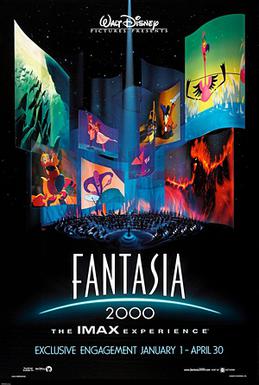
Family Movie Night: Fantasia 2000
Title: Fantasia 2000
Directors: Don Hahn, Pixote Hunt, Hendel Butoy, Eric Goldberg, James Algar, Francis Glebas, Paul Brizzi and Gaƫtan Brizzi
Original Release: 1999
Choice: Purple Penguin's
My Overall Rating: 5 stars out of 5
Three weeks ago, we watched the original Fantasia (review here). Somewhat predictably, the Purple Penguin chose the sequel this week. My Wife and I first saw Fantasia 2000 at an IMAX theater in New York City back in Y2K.
The second installment generally doesn't fair as well with the critics as the original does. While I love it, I'm willing to admit the segments are uneven. Beethoven's Fifth Symphony and Elgar's Pomp and Circumstance are not especially memorable. Both the flying whales in Respighi's Pines of Rome and the toys come to life in Shostakovich's Piano Concerto No. 2 are fun but I find their relationships to the music less convincing. The inclusion of The Sorcerer's Apprentice is nice for nostalgia but I would have preferred all new material. I still think those segments are good, mind you, just not great.
The remaining three segments, though, definitely meet or even exceed the standard of the original. Gershwin's Rhapsody in Blue is paired perfectly with the artistic style of cartoonist Al Hirschfeld. The flamingo sketch for The Carnival of the Animals is short but sweet - a welcome dose of slapstick comedy. Then, in the end, the masterpiece of the whole operation: Firebird.
If one seeks the roots of movie music in general, one need look no further than Igor Stravinsky. He was the biggest influence on all of the epic film score composers, John Williams most of all. In my professional experience, Firebird is an easy sell with kids. Little explanation is required for its dramatic power. For Disney, it inspired the death and rebirth of a forest brought on by a volcanic eruption. The play between the spring sprite, her elk companion and the Firebird they accidentally awaken is an elegant and furious dance, ending with blaring, triumphant French horns as life is restored. Either story or music would be potent alone. Their perfect synthesis generates Fantasia magic at its very best.
A new, full-length Fantasia sequel is unlikely in the near future - too expensive and time-consuming for the modest financial profit. A plan for Fantasia 2006 was abandoned, though a few individual segments were produced and distributed as shorts. Perhaps it is a once every 60 years phenomenon. Mark your calendars for 2060.
Directors: Don Hahn, Pixote Hunt, Hendel Butoy, Eric Goldberg, James Algar, Francis Glebas, Paul Brizzi and Gaƫtan Brizzi
Original Release: 1999
Choice: Purple Penguin's
My Overall Rating: 5 stars out of 5
| via Wikipedia |
The second installment generally doesn't fair as well with the critics as the original does. While I love it, I'm willing to admit the segments are uneven. Beethoven's Fifth Symphony and Elgar's Pomp and Circumstance are not especially memorable. Both the flying whales in Respighi's Pines of Rome and the toys come to life in Shostakovich's Piano Concerto No. 2 are fun but I find their relationships to the music less convincing. The inclusion of The Sorcerer's Apprentice is nice for nostalgia but I would have preferred all new material. I still think those segments are good, mind you, just not great.
The remaining three segments, though, definitely meet or even exceed the standard of the original. Gershwin's Rhapsody in Blue is paired perfectly with the artistic style of cartoonist Al Hirschfeld. The flamingo sketch for The Carnival of the Animals is short but sweet - a welcome dose of slapstick comedy. Then, in the end, the masterpiece of the whole operation: Firebird.
If one seeks the roots of movie music in general, one need look no further than Igor Stravinsky. He was the biggest influence on all of the epic film score composers, John Williams most of all. In my professional experience, Firebird is an easy sell with kids. Little explanation is required for its dramatic power. For Disney, it inspired the death and rebirth of a forest brought on by a volcanic eruption. The play between the spring sprite, her elk companion and the Firebird they accidentally awaken is an elegant and furious dance, ending with blaring, triumphant French horns as life is restored. Either story or music would be potent alone. Their perfect synthesis generates Fantasia magic at its very best.
A new, full-length Fantasia sequel is unlikely in the near future - too expensive and time-consuming for the modest financial profit. A plan for Fantasia 2006 was abandoned, though a few individual segments were produced and distributed as shorts. Perhaps it is a once every 60 years phenomenon. Mark your calendars for 2060.
Labels:
family adventures,
film,
movie music,
music
Wednesday, January 21, 2015
Star Trek: The Way to Eden
Episode: "The Way to Eden"
Series: Star Trek: The Original Series
Season 3, Episode 20
Original Air Date: February 21, 1969
In "The Way to Eden," Star Trek takes on the counter culture of the late 1960s. The Enterprise crew encounters Dr. Sevrin, a Timothy Leary-esque figure, and his band of followers. The space hippies are on a quest for Eden: a planet of beauty and tranquility, upon which to build an idyllic society.
This episode is much maligned by critics, though I have no issue with the basic premise. Many Star Trek stories are laden with social commentary and the counter culture was certainly fair game. Unfortunately, there are songs - truly awful songs. Guest stars Charles Napier (Adam) and Deborah Downey (Mavig) co-wrote several folk-songish numbers for the show with sappy, we-all-love-each-other-and-we're-gonna-be-so-groovy lyrics. I've been keeping a rolling eye out for a rock bottom point in Trek's final season and I believe I have found it in these songs.
Getting back to the story, one of the travelers, Irina (Mary Linda Rapelye), is an old flame of Chekov's from the Academy. It's worth noting that two of the past three episodes have involved a love interest for someone other than Captain Kirk. Anyway, the two young exes rehash the differences both personal and political that pulled their lives in different directions. Many, including actor Walter Koenig, have criticized the relationship as being out of character for the playboy Chekov but it was the part of the episode I enjoyed the most. Friends and lovers grow up together. If not for a few life choices, they might have shared a path but it didn't work out. For quite a lot of us, that's the tale of young adulthood.
But that doesn't make up for the songs...
Skip Homeier (Dr. Sevrin) was born October 5, 1930 in Chicago. Homeier was the rare child actor who transitioned to a successful, though unspectacular, adult career. He made his film debut at the age of 14 in Tomorrow, the World! as a member of the Hitler Youth transplanted to the United States after the deaths of his parents. He had already performed the role on stage to great acclaim.
Most of his work has been in television, mostly guest appearances but there were regular roles on Dan Raven and The Interns. "The Way to Eden" was actually his second Trek episode. He'd also played Melakon in "Patterns of Force."
Homeier has been married to his wife, Della Sharman, since 1963.
Series: Star Trek: The Original Series
Season 3, Episode 20
Original Air Date: February 21, 1969
| via Wikipedia |
This episode is much maligned by critics, though I have no issue with the basic premise. Many Star Trek stories are laden with social commentary and the counter culture was certainly fair game. Unfortunately, there are songs - truly awful songs. Guest stars Charles Napier (Adam) and Deborah Downey (Mavig) co-wrote several folk-songish numbers for the show with sappy, we-all-love-each-other-and-we're-gonna-be-so-groovy lyrics. I've been keeping a rolling eye out for a rock bottom point in Trek's final season and I believe I have found it in these songs.
Getting back to the story, one of the travelers, Irina (Mary Linda Rapelye), is an old flame of Chekov's from the Academy. It's worth noting that two of the past three episodes have involved a love interest for someone other than Captain Kirk. Anyway, the two young exes rehash the differences both personal and political that pulled their lives in different directions. Many, including actor Walter Koenig, have criticized the relationship as being out of character for the playboy Chekov but it was the part of the episode I enjoyed the most. Friends and lovers grow up together. If not for a few life choices, they might have shared a path but it didn't work out. For quite a lot of us, that's the tale of young adulthood.
But that doesn't make up for the songs...
*****
| via Wikipedia |
Most of his work has been in television, mostly guest appearances but there were regular roles on Dan Raven and The Interns. "The Way to Eden" was actually his second Trek episode. He'd also played Melakon in "Patterns of Force."
Homeier has been married to his wife, Della Sharman, since 1963.
Labels:
comics,
family adventures,
film,
good reading,
music,
sources,
star trek,
TV
Monday, January 19, 2015
On the Coffee Table: Haruki Murakami
Title: The Strange Library
Author: Haruki Murakami
My Wife introduced me to Murakami's work last summer (review here). The Strange Library
was first published in Japanese as a short story in 1982, then revised
in 2005. The English translation was released in 2014. Here's the
synopsis from Goodreads:
The real treat of The Strange Library is the illustrations, most of them taken from books found in The London Library. The pictures fit the story so well that I wondered if Murakami had found them first and built the story around them. But, in fact, they were added by the English language publishers. The original Japanese and translated German editions use different illustrations entirely.
Author: Haruki Murakami
| via Amazon |
'All I did was go to the library to borrow some books'.Tax collection in the Ottoman Empire is such an esoteric topic and the library atmosphere so grim that one wonders if it's all an allegory for a life in academic research. As with Hard-Boiled Wonderland and the End of the World, the story is dreamlike and odd. The prose isn't as clever as in the other book but it's still fun.
On his way home from school, the young narrator of The Strange Library finds himself wondering how taxes were collected in the Ottoman Empire. He pops into the local library to see if it has a book on the subject. This is his first mistake.
Led to a special 'reading room' in a maze under the library by a strange old man, he finds himself imprisoned with only a sheep man, who makes excellent donuts, and a girl, who can talk with her hands, for company. His mother will be worrying why he hasn't returned in time for dinner and the old man seems to have an appetite for eating small boy's brains. How will he escape?
The real treat of The Strange Library is the illustrations, most of them taken from books found in The London Library. The pictures fit the story so well that I wondered if Murakami had found them first and built the story around them. But, in fact, they were added by the English language publishers. The original Japanese and translated German editions use different illustrations entirely.
On the Coffee Table: Harold McGee
Title: On Food and Cooking: The Science and Lore of the Kitchen
Author: Harold McGee
First published in 1984, On Food and Cooking is exactly as its subtitle advertises, a 360 degree view of darn near everything edible. The first chapter - on milk, a mammal's first food - sets the template for the rest of the book: begin with the historical and cultural context of a food, then dissect it down to the molecular level. I made the decision early on that I was not going to be able to read this impressive work cover-to-cover but I still managed to learn plenty.
This particular read coincides with a sad event in my life. My favorite high school science teacher passed away in December. I had him for both biology and chemistry, the two predominant sciences covered in McGee's book. Mr. B was one of the most popular teachers in the school. Also on the coaching staff of the school's extraordinarily successful field hockey program, he touched thousands of lives over several decades.
Despite his best efforts, even Mr. B couldn't turn me on to science. As soon as McGee's text started heading towards the lab, I'd skip ahead to the next section. I made honest attempts. In theory, I was fascinated by the fact that meringues are best whipped in a copper bowl for genuine chemical reasons but after reading the section, I couldn't remember any of it. Such was my experience for four years of high school science. I'm so sorry, Mr. B. I know you tried.
And yet, I did manage to learn. Figs, for instance, are pollinated not by bees or birds but by a particular eighth-inch long species of wasp. You can't even cultivate figs unless you tie wasp nests to the trees. One of my favorite chapters was the one on alcohol: Wine, Beer and Distilled Liquors. I have some modest experience making beer but really, the chapter made me want to experiment with cocktails. Fortunately, McGee also provides gory details of the terrible things drunkenness does to the mind and body. Everything in moderation, folks...
I had a bit of a dilemma when it came to my Goodreads rating for On Food and Cooking. My Goodreads recommendations have been quite satisfying so this is not a matter I take lightly. On the one hand, I don't really want more foodie books that are so heavy on the "science" but the "lore" parts of the text were amazing. Even the material that wasn't so interesting to me personally was thoroughly researched and well written. I may well refer back to some of those sections as I get deeper into my own cooking adventures. So, a 3 seemed reasonable.
Author: Harold McGee
| via Wikipedia |
This particular read coincides with a sad event in my life. My favorite high school science teacher passed away in December. I had him for both biology and chemistry, the two predominant sciences covered in McGee's book. Mr. B was one of the most popular teachers in the school. Also on the coaching staff of the school's extraordinarily successful field hockey program, he touched thousands of lives over several decades.
Despite his best efforts, even Mr. B couldn't turn me on to science. As soon as McGee's text started heading towards the lab, I'd skip ahead to the next section. I made honest attempts. In theory, I was fascinated by the fact that meringues are best whipped in a copper bowl for genuine chemical reasons but after reading the section, I couldn't remember any of it. Such was my experience for four years of high school science. I'm so sorry, Mr. B. I know you tried.
And yet, I did manage to learn. Figs, for instance, are pollinated not by bees or birds but by a particular eighth-inch long species of wasp. You can't even cultivate figs unless you tie wasp nests to the trees. One of my favorite chapters was the one on alcohol: Wine, Beer and Distilled Liquors. I have some modest experience making beer but really, the chapter made me want to experiment with cocktails. Fortunately, McGee also provides gory details of the terrible things drunkenness does to the mind and body. Everything in moderation, folks...
I had a bit of a dilemma when it came to my Goodreads rating for On Food and Cooking. My Goodreads recommendations have been quite satisfying so this is not a matter I take lightly. On the one hand, I don't really want more foodie books that are so heavy on the "science" but the "lore" parts of the text were amazing. Even the material that wasn't so interesting to me personally was thoroughly researched and well written. I may well refer back to some of those sections as I get deeper into my own cooking adventures. So, a 3 seemed reasonable.
Labels:
family adventures,
food,
food books,
good reading
Subscribe to:
Posts (Atom)